ATLS TEST QUESTIONS AND ANSWERS
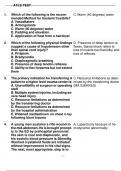
1. Which of the following is the recom- mended Method for trestemt frostbite? A. Vasodilators B. Anticigulants C. Warm (40 degrees) water D. Padding and elevation E. Application of heat from a hairdryer 2. Which of the following physical findings suggest a cause of hypotension other than spinal cord injury? A. Prispism B. Bradycardia C. Diaphragmatic breathing D. Presence of deep tendon reflexes E. Ability to flex forearms but not extend them 3. The primary indication for transferring A patient to a higher level trauma center is: A. Unavailibility of surgeon or operating staff B. Multiple system injuries, including se- vere head injury C. Resource limitations as determined by the transferring doctor D. Resource limitations as determined by the hospital administration E. Widened mediastinum on chest x-ray following blunt trauma 4. A young man sustains a rifle wound to the mid-abdomen. He is brought prompt- ly to the ED by prehospital personnel. His skin is cool and diaphoretic, and his systolic blood pressure is 58mmHg. Warmed crystalloid fluids are initiated without improvement in his vital signs. The next, most appropriate, step is to C. Warm (40 degrees) water D. Presence of deep tendon re- flexes. Spinal shock refers to loss of muscle toe (flaccidty) and loss of reflexes. C. Resource limitations as deter- mined by the transferring doctor (MÅ SJEKKES) A. Laparotomy because of he- modynamic abnormality perform: A. a laparotomy B. An abdominal CT-scan C. Diagnostic laparoscopy D. Abdominal ultrasonography E. A diagnostic peritoneal lavage 5. A 42-year-old man is trapped from the waist down beneath his overturned trac- tor for several hours before medical as- sistance arrives. He is awake and alert until just before arriving in the ED. He is now unconscious and responds only to painful stimuli by moaning. His pupils are 3mm in diameter and symmetrically reactive to light. Prehospital personnel indicate that they have not seen the pa- tient move either of his lower extremi- ties. On examination in the ED, no move- ment of his lower extremities are detect- ed, even in response to painful stimuli. The most likely cause for this finding is: A. An epidural hematoma B. A pelvic fracture C. Central cord syndrome D. Intracerebral hemorrhage E. Bilateral compartment syndrome 6. A 6-year-o boy is struck by an automo- bile and brought to the ED. He is lethar- gic, but withdraws purposefully from painful stimuli. His blood pressure is 90mmHg systolic, heart rate 140 beats per minute and his respiratory rate is 36 breaths per minute. The preferred route of venous access in this patient is: A. Percutaneous femoral vein cannula- tion B. Cutdown on the saphenous vein at MÅ SJEKKES D. Percutaneous peripheral veins in the upper extremities the ankle C. Intraosseous catheter placement in the proximal tibia D. Percutaneous peripheral veins in the upper extremities E. Central venous access via the subcla- vian or internal jugular vein 7. A young man sustains a gunshot wound to the abdomen and is brought prompt- ly to the ED by prehospital personnel. His skin is cool and diaphoretic, and he is confused. His pulse is thready and his femoral pulse is only weakly palpa- ble. The definitive treatment in manag- ing this patient is to: A. Administer O-negative blood B. Apply external warming devices C. Control internal hemorrhage opera- tively D. Apply a pneumatic antishock garment (PASG) E. Infuse large volumes of intravenous crystalloid solutions. 8. Regarding shock in the child, which of the following is FALSE? A. Vital signs are age-related B. Children have greater physiologic re- serves than do adults C. Tachycardia is the primary physiolog- ic response to hypovolemia D. The absolute volume of blood loss required to produce shock is the same as in adults E. An initial fluid bolus for resuscitation should approximate 20ml/kg Ringers Lactate C. Control internal hemorrhage operatively D. The absolute volume of blood loss required to produce shock is the same as in adults 9. A 33-year-old man is struck by a car travelling at 56km/h (35mph). He has obvious fractures of the left tibia near the knee, pain in the pelvic area, and severe dyspnea. His heart rate is 182 beats per minute, and his respiratory rate is 48 breaths per minute with no breath sounds heard in the left chest. A tension pneumothorax is relieved by immediate needle decompression and tube thoracostomy. Subsequently, his heart rate decreases to 144 beats per minute, his respirartory rate decreas- es to 36 breaths per minute and his blood pressure is 81/53 mmHg. Warmed Ringers lactate is adminstered intra- venously. The next priority should be to: A. Perform external fixation of the pelvis B. Obtain abdominal and pelvic CT-scans C. Perform arterial embolization of the pelvic vessel D. Perform diagnostic peritoneal lavage or FAST E. Perform a urethrogram and cys- togram 10. A 42-year-old man, injured in a motor ve- D. Perform diagnostic peritoneal lavage or FAST A. Obtain a chest x-ray (MÅ hicle crash, suffers a closed head injury, SJEKKES) multiple palpable left rib fractures, and bilateral femur fractures. He is intubated orotracheally without difficulty. Initially, his ventilations are easily assisted with a bag-mask device. It becomes more dif- ficult to ventilate the patient over the next 5 minutes, and his hemoglobin oxy- gen saturation level decreases from 98% to 89%. The most appropriate next step is to: A. Obtain a chest x-ray B. Decrease the tidal volume C. Decrease PEEP D. Increase the rate of assisted ventila- tions E. Perform needle decompression of the left chest. 11. A 30-year-old man sustains a severe- ly comminuted, open, distal right fe- mur fracture in a motorcycle crash. The wound is actively bleeding. Normal sen- sation is present over the lateral aspect of the foot but decreased over the medi- al foot and great toe. Normal motion of the foot is observed. Dorsalis pedis and posterior tibial pulses are easily palpa- ble on the left, but heard only by Doppler on the right. Immediate efforts to im- prove circulation to the injured extremity should involve: A. Immediate angiography B. Tamponade of the wound with a pres- sure dressing C. Wound exploration and removal of bony fragments D. Realignment of the fracture segments with a traction splint E. Fasciotomy of all four compartments in the lower extremity 12. An 18-yeard-old, unhelmeted motorcy- clist is brought by ambulance to the ED following a crash. He had decreased lev- el of consciousness at the scene, but then was alert and conversational dur- ing transportation. Now his GCS is only 11. Which of the following statements is TRUE? B. Tamponade of the wound with a pressure dressing E. The patient probably has an acute epidural hematoma A. Cerebral perfusion is intact B. Intravascular volume status is normal C. The patient is in a postictal state D. Intra-abdominal visceral injury is un- likely E. The patient probably has an acute epidural hematoma 13. A previously healthy, 70kg (175 pound) man suffers an estimated acute blood loss of two liters. Which one of the fol- lowing statements apply to this patient? A. His pulse pressure will be widened B. His urinary output will be at the lower limits of normal C. He will have tachycardia, but no change in systolic blood pressure D. His systolic blood pressure will be de- creased with a narrowed, pulse pressure E. His systolic blood pressure will be maintained with an elevated diastolic pressure. 14. The physioclogic hypervolemia of preg- nancy has clinical significance in the management of the severely injured gravid woman by A. Reducing the need for blood transfu- sion B. Increasing the risk of pulmonary ede- ma C. Complicating the management of closed head injury D. Increasing the volume of blood loss to produce shock/maternal hypotension E. Reducing the volume of crystalloid required for resuscitation E. His systolic blood pressure will be maintained with an elevat- ed diastolic pressure. D. Increasing the volume of blood loss to produce shock 15. B. A long spine board A 17-year-old helmeted motorcyclist los- es consciousness when he is struck broad side by an automobile at an in- tersection. He arrives in the ED with a blood pressure of 140/92, pulse rate 88 beats per minute, a respiratory rate of 18 breaths per minue, and a GCS of 7. Appropriate initial immobilization of this patient should include a semi-rigid cer- vical collar and: A. A scoop stretcher B. A long spine board C. A short spine board D. Cervical traction tongs E. Pneumatic antishock garment 16. During an altercation, a 36-year-old man sustains a gunshot wound above the nipple line on the right, with an exit wound posteriorly above the scapula on the right. He is transported by am- bulance to a community hospital. He is endotracheally intubated, close tube thoracostomy is performed, and 2 liters Ringers lactate solution are infused via 2 large-caliber IV´s. His blood pressure now is 60/0mmHg, heart rate is 160 beats per minute, and respiratory rate is 14 breaths per minute (ventilated with 100% O2). The most appropriate next step in managin this patient is: A. Laparotomy B. Diagnostic peritoneal lavage C. Arterial blood gas determination D. Administer packed red blood cells E. Chest X-ray to confirm tube place- ment E. Chest X-ray to confirm tube placement 17. A. Left hemothorax Abscence of breath sounds and dull- ness to percussion over the left hemithorax are findings best explained by: A. Left hemothorax B. Cardiac contusion C. Left simple pneumothorax D. Left diaphragmatic rupture E. Right tension pneumothorax 18. A 23-year-old man is brought immedi- ately to the ED from the hospitals park- ing lot where he was shot in the lower abdomen. Examination reveals a single bullet wound. He is breathing and has a thready pulse. However, he is uncon- sious and has no detectable blood pres- sure. Optimale immediate management is to: A. Perform a diagnostic peritoneal lavage B. Initiate infusion of packed red blood cells C. Insert a nasogastric tube and urinary catheter D. Transfer the patient to the operating room, while initiating fluid therapy E. Initiate fluid therapy to return his blood pressure to normotensive 19. A teen-aged bicycle rider is hit by a truck traveling at high speed. In the ED, she is actively bleeding from open fractures of her legs, and has abrasions on her chest and abdominal wall. Her blood pressure is 80/50 mmHg, heart rate is 140 beats per minute, respiratory rate is 8 breaths per minute, and GCS score is 6. The first step in managing this patient is to: D. Transfer the patient to the op- erating room, while initiating fluid therapy D. Perform endotracheal intuba- tion and ventilation A. Obtain a lateral cervical spine x-ray B. Insert av central venous pressure line C. Adminster 2 liters of crystalloid solu- tion D. Perform endotracheal intubation and ventilation E. Apply a pneumatic antishock gar- ment (PASG) and inflate the leg compart- ments. 20. An 8-year-old boy falls 4,5 meters (15 feet) from a tree and is brought to the ED by his family. His vital signs are normal, but he complains of left upper quadrant pain. An abdominal CT-scan reveals a moderately severe laceration of the spleen. The receiving institution does not have 24-hour-a-day operating room capabilities. The most appropriate management of this patient would be to A. Type and crossmatch for blood B. Request consultation of a pediatri- cian C. Transfer the patient to a trauma center D. Admit the patient to the intensive care unit E. Prepare the patient for surgery the next day 21. Which of the following statements re- garding injury to the central nervous system in children is TRUE? A. Children suffer spinal cord injury without x-ray abnormality more com- monly than adults. B. An infant with a traumatic brain injury may become hypotensive from cerebral edema C. Initial therapy for the child with trau- D. Admit the patient to the inten- sive care unit A. Children suffer spinal cord injury without x-ray abnormality more commonly than adults. matic brain injury includes the admin- istration of methylprednisolone intra- venously D. Children have more focal mass le- sions as a result for traumatic brain in- jury when compared to adults. E. Young children are less tolerant of ex- panding intracranial mass lesions than adults 22. A 17-year-old helmeted motorcyclist is struck broadside by an automobile at an intersection. He is unconscious at the scene with a blood pressure of 140/90mmHg, heart rate of 90 beats per minute, and respiratory rate of 22 breaths per minute. His respirations are sonorous and deep. His GCS score is 6. Immobilization of the entire patient may include the use of all the following EX- CEPT: A. Air splints B. Bolstering devices C. A long spine board D. A scoop-style stretcher E. A semi-rigid cervical collar 23. Twenty-seven patients are seriously in- jured in an aircraft accident at a local air- port. The basic principle of triage should be to: A. Treat the most severely injured pa- tients first B. Establish a field triage area directed by a doctor C. Rapidly transport all patients to the nearest appropriate hospital D. Treat the greatest number of patients in the shortest period of time A. Air splints E. Produce the greatest number of survivors based on available resources E. Produce the greatest number of sur- vivors based on available resources 24. An electrician is eletrocuted by a B. Aggressive fluid infusion - downed power line after a thunderstorm. suspected rhabdomyolyse He apparently made contact with the wire at the level of the right mid thigh. In the ED, his vital signs are normal and no dysrythmia is noted on ECG. On examination, there is an exit wound on the bottom of the right foot. His urine is positive for blood by dipstick but not RBCs are seen microscopically. Initial management should include: A. Immediate angiography B. Aggressive fluid infusion C. Intravenous pyelography D. Debridement of necrotic muscle E. Admission to the ICU for observation 25. A young woman sustains a severe head injury as the result of a motor vehicular crash. In the ED, her GCS is 6. Her blood pressure is 140/90 mmHg and her heart rate 80 beats per minute. She is intubat- ed and is being mechanically ventilated. Her pupils are 3mm in size and equally reactive to light. There is no other appar- ent injury. The most important principle to follow in early management of her head injury is to: A. Administer an osmotic diuretic B. Prevent secondary brain injury C. Agressively treat systemic hyperten- sion D. Reduce meatbolic requirements of the brain E. Distinguish between intracranial hematoma and cerebral edema. B. Prevent secondary brain in- jury 26. To establish a diagnosis of shock, A. Systolic blood pressure must be be- low 90mmHg B. The presence of a closed head injury should be excluded C. Acidosis should be present by arterial blood gas analysis D. The patient must fail to respond to intravenous fluid infusion E. Clinical evidence of inadequate organ perfusion must be present. 27. A 32-year-old is brought to the hospital unconscious with severe facial injuries and noisy respirations after an automo- bile collision. In the ED, he has no ap- parent injury to the anterior aspect of his neck. He suddenly becomes apne- ic, and attempted ventilation with a face mask is unsuccessful. Examination of his mouth reveals a large hematoma of the pharynx with loss of normal anatom- ic landmarks. Initial management of his airways should be consist of: A. Inserting an oropharyngeal airway B. Inserting a nasopharyngeal airway C. Performing a surgical cricothyroido- tomy D. Performing fiberoptic-guided nasotra- cheal intubation E. Performin orotracheal intubation after obtaining a lateral c-spine x-ray 28. A 25-year-old woman is brought to the E. Clinical evidence of inade- quate organ perfusion must be present. A. Inserting an oropharyngeal airway C. Perform endotracheal intuba- ED after a motor vehicle crash. She was tion initially lucid at the scene and then de- veloped a dilated pupil and contralateral extremity weakness. In the ED, she is unconscious and has a GCS score of 6. The initial management step for this patient should be to: A. Obtain a CT-scan of the head B. Administer decadron 20mg IV C. Perform endotracheal intubation D. Administer mannitol 1g/kg IV E. Perform an emergency bone flap cran- iotomy on the side of the dilated pupil. 29. A contraindication to nasogastric intu- E. Fracture of the cribiform plate bation is the presence of a: A. Gastric perforation B. Diaphragmatic rupture C. Open depressed skull fracture D. Fracture of the cervical spine E. Fracture of the cribiform plate 30. An 8-year-old girl is an unrestrained D. May exist in the abscence of passenger in a vehicle struck from be- objective findings on x-ray stud- hind. In the ED, her blood pressure ies is 80/60mmHg, heart rate is 80 beats per minute, and respiratory rate is 16 breaths per minute. Her GCS score is 14. She complains that her legs feel "fun- ny and wont move right". However, her spine x-rays do not show a fracture or dislocation. A spinal cord injury in this child: A. Is most likely a central cord syndrome B. Must be diagnosed by magnetic reso- nance imaging C. Can be excluded by obtaining a CT-scan of the entire spine D. May exist in the abscence of objective findings on x-ray studies E. Is unlikely because of the incomplete calcification of the vertebral bodies. 31. C. Massive hemothorax Immediate chest tube insertion is indi- cated for which of the following condi- tions? A. Pneumothorax B. Pneumomediastinum C. Massive hemothorax D. Diaphragmatic rupture E. Subcutaneous emphysema 32. Cardiac tamponade after trauma: A. Is seldom life-threating B. Can be excluded by an upright, AP chest x-ray C. Can be confused with a tension pneumthorax D. Causes a fall in systolic pressure of 15mmHg with expiration E. Most commonly occurs after blunt in- jury to the anterior chest wall 33. A 22-year-old man is brought to the hos- pital after crashing his motorcycle into a telephone pole. He is unconscious and in profound shock. He has no open wounds or obvious fractures. The cause of his shock is MOST LIKELY caused by: A. A subdural hematoma B. An epidural hematoma C. A transected lumbar spinal cord D. A basilar skull fracture E. Hemorrhage into the chest or ab- domen 34. Which of the following statements is FALSE concerning Rh-isoimmunization in the pregnant trauma patient? A. It occurs in blunt or penetrating ab- dominal trauma B. Minor degrees of fetomaternal hemor- C. Can be confused with a ten- sion pneumthorax E. Hemorrhage into the chest or abdomen C. A negative Kleihauer-Betke test excludes Rh-Isoimmunza- tion rhage produce it C. A negative Kleihauer-Betke test ex- cludes Rh-Isoimmunzation D. This is not a problem in the trauma- tized Rh-positive pregnant patient E. Initiation of Rh-immunoglobulin ther- apy does not require proof of fetomater- nal hemorrhage 35. All of the following signs on the chest x-ray of a blunt injury victim may sug- gest aortic rupture EXCEPT: A. Mediastinal emphysema B. Presence of a "pleural cap" C. Obliteration of the aortic knob D. Deviation of the trachea to the right E. Depression of the left mainstem bronchus 36. Early central venous pressure monitor- ing during fluid resusciation in the ED has the greatest utility in a: A. Patient with a splenic laceration B. Patient with a inhalation injury C. 6 year-old child with a pelvic fracture D. Patient with a severe cardiac contu- sion E. 24-year-old man with a massive hemo- thorax A. Mediastinal emphysema D. Patient with a severe cardiac contusion 37. A cross-table lateral x-ray of the cervical E. Is unacceptable unless 7 cer- spine: A. must precede endotracheal intuba- tion B. excludes serious cervical spine injury C. Is an essential part of the primary survey D. Is not necessary for unconscious pa- tients with penetrating cervical injuries vical vertebrae and the C-7 to T-1 relationship are visualized. E. Is unacceptable unless 7 cervical ver- tebrae and the C-7 to T-1 relationship are visualized. 38. A 24-year old man sustains multiple fractured ribs bilaterally as a result of being crushed in a press at a ply- wood factory. Examination in the ED reveals a flail segment of the patients thorax. Primary resuscitation includes high-flow oxygen administration via a nonrebreathing mask, and initiation of Ringers lactate solution. The patient ex- hibits progressive confusion, cyanosis and tachypnea. Management at this time should consist of: A. Intravenous sedation B. External stabilization of the chest wall C. Increasing the FIO2 in the inspired gas D. Intercostal nerve blocks for pain relief E. Endotracheal intubation and mechan- ical ventilation. 39. Which of the following statements re- garding patients with thoracic spine in- juries is TRUE? A. Log-rolling may be destabilizing to fractures from T12 to L1 B. Adequate immobilization can be ac- complished with the scoop stretcher C. Spinal cord injury below T10 usually spares bowel and bladder function D. Hyperflexion fractures in the upper thoracic spine are inherently unstable E. These patients rarely present with neurogenic shock in association with cord injury. E. Endotracheal intubation and mechanical ventilation A. Log-rolling may be destabiliz- ing to fractures from T12 to L1 40. During resuscitation, which one of the following is the most reliable as a guide to volume replacement? A. Heart rate B. Hematocrit C. Blood pressure D. Urinary output E. Jugular venous pressure 41. A 24-year-old woman passenger in an automobile strikes the wind screen with her face during a head-on collision. In the ED, she is talking and has marked facial edema and crepitus. The highest priority should be given to: A. Lateral c-spine x-ray B. Upper airway protection C. Carotid pulse assessment D. Management of blod loss E. Determination of associated injuries 42. The driver of a single car crash is oro- tracheally intubated in the field by pre- hospital personnel after they identify a closed head injury and determine that the patient is unable to protect his air- way. In the ED, the patient demonstrate decorticate posturing bilaterally. He is being ventilated with a bag-valve device, but his breath sounds are absent in the left hemithorax. His blood pressure is 160/80mmHg, heart rate is 70 beats per minute, and the pulse oximeter displays a hemoglobin oxygen saturation of 96%. The next step in assessing and manag- ing this patient should be to: A. Determine the arterial blood gases B. Obtain a lateral cervical spine x-ray C. Assess placement of the endotra- D. Urinary out B. Upper airway protection C. Assess placement of the en- dotracheal tube cheal tube D. Perform needle decompression of the left chest E. Insert a thoracostomy in the left hemithorax. 43. The response to catecholamines in an injured, hypovolemic pregnant woman can be expected to result in: A. Placental abruption B. Fetal hypoxia and distress C. Fetal/maternal dysrhytmia D. Improved uterine blood flow E. Increased maternal renal blood flow 44. A 22-year-old man sustains a gunshot wound to the left chest and is trans- ported to a small community hospital at which surgical capabilites are not avail- able. In the ED, a chest tube is inserted and 700ml of blood is evacuted. The trau- ma center accepts the patient in transfer. Just before the patient is placed in an ambulance for transfer, his blood pres- sure decreases to 80/68mmHg and his heart rate increases to 136 beats per minute. The next step should be to: A. Clamp the chest tube B. Cancel the patients transfer C. Perform an ED thoracotomy D. Repeat the primary survey and pro- ceed with transfer E. Delay the transfer until the referring doctor can contact a thoracic surgeon. 45. A young woman sustains a severe head injury as the result of a motor vehicular crash. In the ED, her GCS is 6. Her blood pressure is 140/90 mmHg and her heart B. Fetal hypoxia and distress D. Repeat the primary survey and proceed with transfer A. Avoid hypotension rate 80 beats per minute. She is intubat- ed and is being mechanically ventilated. Her pupils are 3mm in size and equally reactive to light. There is no other appar- ent injury. The most important principle to follow in early management of her head injury is to: A. Avoid hypotension B. Prevent secondary brain injury C. Agressively treat systemic hyperten- sion D. Reduce meatbolic requirements of the brain E. Distinguish between intracranial hematoma and cerebral edema. 46. A 6-year-old boy walking across the street is struck by the front bumper of a sports utility vehicle traveling at 32kph (20mph). Which one of the follow- ing statements is TRUE? A. A flail chest is probable B. A symptomatic cardiac contusion is expected C. A pulmonary contusion may be pre- sent in the absence of rib fractures D. Transection of the thoracic aorta is more likely than in an adult patient E. Rib fractures are commonly found in children with this mechanism of injury 47. A 39-year-old man is admitted to the ED after an automobile collision. He is cyan- otic, has insufficient respiratory effort, and has a GCS score of 6. His full beard makes it difficult to fit the oxygen face- mask to his face. The most appropriate next step is to: A. Perform a surgical cricothyroidotomy C. A pulmonary contusion may be present in the absence of rib fractures D. Attempt orotracheal intuba- tion using 2 people and inline stabilization of the cervical spine B. Attempt nasotracheal intubation C. Ventilate him with a bag-mask device until c-spine injury can be excluded D. Attempt orotracheal intubation using 2 people and inline stabilization of the cervical spine E. Ventilate the patient with a bag-mask device until his beard can be shaved for a better mask fit. 48. A patient is brought to the ED 20 min- utes after a motor vehicle crash. He is conscious and there is no obvious ex- ternal trauma. He arrives at the hospital completely immobilized on a long spine board. His blood pressure is 60/40mmHg and his heart rate is 70 beats per minute. His skin is warm. Which one of the fol- lowing statements is true? A. Vasoactive medications have no role in the patients management B. The hypotension should be managed with volume resuscitation alone C. Flexion and extension views on the c-spine should be performed early D. Occult abdominal visceral injuries can be excluded as a cause of hypoten- sion E. Flaccidity of the lower extremities and loss of deep tendon reflexes are expect- ed. 49. The following are contraindications for tetanus toxoid administration: A. History of neurological reaction or se- vere hypersensitivity to the product B. Local side effects C. Muscular spasm E. Flaccidity of the lower extrem- ities and loss of deep tendon re- flexes are expected. A. History of neurological reac- tion or severe hypersensitivity to the product D. Pregnancy E. All of the above 50. After being involved in a motor vehicle crash, a 25-year-old man is brought to a hospital with a general surgeon on duty. He has a GCS of 13 and complains of abdominal pain. His blood pressure was 80mmHg systolic by palpation on arrival at the hospital, but increases to 110/70 wit the administration of 2L of IV-fluid. His heart rate remains 120 beats per minute. CT shows an aortic injury and splenic laceration with free abdom- inal fluid. His blood pressure falls to 70mmHg after CT. The next step is to A. Contrast angiography B. Transfer to a higher level trauma cen- ter C. Exploratory laparotomy D. Transfuse packed red blood cells E. Transesophageal echocardiography 51. Which one of the following statements regarding abdominal trauma in the preg- nant patient is TRUE? A. The fetus is in jeopardy only with ma- jor abdominal trauma B. Leakage of amniotic fluid is an indica- tion for hospital admission C. Indications for peritoneal lavage are different from those in the non-pregnant patient D. Penetration of an abdominal hollow viscus is mor common late than in early pregnancy E. The secondary survey follows a dif- ferent pattern from that of the non-preg- nant patient C. Exploratory laparotomy B. Leakage of amniotic fluid is an indication for hospital admission 52. All of the following are indicators of in- halation injury EXCEPT: A. Singeing of the eyebrows and nasal vibrissae B. Carboxyhemoglobin level 4% C. Carbon deposits in the mouth or nose and carbonaceous sputum D. Hoarseness E. Face or neck burns 53. A 32-year-old man right leg is trapped beneath his overturned car for nearly 2 hours before he is extricated. On ar- rival in the ED, his right lower extremity is cool, mottled, insensate, and motion- less. Despite normal vital signs, puls- es cannot be palpated inferior to the femoral artery, and the muscles of the lower extremity are firm and hard. Dur- ing initial management of this patient, which of the following is most likely to improve chances for limb salvage? A. Apply skeletal traction B. Administering anticoagulant drugs C. Adminstering thrombolytic therapy D. Perform right lower extremity fas- ciotomy E. Immediately transferring the patient to a trauma center. 54. A patient arrives in the ED after being beaten about the head and face with a wooden club. He is comatose and has a palpable depressed skull fracture. His face is swollen and ecchymotic. He has gurgling respirations and vomitus on his face and clothing. The most appro- priate step after providing supplemental oxygen and elevating his jaw is to: B. Carboxyhemoglobin level 4% (grensen er 10%) D. Perform right lower extremity fasciotomy C. Suction of the oropharynx A. Request a CT-scan B. Insert a gastric tube C. Suction of the oropharynx D. Obtain a lateral cervical spine x-ray E. Ventilate the patient with a bag-mask 55. A 64-year-old man, involved in a high-speed car crash, is resuscitated initially in a small hospital with limit- ed resources. He has a closed head in- jury with a GCS score of 13. He has a widened mediastinum on chest x-ray with fractures of left ribs 2 through 4 but no pneumothorax. After infusing 2 liters of crystalloid solution, his blood pres- sure is 100/74, heart rate is 110 beats per minute, and respiratory rate is 18 breaths per minute. He has gross hema- turia and a pelvic fracture. You decide to transfer this patient to a facility capable of providing a higher level of care. The facility is 128km (80 miles) away. Before transfer, you should first: A. Intubate the patient B. Perform diagnostic peritoneal lavage C. Apply the pneumatic antishock gar- ment D. Call the receiving hospital and speak to the surgeon on call E. Discuss the advisability of transfer with the patients family. 56. During the third trimester of pregnancy, all of the following changes occur nor- mally, EXCEPT a: A. Decrease in PaCO2 B. Decrease in the leukocyte count C. Reduce gastric emptying rate D. Call the receiving hospital and speak to the surgeon on call B. Decrease in the leukocyte count D. Diminished residual lung volume E. Diminished pelvic ligament tension 57. In managing the head-injury patient, the most important initial step is to: A. Secure the airway B. Obtain c-spine film C. Support the circulation D. Control scalp hemorrhage E. Determine GCS score 58. The first maneuver to improve oxygena- tion after chest injury is: A. Intubate the patient B. Assess arterial blood gases C. Administer supplemental oxygen D. Ascertain the need for a chest tube E. Obtain a chest x-ray 59. A 25-year-old man, injured in a motor vehicular crash, is admitted to the ED. His pupils react sluggishly and his eyes open to painful stimuli only. He does not follow commands, but he does moan pe- riodically. His right arm is deformed and does not respond to painful stimulus; however, his left hand reaches purpose- fully toward the painful stimulus. Both legs are stiffly extended. His GCS score is: A. 7 B. 8 C. 9 D. 10 E. 11 60. A 20-year-old woman, at 32 weeks ges- tation, is stabbed in the upper right chest. In the ED, her blood pressure is 80/60mmHg. She is gasping for breath, A. Secure the airway C. Administer supplemental oxy- gen 9 C. Perform needle decompres- sion of the right chest extremely anxious, and yelling for help. Breath sounds are diminished in the right chest. The most appropriate first step is to: A. perform tracheal intubation B. Insert an oropharyngeal airway C. Perform needle decompression of the right chest D. Manually displace the gravid uterus to the left side of the abdomen E. Initiate 2 large-caliber peripheral IV lines and crystalloid infusion 61. Which one of the following findings in an adult should prompt immediate manage- ment during primary survey? A. Distended abdomen B. GCS of 11 C. Temperature of 36,5 D. Heart rate of 120 beats per minute E. Respiratory rate of 40 breaths per minute 62. A trauma patient present to your emer- gency department with inspiratory stri- dor and a suspected C-spine injury. Oxygen saturation is 88% on high-flow oxygen via a nonrebreathing mask. The most appropriate next step is to: A. Apply cervical traction B. Perform immediate tracheostomy C. Insert bilateral thoracostomy tubes D. Maintain 100% oxygen and obtain im- mediate c-spine x-rays E. Maintain inline immobilization and es- tablish a definitive airway 63. When apply the Rule of Nines to infants, A. It is not reliable E. Respiratory rate of 40 breaths per minute E. Maintain inline immobilization and establish a definitive airway C. The head is proportionally larger in infants than in adults B. The body is proportionally larger in infants than in adults C. The head is proportionally larger in infants than in adults D. The legs are proportionally larger in infants than in adults E. The arms are proportionally larger in infants than in adults 64. A 60-year-old man sustains a stab wound to the right posterior flank. Wit- nesses state the weapon was a small knife. His heart rate is 90 beats per minute, blood pressure is 128/72mmHg and respiratory rate is 24 breaths per minute. The most appropriate action to take at this time is to: A. Perform a colonoscopy B. Perform a barium enema C. Perform an intravenous pyelogram D. Perform serial physical examinations E. Suture repair the wound and outpa- tient follow up 65. The following are criteria for transfer to a burn center, EXCEPT for: A. Partial-thickness and full-thickness burns on greater than 10% of the BSA B. Any full-thickness burn C. Partial-thickness and full-thickness burn involving the face, hands, feet, gen- italia, perineum and skin overlying major joints D. Elevated central venous pressure E. Inhalation injury 66. Systolic blood pressure starts to de- crease in which class of hemorrhage? A. Class 0 D. Perform serial physical exam- inations D. Elevated central venous pres- sure C. Class 2 B. Class 1 C. Class 2 D. Class 3 E. Class 4 67. A 7-year-old boy is brought to the ED by his parents several minutes after he fell through a window. He is bleeding pro- fusely from a 6-cm wound of his medial right thigh. Immediate management of the wound should consist of: A. Application of a torniquet B. Direct pressure on the wound C. Packing the wound with gauze D. Direct pressure on the femoral artery at the groin E. Debridement of devitalized tissue 68. For the patient with severe traumat- ic brain injury, profound hypocarbia should be avoided to prevent: A. Respiratory alkalosis B. Metabolic acidosis C. Cerebral vasoconstriction with dimin- ished perfusion D. Neurogenic pulmonary edema E. Shift of the oxyhemoglobin dissocia- tion curve. 69. A 33-year-old woman is involved in a head-on motor vehicle crash. It took 30 minutes to extricate her from the car. Upon arrival in the ED, her heart rate is 120 beats per minute, BP is 90/70mmHg, respiratory rate is 16 breaths per minute, and GCS is 15. Examination reveals bi- laterally equal breath sounds, anterior chest wall ecchymosis, and distended neck veins. Her abdomen is flat, soft, B. Direct pressure on the wound C. Cerebral vasoconstriction with diminished perfusion B. Cardiac tamponade and not tender. Her pelvis is stable. Pal- pable distal pulses are found in all 4 extremities. Of the following, the most likely diagnosis is: A. hemorrhagic shock B. Cardiac tamponade C. Massive hemothorax D. Tension pneumothorax E. Diaphragmatic rupture. 70. A hemodynamically normal 10-year-old girls is admitted to the pediatric inten- sive care unit for observation after a grade III (moderately severe) splenic in- jury has been confirmed by CT. Which of the following mandates prompt laparo- tomy? A. Serum amylase of 200 B. Leukocyte count of 14,000 C. Extraperitoneal bladder rupture D. Free peritoneal air demonstrated on follow up CT E. A fall in the hemoglobin level from 12g/dl to 8g/dl over 24 hours 71. A 40-year-old woman restrained driver is transported to the ED in full spinal immobilization. She is hemodynamical- ly stable and found to be paraplegic at the level of T10. Neurologic examination also determines that there is loss of pain and temperature sensation with preser- vation of proprioception and vibration. These finding are consistent with the di- agnosis of : A. Central cord syndrome B. Spinal shock syndrome C. Anterior cord syndrome D. Free peritoneal air demon- strated on follow up CT C. Anterior cord syndrome D. Complete cord syndrome E. Brown-Sequard syndrome 72. Hemorrhage of 20% of the patients D. Tachycardia blood volume is associated usually with: A. Oliguria B. Confusion C. Hypotension D. Tachycardia E. Blood transfusion requirement 73. Which of the follow statements concern- B. Aspiration of bone marrow ing intraosseous infusion is TRUE? confirms appropriate positioning A. Only crystalloid solutions may be of the needle safely infused through the needle B. Aspiration of bone marrow confirms appropriate positioning of the needle C. Intraosseous infusion is the preferred route for volume resuscitation in small children D. Intraosseous infusion may be utilized indefinitely E. Swelling in the soft tissues around the intraosseous site is not a reason to discontinue infusion. 74. The most important, immediate step in D. Placement of an occlusive the management of an open pneumoth- dressing over the wound orax is: A. endotracheal intubation B. Operation to close the wound C. Placing a chest tube through the chest wound D. Placement of an occlusive dressing over the wound E. Initiation of 2 large-caliber IVs with crystalloid solution 75. Which one of the following situations re- quires Rh immunoglobulin administra- tion to an injured woman? A. Negative pregnancy test, Rh negative, and torso trauma B. Positive pregnancy test, Rh positive, and has torso trauma C. Positive pregnancy test, Rh negative, and has torso trauma D. Positive pregnancy test, Rh positive, and has an isolated wrist fracture E. Positive pregnancy test, Rh negative, and has an isolated wrist fracture 76. A 22-year-old man is hypotensive and tachycardic after a shotgun wound to the left shoulder. His BP is initially 80/40mmHg. After 2 liters of crystalloid solution his blood pressure increases to 122/84mmHg. His heart rate is now 100 beats per minute and his respira- tory rate is 28 breaths per minute. His breath sounds are decreased in the left hemithorax, and after initial IV fluid re- susciation, a closed tube thoracostomy is performed for decreased left breath sound with the return of small amount of blood and no air leak. After chest tube insertion, the most appropriate next step is to: A. Reexamine the chest B. Perform an aortogram C. Obtain a CT-scan of the chest D. Obtain arterial blood gas analyses E. Perform transesophageal echocardio- graphy 77. A construction worker falls two stories from a building and sustain bilateral cal- C. Positive pregnancy test, Rh negative, and has torso trauma A. Reexamine the chest E. Complete spine x-ray series caneal fractures. In the ED, he is alert, vital signs are normal, and he is com- plaining of severe pain in both heels and his lower back. Lower extremity pulses are strong and there is no deformity. The suspected diagnosis is most likely to be confirmed by: A. Angiography B. Compartment pressures C. Retrograde urethrogram D. Doppler-ultrasound studies E. Complete spine x-ray series 78. A 22-year-old female athlete is stabbed in her left chest at the third interspace in the anterior axillary line. On admis- sion to the ED and 15 minutes after the incident, she is awake and alert. Her heart rate is 100 beats per minute, BP 80/60mmHg, and respiratory rate is 20 breaths per minute. A chest x-ray re- veals a large left hemithorax. A left chest tube is placed with an immediate return of 1600ml of blood. The next manage- ment step for this patient is: A. perform a thoracoscopy B. Perform an arch aortogram C. Insert a second left chest tube D. Prepare for an exploratory thoracoto- my E. Perform a chest CT 79. A 56-year-old man is thrown violently against the steering wheel of his truck during a motor vehicle crash. On ar- rival in the ED he is diaphoretic and complaining of chest pain. His BP is 60/40mmHg and his respiratory rate is 40 breaths per minute. Which of the fol- D. Prepare for an exploratory thoracotomy C. Breath sounds lowing best differentiates cardiac tam- ponade from tension pneumothorax as the cause of his hypotension? A. Tachycardia B. Pulse volume C. Breath sounds D. Pulse pressure E. Jugular venous pressure 80. All of the following are true of the Mal- lampati classification EXCEPT: A. Class IV is the easiest intubation, while Class 1 is the most difficult B. It helps assess for difficult intuba- tions C. It is part of the LEMON assessment D. It comprises a visual assessment of the distance from the tongue base to the roof of the mouth, and therefore the amount of space there is to work E. A poor Mallampati score is associat- ed with a higher incidens of obstructive sleep apnea. 81. A 23-year-old man sustains three stab wounds to the upper right chest during an altercation and is brought by ambu- lance to a hospital that has full surgical capabilities. His wounds are all above the nipple. He is endotracheally intu- bates, closed tube thoracostomy is per- formed, and 2 liters of crystalloid solu- tion are infused through 2 large-caliber IVs. His BP i 60/0mmHg, heart rate is 160 beats per minute, and respiratory rate is 14 breaths per minute (ventilated with 100% O2). 1500ml of blood has drained from the right chest. The most appropri- ate next step in managing this patient is A. Class IV is the easiest intu- bation, while Class 1 is the most difficult D. Urgently transfer the patient to the operating room to: A. Perform FAST B. Obtain a CT of the chest C. Perform angiography D. Urgently transfer the patient to the operating room E. Immediately transfer the patient to a trauma center. 82. Which of the following signs is LEAST reliable for diagnosing esophageal intu- bation? A. Symmetrical chest movement B. End-tidal CO2 presence by colorime- try C. Bilateral breath sounds D. Oxygen saturation 92% E. ETT above carina on chest x-ray 83. Which one of the following signs neces- sitates a definitive airway in severe trau- ma patients? A. Facial lacerations B. Repeated vomiting C. Severe maxillofacial fractures D. Sternal fracture E. GCS score of 12 84. Which one of the following statements is correct? A. Cerebral contusion may coalesce to form an intracerebral hematoma B. Epidural hematomas are usually seen in frontal region C. Subdural hematomas are caused by injury to the middle meningeal artery D. Subdural hematomas typically have a lenticular shape on CTscan E. ETT above carina on chest x-ray C. Severe maxillofacial fractures A. Cerebral contusion may co- alesce to form an intracerebral hematoma E. The associated brain damage is more severe in epidural hematomas. 85. An 18 year old male is brought to the ED after having been shot. He has one bullet wound just below the right clavicle and another just below the costal margin in the right posterior axillary line. His BP is 110/60, HR is 90bpm, and RR is 34bpm. After ensuring a patent airway and inserting 2 large caliber iv line, the next appropriate step is to: A. Obtain a chest x-ray B. Adminster a bolus of additional iv flu- id C. Perform a laparotomy D. Obtain abdominal CT-scan E. Perform DPL 86. An 8 year old boy falls 4,5meters from a tree and is brought to the ED by his familiy. His vital signs are normal, but he complains of left upper quadrant pain. An abdominal CT scan reveals a mod- erately severe laceration of the spleen. The receiving institution does not have 24 hour a day operating room capabili- ties. The most appropriate management of this patient would be: A. Type and crossmatch for blood B. Request consultation of a pediatri- cian C. Transfer the patient to a trauma center D. Admit the patient to the ICU E. Prepare the patient for surgery the next day 87. A construction worker falls from a scaf- fold and is transferred to the ED. His A. Obtain a chest x-ray D. Admit the patient to the ICU A. FAST HR is 124 bpm and BP is 85/60mmHg. He complains of lower abdominal pain. After assessing the airway and chest, immobilizing the c-spine and initiating fluid resuscitation, the next step is to perform A. FAST B. Detailed neurological exam C. Rectal exam D. Cervical c-spine x-ray E. Urethral catheterization. 88. A 22 year old male sustains a shotgun wound to the left shoulder and chest at close range. His BP is 80/40mmHg and his HR is 130bpm. After 2 liters of crystalloid solution are rapidly infused, his BP increases to 122/84, and HR de- creases to 100bpm. He is tachypneic with RR of 28. On physical examination, his breath sounds are decreased at the left upper chest with dullness on per- cussion. A large caliber (36 french) tube thoracostomy is inserted in the fifth in- tercostal space with the return of 200ml of blood and no air leak. The most appro- priate next step is to: A. insert a foley catheter B. Begin to transfuse o-negative blood C. Perform thoracotomy D. Obtain a CT-scan of chest and ab- domen E. Repeat the physical examination of the chest 89. Which one of the following statements concerning spine and spinal cord trau- ma is true? A. A normal lateral c-spine film excludes E. Repeat the physical examina- tion of the chest D. Diaphragmatic breathing in an unconscious patient who has fallen is a sign of spine injury injury B. A vertebral injury is unlikely in the absence of physical findings of a cord injury C. A patient with a suspected injury re- quires immobilization on a short spine D. Diaphragmatic breathing in an uncon- scious patient who has fallen is a sign of spine injury E. Determination of whether a spinal cord lesion is complete or incomplete must be made in the primary survey 90. A 20 year old athlete is involved in a motorcycle crash. When he arrives in the ED, he shouts that he cannot move his legs. On physical examination, there are noe abnormalities of the chest, ab- domen or pelvis. The patient has no sen- sation in his legs and cannot move them, but his arms are moving. The patients RR is 28 bpm, HR is 88bpm and BP is 80/60mmHg. He is pale and sweaty. What is the most likely cause of this condi- tion? A. Neurogenic shock B. Cardiogenic shock C. Abdominal hemorrhage D. Myocardial contusion E. Hyperthermia. 91. A 28 year old male is brought to the ED. He was involved in a fight in which he was beaten with a wooden stick. His chest shows multiple severe bruises. His airway is clear, RR is 22, HR is 126 and systolic BP is 90mmHg. Which one of the following should be performed during the primary survey? A. Neurogenic shock A. GCS A. GCS B. Cervical spine x-ray C. TT-administration D. Blood alcohol level E. Rectal exam 92. Which one of the following statements is true regarding access in pediatric resus- citation? A. Intraosseous access should only be considered after five percutaneous at- tempts B. Cut down at the ankle is a preferred initial access technique C. Blood transfusion can be delievered through an intraosseous access D. Internal jugular cannulation is the next preferred opinion when percuta- neous venous access fails E. Intraosseous cannulation should be first choice for access 93. Regarding shock in the child, which of the following is FALSE? A. Vital signs are age-related B. Children have greater physiologic re- serves than do adults C. Tachycardia is the primary physiolog- ic response to hypervolemia D. The absolute volume of blood loss required to produce shock is the same as in adults E. An initial fluid bolus for resuscitation should approximate 20ml/kg of Ringers lactate 94. A young man sustain a gunshot wound to the abdomen and is brought prompt- ly to the ED by prehospital personnel. C. Blood transfusion can be delievered through an in- traosseous access D. The absolute volume of blood loss required to produce shock is the same as in adults C. Control internal hemorraghe operatively His skin is cool and diaphoretic, and he is confused. His pulse is thready and his femoral pulse is only weakly palpa- ble. The definitive treatment in manag- ing this patient is to A. Administer blood B. Apply external warming devices C. Control internal hemorraghe opera- tively D. Apply pneumatic anti shock garment E. Infuse large volumes of IV crystalloid solution 95. A four-year-old girl, weighing approxi- mately 20kg is admitted in shock after an automobile crash. The initialt fluid chal- lenge or bolus should consist of Ringers lactate solution in the volume of A. 200ml B. 400ml C. 440ml D. 600ml E. 880ml 96. All of the following are considered min- imal precautions for the prevention of the spread of communicable diseases during resuscitation, EXCEPT: A. goggles B. Face mask C. Water-impervious gown D. Water-impervious leggings E. Needle-impenetrable sterile gloves 97. 30-year-old woman fell down four stair landing on concrete. Unconscious for 5 minutes after the fall, full consciousness during 10 minute transport to hospital, GCS 15, complaint is a slight headache, B. 400ml (20ml/kg) E. Needle-impenetrable sterile gloves Epidural hematoma 30 minute later she is unresponsive with GCS 6 and left pupil is large. 98. A young male fallen from height with obvious flail chest. ABG shows pH 7,47. What is the cause of this abnormality? 99. Cushings triad which occurs in cases of increased intracranial pressure? 100. In comparison with young adults, elderly patients exhibit which of the following regarding brain injuries? A. Increased cerebral blood flow B. Less stretching of the bridging veins C. Less subdural hematomas D. Less brain contusions E. Less mobility with angular accelera- tion and deceleration 101. Which of the following will be missed by DPL? 102. Burn victim, core temperature is 34C. Whats next? A. Escharotomy B. Rewarm C. Oxygen mask D... E.. 103. Which of the following is NORMAL in pregnancy? A. increased residual lung volume B. Decreased plasma volume C. Decreased total RBC mass Pulmonary contusion Bradycardia with irregular res- pirations and isolated increase in SYSTOLIC BLOOD PRES- SURE D. Less brain contusions Subcapsular hematoma of the spleen (becauase it is a retroperitoneal organ) C. Oxygen mask D. Widened symphysis pubis D. Widened symphysis pubis E. 104. A 34-year-old man is brought to the ED after being pinned to the wall of build- ing by a cement truck. He is in obvious shock, and has deformities and marked swelling of both thighs. Although no open wound are present, his shock: A. Cannot be explained without con- comitant pelvic fracture B. Signifies a loss of approximately 15% C. Is consistent with blood loss from bilateral femoral fracture D. Will likely be reversed if appropriate traction splint are applied E. Cannot be explained by his observed injuries unless a major arterial injury ex- ist 105. Prior to passage of urinary catheter in a man, it is essential to: A. Examine the abdomen B. Determine pelvic stability C. Examine the rectum and perineum D. Perform a retrograde urethrogram E. Know the history and mechanism of injury 106. The best guide for adequate fluid resus- citation of the burn patient is: A. Adequate urinary output B. Reversal of systemic acidosis C. Normalization of the heart rate D. A normal central venous pressure E. 4ml/kg/percent body burn/24 hours 107. A 36-year-old woman is beaten about the head and face and is brought to the local community hospital in full spinal immo- C. Is consistent with blood loss from bilateral femoral fracture C. Examine the rectum and per- ineum A. Adequate urinary output D. Transfer the patient to a neu- rosurgeon without performing a CT-scan bilization. Her BP is 13088, HR 70/min- utes, and RR 18/minute. Pulse oximetry indicated 98% while she was given 100% O2 via a non rebreather mask. Her air- way is clear. She has marked swellings on her face and several lacerations of her scalp that are not actively bleeding. She does not respond to verbal stim- uli, but localizes to painful stiumuli and opens her eyes. She moves all extremi- ties equally. The remainder of her phys- ical exam is normal. There is no neuro- surgeon at the local hospital. After en- suring the patient airway, the most ap- propriate course of action is to: A. Admit the patient to the hospital for observation B. Obtain x-ray of her facial bones prior to transfer C. Obtain complete x-ray evaluation of the cervical spine D. Transfer the patient to a neurosurgeon without performing a CT-scan E. Perform DPL or request abdominal ultrasonography 108. For the trauma patient with cerebral ede- ma, hypercarbia should be avoided to prevent: A. metabolic acidosis B. Respiratory acidosis C. Cerebral vasodilatation D. Neurogenic pulmonary edema E. Reciprocal high level of PaCO2 109. A 29 y/o male is brought to the ED af- ter being involved in a motor vehicular collision when his car struck a bridge abutment. He is intoxicated, has GCS 13 C. Cerebral vasodilatation D. Is not necessary if the CT-scan of the chest is normal and complains of abdominal pain. His BP was 80mmHg systolic by palpation on admission, but rapidly increased to 110/70 with the administration of IV fluid. His heart rate is 120/minute. The chest x-ray show loss of aortic know, widening of mediastinum, no rib fracture and no hemopneumothorax. Contrast angiogra- phy: A. Is not indicated B. Should be performed after CT scan of the chest C. Is positive ofr aortic rupture in 80% of similar cases D. Is not necessary if the CT-scan of the chest is normal E. Should be performed after DPL 110. Important screening x-rays to obtain in the multiple system trauma patient are: A. Skull, chest and abdomen B. Chest, abdomen and pelvis C. Skull cervical spine and pelvis D. Cervical spine, chest and pelvis E. Cervical spine, chest and abdomen 111. All of the following statement regarding pulse oxymetry are true EXCEPT A. excessive surrounding room light can interfere with the accuracy of the read- ing B. Significant levels of dysfunctional he- moglobin can affect the accuracy of the reading C. It provides a continuous measure- ment of the partial pressure of oxygen D. It is dependent on differential light absorption by oxygenated and deoxy- genated hemoglobin D. Cervical spine, chest and pelvis C. It provides a continuous mea- surement of the partial pressure of oxygen E. It provides a continuous, non-invasiv measurement of pulse rate that is updat- ed with each HR 112. Bronchial intubation at the right or left mainstem bronchus can easily occur- ing during infant endotracheal intuba- tion because A. The trachea is relatively short B. The distance from the lips to the lar- ynx is relatively short C. The use of tubes without cuffs allow the tube to slip easily D. The mainstem bronchi are less angu- lated in their relation to the trachea E. Do litte friction exist between endotra- cheal tube and the wall of the trachea. 113. A 52 y/o woman sustaining 50% total body surface burns in an explosion. She has burns around the chest and both upper arms. Adequate resuscitation is initiated. She is nasotracheally intubat- ed and is being mechanically ventilated. Her CarboxyHb level is 10%. Her arteri- al blood gas reveals PaO2 of 40mmHg, PaCo2 of 60mmHg and pH of 7,25. Ap- propriate immediate management at the time is to A. Ensure adequate tissue perfusion B. Increase the rate of fluid resuscitation C. Add PEEP D. Reassess for the presence of pneu- mothorax E. Administer IV narcotics in small amounts 114. All of the following suggest urethral in- jury EXCEPT A. The trachea is relatively short ?A. Ensure adequate tissue per- fusion E. Absence of a palpable prostate on rectal exam A. scrotal hematoma B. Blood in rectal lumen C. Blod in external urethral meatus D. High riding prostate on rectal exam E. Absence of a palpable prostate on rectal exam 115. Which one of the following is recom- mended method for threating frostbite? A. Moist heat B. Early amputation C. Padding and elevation D. Vasodilators and heparin E. Topical application of silversulphadi- azine 116. A 32-year-old mans right leg is trapped beneath his overturned car for nearly two hours before he is extricated. On arrival in the ED, both lower extremities are cool, mottled, insensate and motion- less. Despite normal vital signs, pulses cannot be palpated below the femoral vessels and the muscles of the lower extremities are firm and hard. During the initial management of this patient, which of the followin is most likely to improve chances for limb salvage? A. Apply skeletal traction B. Administering anticoagulant drugs C. Administering trombolytic thearpy D. Performing lower extremity fas- ciotomies E. Immediately transfer the patient to a trauma care 117. A 26 y/o seat belted driver is brought to the ED after a car crash. Primary survey reveals no evidence of serious injury A. Moist heat D. Performing lower extremity fasciotomies B. Undergo promp celiotomy except for diffuse, mild abdominal ten- derness. Bowel sounds are hypoactive and liver dullness is questionable. Ab- dominal films reveal free air. The patient should A. Undergo peritoneal lavage B. Undergo promp celiotomy C. Have a contrast x-ray of her GI-tract D. Be carefully observed for further evi- dence of intraabdominal injury E. Be suspected of having a ruptured di- aphragm and accompanying pneumoth- orax. 118. The least likely cause of a depressed lev- C. Hyperglycemia el of consiousness in the multisystem injured patient is: A. shock B. Head injury C. Hyperglycemia D. Impaired oxygenation E. Alcohol and other drugs 119. Which one of the following state- ments concerning massive hemothorax is true? A. It is usually caused by blunt thoracic trauma B. It is commonly confused with pneu- mothorax C. The diagnosis should be confirmed by upright, plain chest x-ray prior to treat- ment D. The initial draining of 1000ml of blood after chest tube insertion requires im- mediate thoracotomy E. The condition should be suspected in situations with shock and unilateral absent breath sounds E. The condition should be sus- pected in situations with shock and unilateral absent breath sounds 120. During primary and secondary survey, the patient injured by blunt trauma should be completely immobilized until A. The neurologic exam has been com- pleted B. The patient is transferred to definitive care C. The patient is able to indicate that he has no neck pain D. A spinal fracture has been excluded by x-ray E. The patient complains of potential pressure sores due to the spine board. 121. Cervical spine injury A. Is excluded by a normal neurologic exam B. Is not present if the patient has nor- mal range of motion C. Can be detected safely by careful flex- ion and extension of the neck D. Can be excluded by a crosstable later- al x-ray of the c-spine E. May be first manifested by neurologic deficit after movement of the neck 122. An 18 y/o man is brought to the ED after smashing his motorcycle into a tree. He is conscious and alert, but paralyzed in both legs and arms. His skin is pale and cold. He complains of thirst and difficul- ty in breathing. His airway is clear. His BP is 60/40 and his pulse is 140 bpm. Breath sounds are full and equal bilater- ally. He should A. Undergo exploratory celiotomy B. Be treated for neurogenic shock C. Be treated for hypovolemic shock D. Undergo immediate nasotracheal in- D. A spinal fracture has been ex- cluded by x-ray E. May be first manifested by neurologic deficit after move- ment of the neck C. Be treated for hypovolemic shock tubation E. be placed in cervical traction tongs before any other treatment is instituted 123. The principle of balanced resuscitation is: A) Permissive hypotension and early plasma infusion B) Equal amounts of crystalloid and col- loids C) Simultaneous management of breath- ing and circulation D) Maintenance of a normal acid base balance E) Achieving a pulse rate 90 124. Healthy young male in a motor vehicle crash is brought to the emergency de- partment with a blood pressure of 84/60, pulse 123, GCS 10. The patient moans when his pelvis is palpated. After initiat- ing fluid resuscitation, the next step in management is: A) Placement of a pelvic binder B) Transfer to a trauma center C) Pelvic x-ray D) Insert urinary catheter E) Repeat examination of pelvis 125. 22 year old male fall from 2m, large right pneumothorax. Chest tube placed, con- nected to drainage. Control x-ray shows pneumothorax, third x-ray reveals pneu- mothorax 126. Which one of the following is not a fea- ture of neurogenic shock? A. Increased venous capaitance B. Decreased systemic vascular resis- tance A) Permissive hypotension and early plasma infusion A) Placement of a pelvic binder Tracheobronchal injury C. Increased cardiac output C. Increased cardiac output D. Warm skin 127. Tension pneumothorax can be caused by: A. Flail chest B. Cardiac tamponade C. Clamping of a chest tube D. All of the above 128. Which one of the following brain stem reflexes is not assessed when assess- ing for brain death? A. Dolls eyes B. Oculovestibular reflex C. Gag reflex
Document information
- Uploaded on
- December 1, 2023
- File latest updated on
- December 1, 2023
- Number of pages
- 65
- Written in
- 2023/2024
- Type
- Exam (elaborations)
- Contains
- Questions & answers