C10: WORK & RATIONALISATION
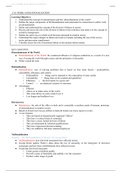
.C10: WORK AND RATIONALISATION
Learning Objectives
1. Understand the concept of rationalization and the “disenchantment of the world”.
2. Outline the major components of McDonaldization and understand its connections to earlier work
on rationalization
3. Define and understand the concept of the division of labour in society.
4. Discuss and assess the role of the division of labour in the workforce and relate it to the concept of
scientific management.
5. Outline the main ways in which work becomes alienated in modern society.
6. Understand the major changes in labour and work in Canada, including the rise of the service
sector and precarious employment
7. Critically assess the role of emotional labour in the modern labour market.
KEY CONCEPTS
Disenchantment of the World
● Disenchantment of the World: the weakened influence of religious authorities as a result of a new
way of seeing the world through science and the principles of rationality.
● Weber coined the term
Rationalisation
● Rationalisation: way of solving problems that is based on four main factors - predictability,
calculability, efficiency, and control.
○ Predictability → things can be repeated w/ the expectation of same results
○ Calculability → things that can be counted and quantified
○ Efficiency → the best means to a given end
○ Control → an enhanced certainty of outcomes
● Advantages:
○ Efficient
○ Allows us to make sense of the world
○ This sense allows us some control over it
○ Live longer and healthier lives
Bureaucracy
● Bureaucracy: the rule of the office or desk and is essentially a machine made of humans; prototype
of rationalisation in modern society.
● Based on French root bureau (officer or desk) & Greek root kratia (power or rule)
● 6 core features:
○ They are based on hierarchically organised “offices”
○ They have a vertical chain of command
○ They have a clear, formal division of labour
○ They are dominated by technical qualifications
○ They have impersonal decision-making
○ They are staffed by full-time, salaried employees
McDonaldisation
Reading: “The McDonaldization of Society” by George Ritzer
● McDonaldization: how fast-food restaurants have affected society.
● George Ritzer applies Weber’s ideas about the rise of rationality to the emergence of fast-food
restaurants and how these establishments have affected society
● Found that fast-food restaurants:
○ Create goods of uniform quality
○ Provide a sense of familiarity and stability over the consumer
○ Produce wider range of goods
, C10: WORK & RATIONALISATION
Irrationality of Rationality
● Irrationality of Rationality: rationalised systems can create negative outcomes.
● Ritzer highlights how rise in rationalisation can result in irrationality of rationality (e.g;
rationalisation of the education system where you have a student number and you are judged based
on your grades can make you frustrated)
● Disadvantages of Rationalisation & McDonaldization:
○ Disenchantment = disillusionment (less enchanted and magical, less meaningful - lack
creativity)
○ Produces focus on efficiency and calculability (e.g; see something w/ no value as money)
○ Produce large amount of waste
○ Food results in obesity and health problems
Commodification
● Commodities: products that have some monetary value, are standardised, and are mass-produced by
many different producers.
● Commodification: the transformation of what is normally a non-commodity into a commodity by
assigning it monetary value.
○ It is the process through which social relations are reduced to an exchange relation
○ Marx calls this “callous ‘cash payment.’”
● Commodification of Culture
○ Process can reduce ideas, customs, and behaviours to items that can be bought/sold (e.g;
aboriginal symbols have been commodified and appropriated by sports teams)
○ Removes original meaning and significance
Division of Labour
● Division of Labour: specialisation of labour into specific and distinct tasks.
● Society based on mechanical solidarity → little division of labour
● Society based on organic solidarity → more complex division of labour
● Advantages:
○ People w/ fewer skills can do each job (efficient & cheap)
○ Do not have to rely on only one worker
○ Able to use more machinery
Scientific Management
● Scientific Management: theory that applies scientific principles and methods to labour management
and involves creating divisions in the labour process.
● Developed by Frederick Taylor
○ Aimed to rationalise work & increase efficiency
○ Had a negative perspective of workers
● Further developed by Henry Ford
○ Developed modern method of mass-production (specifically the assembly line)
○ Practiced 2 main principles of SM:
■ #1: Standardisation of products
■ #2: Use of specialised equipment
○ Also had a negative perspective of workers
● Advantages:
○ Increased efficiency
○ Increased productivity
● Disadvantages:
○ Workers become dissatisfied (work environment & mistreated)
○ Automation (^ dissatisfaction)
○ Outsourcing (^ dissatisfaction)
.C10: WORK AND RATIONALISATION
Learning Objectives
1. Understand the concept of rationalization and the “disenchantment of the world”.
2. Outline the major components of McDonaldization and understand its connections to earlier work
on rationalization
3. Define and understand the concept of the division of labour in society.
4. Discuss and assess the role of the division of labour in the workforce and relate it to the concept of
scientific management.
5. Outline the main ways in which work becomes alienated in modern society.
6. Understand the major changes in labour and work in Canada, including the rise of the service
sector and precarious employment
7. Critically assess the role of emotional labour in the modern labour market.
KEY CONCEPTS
Disenchantment of the World
● Disenchantment of the World: the weakened influence of religious authorities as a result of a new
way of seeing the world through science and the principles of rationality.
● Weber coined the term
Rationalisation
● Rationalisation: way of solving problems that is based on four main factors - predictability,
calculability, efficiency, and control.
○ Predictability → things can be repeated w/ the expectation of same results
○ Calculability → things that can be counted and quantified
○ Efficiency → the best means to a given end
○ Control → an enhanced certainty of outcomes
● Advantages:
○ Efficient
○ Allows us to make sense of the world
○ This sense allows us some control over it
○ Live longer and healthier lives
Bureaucracy
● Bureaucracy: the rule of the office or desk and is essentially a machine made of humans; prototype
of rationalisation in modern society.
● Based on French root bureau (officer or desk) & Greek root kratia (power or rule)
● 6 core features:
○ They are based on hierarchically organised “offices”
○ They have a vertical chain of command
○ They have a clear, formal division of labour
○ They are dominated by technical qualifications
○ They have impersonal decision-making
○ They are staffed by full-time, salaried employees
McDonaldisation
Reading: “The McDonaldization of Society” by George Ritzer
● McDonaldization: how fast-food restaurants have affected society.
● George Ritzer applies Weber’s ideas about the rise of rationality to the emergence of fast-food
restaurants and how these establishments have affected society
● Found that fast-food restaurants:
○ Create goods of uniform quality
○ Provide a sense of familiarity and stability over the consumer
○ Produce wider range of goods
, C10: WORK & RATIONALISATION
Irrationality of Rationality
● Irrationality of Rationality: rationalised systems can create negative outcomes.
● Ritzer highlights how rise in rationalisation can result in irrationality of rationality (e.g;
rationalisation of the education system where you have a student number and you are judged based
on your grades can make you frustrated)
● Disadvantages of Rationalisation & McDonaldization:
○ Disenchantment = disillusionment (less enchanted and magical, less meaningful - lack
creativity)
○ Produces focus on efficiency and calculability (e.g; see something w/ no value as money)
○ Produce large amount of waste
○ Food results in obesity and health problems
Commodification
● Commodities: products that have some monetary value, are standardised, and are mass-produced by
many different producers.
● Commodification: the transformation of what is normally a non-commodity into a commodity by
assigning it monetary value.
○ It is the process through which social relations are reduced to an exchange relation
○ Marx calls this “callous ‘cash payment.’”
● Commodification of Culture
○ Process can reduce ideas, customs, and behaviours to items that can be bought/sold (e.g;
aboriginal symbols have been commodified and appropriated by sports teams)
○ Removes original meaning and significance
Division of Labour
● Division of Labour: specialisation of labour into specific and distinct tasks.
● Society based on mechanical solidarity → little division of labour
● Society based on organic solidarity → more complex division of labour
● Advantages:
○ People w/ fewer skills can do each job (efficient & cheap)
○ Do not have to rely on only one worker
○ Able to use more machinery
Scientific Management
● Scientific Management: theory that applies scientific principles and methods to labour management
and involves creating divisions in the labour process.
● Developed by Frederick Taylor
○ Aimed to rationalise work & increase efficiency
○ Had a negative perspective of workers
● Further developed by Henry Ford
○ Developed modern method of mass-production (specifically the assembly line)
○ Practiced 2 main principles of SM:
■ #1: Standardisation of products
■ #2: Use of specialised equipment
○ Also had a negative perspective of workers
● Advantages:
○ Increased efficiency
○ Increased productivity
● Disadvantages:
○ Workers become dissatisfied (work environment & mistreated)
○ Automation (^ dissatisfaction)
○ Outsourcing (^ dissatisfaction)