VATI RN COMPREHENSIVE PREDICTOR REMEDIATION QUESTIONS
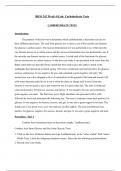
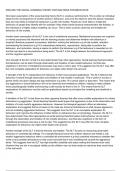
The nurse is reviewing a client's chart upon admission. The nurse notes the client has a Living Will, a Durable Power of Attorney and a prescription for 'allow a natural death' (AND). Define each type of Advance Directive. - Living will is a legal document that expresses the client’s wishes for medical treatment if the client were to become incapacitated and is facing end-of-life issues. - Durable power of attorney for health care is a document that appoints a person (health care proxy) to make decisions regarding the client’s health if they are unable to make decisions for his/herself - Provider’s orders means that if a provider does not write a “do not resuscitate” (DNR) or “allow natural death” (AND) order in the client’s medical chart, the nurse’s job is to begin CPR when the client does not have a pulse or respirations. The provider will consult the client and the family before administering a DNR or AND order. - Nursing role in advance directives is to provide written information about advance directives for the client and the family; document the client’s advance directives status; ensure that the advance directives reflect the client’s current decisions; inform all members of the health care team of the client’s advance directives. 2. A registered nurse (RN) is delegating tasks to an assistive personnel (AP). What are five (5) factors to consider when delegating tasks? - Predictability of the outcome – will the completion of the task have a predictable outcome? (Is it a routine treatment? Is it a new treatment for that client?) - Potential for harm – (Is there a chance that something negative could happen to the client (bleeding, aspiration)? Is the client unstable?) - Complexity of care – (Does the client’s care require complex tasks? Does the state’s practice act or the facility’s policy allow the delegate (AP) to perform the task, and does she have the necessary skills?) - Need for problem solving and innovation – (Is judgment essential while performing the task? Does it require nursing assessment or data-collection skills?) - Level of interaction with the client – (Does the delegate need psychosocial support or education during the performance of the task?) 3. A registered nurse (RN) at the beginning of the shift is delegating tasks to the licensed practical nurse (LPN) and the assistive personnel (AP). Identify five (5) tasks that the LPN can be delegated and five (5) tasks the AP can be delegated to complete during their shift. - Tasks that can be delegated to the LPN: monitoring findings as input to the RNs ongoing assessment); reinforcing client teaching from a standard care plan; performing tracheostomy care; suctioning; checking NG tube patency; administering enteral feedings; inserting a urinary catheter; administering medication (excluding IV medication in some states) - Tasks that can be delegated to the AP: activities of daily living (ADLs) [bathing, grooming, dressing, toileting, ambulating, feeding (without swallowing precautions, positioning)], routine tasks (bed making, specimen collection, intake and output, vital signs [for stable clients]) 4. A registered nurse (RN) has delegated tasks to the licensed practical nurse (LPN). What are characteristics of an effective delegator to manage task completion? - The five rights of delegation: tasks the delegate (right task), to whom (right person), wha
Written for
- Institution
- VATI RN COMPREHENSIVE PREDICTOR REMEDIATION
- Course
- VATI RN COMPREHENSIVE PREDICTOR REMEDIATION
Document information
- Uploaded on
- November 22, 2023
- Number of pages
- 6
- Written in
- 2023/2024
- Type
- Exam (elaborations)
- Contains
- Questions & answers
Subjects
-
vati rn comprehensive predictor remediation quizes