D276 WEB DEV FOUNDATIONS EXAM WITH COMPLETE SOLUTIONS 2024
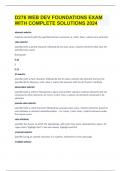
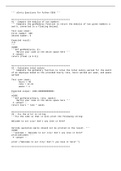
element selector matches elements with the specified element names.Ex: p { color: blue; } selects all p elements. class selector specified with a period character followed by the class name, matches elements that have the specified class name. Brainpower 0:07 / 0:15 ID selector specified with a hash character followed by the ID name, matches the element that has the specified ID.Ex: #byLine { color: blue; } selects the element with the id="byLine" attribute descendant selector specified with a selector followed by a space and another selector, matches elements that are contained in other elements. Ex: h2 em { color: blue; } selects em elements contained in h2 elements pseudo-class selector specified with a colon character followed by a pseudo-class name, matches elements based on user behavior or element metainformation -- Ex: :hover { color: blue; } selects elements under the mouse cursor class attribute specifies the classes to which the tag belongs, with each class name separated by a space. Ex: <span class="highlight first"> has two classes, highlight and first universal selector specified using an asterisk character (*), matches all elements in the web page multiple selector specified using a comma (,) to separate selectors, matches all listed elements to apply a style rule. whitespace character unprinted character such as the spaces between words and lines of text. Browsers treat all sequences of whitespace as a single space between non-whitespace characters. <br> break tag <em> tag indicates emphasized text, such as text having an emphasized pronunciation when spoken, and is italicized by default. <strong> tag indicates text that has strong importance, and is bolded by default <cite> tag denotes a title, such as a book or song title, and is italicized by default. <mark> tag denotes important content that should be semantically highlighted and is rendered with a yellow background by default. <b> tag indicates text that needs attention, like key words in a document abstract or product names in a review, and renders the text in bold. <i> tag indicates text in an alternative voice, such as a word or phrase in a foreign language, and is rendered using italics. Ex: Dashi is a stock used in Japanese cooking. <u> tag denotes text that should appear differently from normal text, such as misspelled words, and is underlined by default. Ex: Misspelled is often misspelled as mispelled. <var> tag Definition of a variable in a computer program nested list is a list within a list item of another list. Nested lists are indented inside the outer list. A nested unordered list uses a different bullet style, and a nested ordered list restarts at 1. table is an HTML structure surrounded by the <table> opening and closing tags that allows data to be organized in rows and columns. A cell is a location in the table at a specific row and column. <tr> opening and closing tags create a table row, which contains all the row's cells. <th> opening and closing tags create a new table cell containing table header information about the data. Usually, the browser displays table headers centered with a bold font. <td> opening and closing tags create a new table cell containing a table datum. caption defines a short descriptive text for a table and is created with <caption> tags. The caption opening and closing tags must immediately follow the opening table tag.
Written for
Document information
- Uploaded on
- November 18, 2023
- Number of pages
- 11
- Written in
- 2023/2024
- Type
- Exam (elaborations)
- Contains
- Questions & answers
Subjects
-
d276 web dev foundations exam

Also available in package deal