NRNP 6675 -15; NRNP 6675 Week 6 Midterm Exam 2022/23 100% solved -
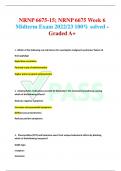
Graded A+ 1. Which of the following are risk factors for neuroleptic malignant syndrome? Select all that apply Age Rapid dose escalation Parental route of administration Higher potency typical antipsychotics 2. Antipsychotic medications provide D2 blockade in the mesocortical pathway causing which of the following effects? Reduces negative symptoms Increases extra pyramidal symptoms (EPS) Causes prolactinemia Reduces positive symptoms 3. Phencyclidine (PCP) and Ketamine exert their unique behavioral effects by blocking which of the following receptors? GABA type receptors Serotonin receptors Dopamine receptors NMDA type receptors 4. The diagnosis used to describe a syndrome characterized by specific signs and symptoms resulting from recent ingestion or exposure to a substance is known as which of the following? Substance intoxication Substance withdrawal Substance use disorder Any of the above 5. Abnormal involuntary movements in a rhythmic pattern affecting face, mouth, tongue, jaw is known as which of the following? Akathisi
a Dystoni
a Tardive dyskinesia Extrapyramidal side effects 6. A deeply held belief despite evidence to the contrary, lasting at least one month, without prominent hallucinations, with functional impairment that relates to the delusional syste..... Schizophrenia Delusional disorder Brief psychotic disorder Schizophreniform disorder
Graded A+ 1. Which of the following are risk factors for neuroleptic malignant syndrome? Select all that apply Age Rapid dose escalation Parental route of administration Higher potency typical antipsychotics 2. Antipsychotic medications provide D2 blockade in the mesocortical pathway causing which of the following effects? Reduces negative symptoms Increases extra pyramidal symptoms (EPS) Causes prolactinemia Reduces positive symptoms 3. Phencyclidine (PCP) and Ketamine exert their unique behavioral effects by blocking which of the following receptors? GABA type receptors Serotonin receptors Dopamine receptors NMDA type receptors 4. The diagnosis used to describe a syndrome characterized by specific signs and symptoms resulting from recent ingestion or exposure to a substance is known as which of the following? Substance intoxication Substance withdrawal Substance use disorder Any of the above 5. Abnormal involuntary movements in a rhythmic pattern affecting face, mouth, tongue, jaw is known as which of the following? Akathisi
a Dystoni
a Tardive dyskinesia Extrapyramidal side effects 6. A deeply held belief despite evidence to the contrary, lasting at least one month, without prominent hallucinations, with functional impairment that relates to the delusional syste..... Schizophrenia Delusional disorder Brief psychotic disorder Schizophreniform disorder