Introduction to the Cardiovascular System
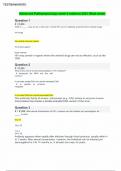
The cardiovascular system… (A) Aids in the transfer of heat energy from organs deep within the body to the outside environment (B) Comprises pulmonary and systemic circulations that are in parallel with each other (C) Transports carbon dioxide from the lungs to tissues within organs (D) Transports oxygen from individual cells to the lungs 2. Cardiac output of the right side of the heart is what percentage of the cardiac output of the left side of the heart? (A) 25% (B) 50% (C) 75% (D) 100% (E) 125% 3. A 22-year-old man with no history of congenital heart disease has a normal physical examination prior to entering the military. Which of the following characteristics is most similar in the systemic and pulmonary circulations of this patient? (A) Preload (B) Afterload (C) Peak systolic pressure (D) Blood volume (E) Stroke work 4. A patient with valve disease undergoes cardiac catheterization to compare vascular and intracardiac pressures against normal values. Which of the following is found in a heart with normal valve function? (A) Aortic diastolic pressure is less than pulmonary artery systolic pressure (B) Left ventricular end-diastolic pressure is less than mean right atrial pressure (C) Mean left atrial pressure is normally greater than mean right atrial pressure by < 10 mm Hg (D) Pulmonary artery diastolic pressure is less than mean right atrial pressure 5. The greatest pressure decrease in the circulation occurs across the arterioles because... (A) They have the greatest surface area (B) They have the greatest cross-sectional area (C) The velocity of blood flow through them is the highest (D) The velocity of blood flow thorough them is the lowest (E) They have the greatest resistance
Written for
- Institution
- Nursing
- Course
- Nursing
Document information
- Uploaded on
- November 14, 2023
- Number of pages
- 41
- Written in
- 2023/2024
- Type
- Exam (elaborations)
- Contains
- Questions & answers
Subjects
-
introduction to the cardiovascular system