Describe and evaluate research into minority influence
A01
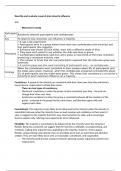
Moscovici’s study
Participant
Randomly selected participants and confederates
s
Aim To observe how minorities can influence a majority
• It was a lab experiment
• Participants were in a group where there were two confederates (the minority) and
four participants (the majority).
• Everyone was shown 36 blue slides, each with a different shade of blue.
• They were each asked to say whether the slide was blue or green.
Procedure
• Confederates deliberately said they were green on two-thirds of the trials, therefore
producing a consistent minority view.
• The number of times that the real participants reported that the slide was green was
observed.
• A control group was also used consisting of participants only – no confederates..
When the confederates were consistent in their answers about 8% of participants said
the slides were green. However, when the confederates answered inconsistently about
Findings
1% of participants said the slides were green. This shows that consistency is crucial for a
minority to exert maximum influence on a majority.
Consistency: if people in the minority are consistent with their views over time they will attract
more interest, makes others rethink their views.
There are two types of consistency:
o Diachronic consistency is when the group remains consistent over time – they do not
change their views over time.
o Synchronic consistency is when the group is consistent between all the members of the
group – everyone in the group has the same views, and therefore agree with and
support each other.
Commitment: The majority is more likely to be influenced by the minority when the minority is
committed, because when the minority have so much passion and confidence in their point of
view, it suggests to the majority that their view must somehow be valid, and it encourages
them to explore why; offering more opportunity to be influenced.
Flexibility: The majority is more likely to be influenced by the minority when the minority is
flexible. Being too consistent can suggest that the minority is inflexible, uncompromising, and
irrational, making their argument less appealing to the majority. However, if they appear
flexible, compromising, and rational, they are less likely to be seen as extremists and attention
seekers. They are more likely to be seen as reasonable, considerate, and cooperative.
o The minority need to have a balance between allowing counter arguments and the own
original view.
A01
Moscovici’s study
Participant
Randomly selected participants and confederates
s
Aim To observe how minorities can influence a majority
• It was a lab experiment
• Participants were in a group where there were two confederates (the minority) and
four participants (the majority).
• Everyone was shown 36 blue slides, each with a different shade of blue.
• They were each asked to say whether the slide was blue or green.
Procedure
• Confederates deliberately said they were green on two-thirds of the trials, therefore
producing a consistent minority view.
• The number of times that the real participants reported that the slide was green was
observed.
• A control group was also used consisting of participants only – no confederates..
When the confederates were consistent in their answers about 8% of participants said
the slides were green. However, when the confederates answered inconsistently about
Findings
1% of participants said the slides were green. This shows that consistency is crucial for a
minority to exert maximum influence on a majority.
Consistency: if people in the minority are consistent with their views over time they will attract
more interest, makes others rethink their views.
There are two types of consistency:
o Diachronic consistency is when the group remains consistent over time – they do not
change their views over time.
o Synchronic consistency is when the group is consistent between all the members of the
group – everyone in the group has the same views, and therefore agree with and
support each other.
Commitment: The majority is more likely to be influenced by the minority when the minority is
committed, because when the minority have so much passion and confidence in their point of
view, it suggests to the majority that their view must somehow be valid, and it encourages
them to explore why; offering more opportunity to be influenced.
Flexibility: The majority is more likely to be influenced by the minority when the minority is
flexible. Being too consistent can suggest that the minority is inflexible, uncompromising, and
irrational, making their argument less appealing to the majority. However, if they appear
flexible, compromising, and rational, they are less likely to be seen as extremists and attention
seekers. They are more likely to be seen as reasonable, considerate, and cooperative.
o The minority need to have a balance between allowing counter arguments and the own
original view.