Endocrine NCLEX questions nursing misc exam questions and answers graded A+
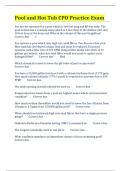
Endocrine NCLEX questions nursing misc exam questions and answers graded A+ 1. An agitated, confused female client arrives in the emergency department. Her history includes type 1 diabetes mellitus, hypertension, and angina pectoris. Assessment reveals pallor, diaphoresis, headache, and intense hunger. A stat blood glucose sample measures 42 mg/dl, and the client is treated for an acute hypoglycemic reaction. After recovery, nurse Lily teaches the client to treat hypoglycemia by ingesting: a. 2 to 5 g of a simple carbohydrate. b. 10 to 15 g of a simple carbohydrate. c. 18 to 20 g of a simple carbohydrate. d. 25 to 30 g of a simple carbohydrate. - B. To reverse hypoglycemia, the American Diabetes Association recommends ingesting 10 to 15 g of a simple carbohydrate, such as three to five pieces of hard candy, two to three packets of sugar (4 to 6 tsp), or 4 oz of fruit juice. If necessary, this treatment can be repeated in 15 minutes. Ingesting only 2 to 5 g of a simple carbohydrate may not raise the blood glucose level sufficiently. Ingesting more than 15 g may raise it above normal, causing hyperglycemia. 2. A female adult client with a history of chronic hyperparathyroidism admits to being noncompliant. Based on initial assessment findings, nurse Julia formulates the nursing diagnosis of Risk for injury. To complete the nursing diagnosis statement for this client, which "related-to" phrase should the nurse add? a. Related to bone demineralization resulting in pathologic fractures b. Related to exhaustion secondary to an accelerated metabolic rate c. Related to edema and dry skin secondary to fluid infiltration into the interstitial spaces d. Related to tetany secondary to a decreased serum calcium level - A. Poorly controlled hyperparathyroidism may cause an elevated serum calcium level. This, in turn, may diminish calcium stores in the bone, causing bone demineralization and setting the stage for pathologic fractures and a risk for injury. Hyperparathyroidism doesn't accelerate the metabolic rate. A decreased thyroid hormone level, not an increased parathyroid hormone level, may cause edema and dry skin secondary to fluid infiltration into the interstitial spaces. Hyperparathyroidism causes hypercalcemia, not hypocalcemia; therefore, it isn't associated with tetany. 3. Nurse John is assigned to care for a postoperative male client who has diabetes mellitus. During the assessment interview, the client reports that he's impotent and says he's concerned about its effect on his marriage. In planning this client's care, the most appropriate intervention would be to: a. Encourage the client to ask questions about personal sexuality. b. Provide time for privacy. c. Provide support for the spouse or significant other. d. Suggest referral to a sex counselor or other appropriate professional. - D. The nurse should refer this client to a sex counselor or other professional. Making appropriate referrals is a valid part of planning the client's care. The nurse doesn't normally provide sex counseling. 4. During a class on exercise for diabetic clients, a female client asks the nurse educator how often to exercise. The nurse educator advises the clients to exercise how often to meet the goals of planned exercise? a. At least once a week b. At least three times a week c. At least five times a week d. Every day - B. Diabetic clients must exercise at least three times a week to meet the goals of planned exercise — lowering the blood glucose level, reducing or maintaining the proper weight, increasing the serum high-density lipoprotein level, decreasing serum triglyceride levels, reducing blo
Written for
- Institution
- NCLEX
- Course
- NCLEX
Document information
- Uploaded on
- November 9, 2023
- Number of pages
- 30
- Written in
- 2023/2024
- Type
- Exam (elaborations)
- Contains
- Questions & answers
Subjects
-
endocrine nclex questions nursing misc exam questi

Also available in package deal