PCCN questions with correct answers
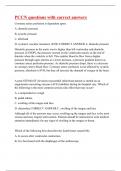
Coronary artery perfusion is dependent upon: A. diastolic pressure B. systolic pressure C. afterload D. systemic vascular resistance (SVR) CORRECT ANSWER A. diastolic pressure Diastolic pressure in the aortic root is higher than left ventricular end-diastolic pressure (LVEDP), the pressure exerted on the ventricular muscle at the end of diastole when the ventricle is full. This enables blood to flow from a higher pressure through open arteries to a lower pressure, a pressure gradient known as coronary artery prefusion pressure. As diastolic pressure drops, there is a decrease in coronary artery blood flow. Coronary artery perfusion is not affected by systolic pressure, afterload or SVR, but they all increase the demand of oxygen in the heart. A post-STEMI (ST elevation myocardial infarction) patient is started on an angiotensin-converting enzyme (ACE) inhibitor during his hospital stay. Which of the following is the most common serious side effect that may occur? A. a nonproductive cough B. pedal edema C. swelling of the tongue and face D. rhinorrhea CORRECT ANSWER C. swelling of the tongue and face Although all of the answers may occur, swelling og the tongue and face is the most serious and may require intervention. Patients should be instructed to seek medical attention immediately for any signs of swelling in the tongue or throat. Which of the following best describes the fourth heart sound (S4): A. It occurs after ventricular contraction B. It is best heard with the diaphragm of the stethoscope C. It is a normal finding in children
Written for
- Institution
- PCCN
- Course
- PCCN
Document information
- Uploaded on
- November 2, 2023
- Number of pages
- 90
- Written in
- 2023/2024
- Type
- Exam (elaborations)
- Contains
- Questions & answers
Subjects
-
pccn questions with correct answers

Also available in package deal