Sport psychology – Lecture 1
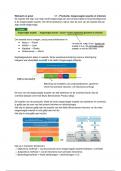
1st Learning goal: overview of the study field of sport psychology
What is Sport psychology?
• Effects of psychological factors on sport-related behavior, performance and well being
• (Performance, Psychological skills, Motivation, Well-being etc.)
• Relationship between those concepts; Antecedents & consequences (cognitive,
affective and behavioral)
studying sport psychology:
• Sport psychology can be applied differently (biological sciences, social sciences,
psychology, exercise physiology, sport sociology etc.)
• Psychophysiological Orientation (effect of imagery/brain activity)
• Social-psychological Orientation (team level, team cohesion etc.)
• Cognitive-Behavioral Orientation (effects of imagery on performance)
1) Individualistic approach -> Person
2) Situational approach -> Environment
3) Interactionist approach -> Person x Environment
History of sport psychology:
• Researchers were not sport psychologist but socialist or behaviorist
• Zajonc -> social facilitation (effect of audience on performance/ increased arousal
level)
•
2nd Learning goal: explain different factors that are studied in SP in order to understand
(theory) and reach (practice) Peak performance in sport.
How do psychological skills contribute to performance?
- Development of certain mental skills are necessary to
1) Perform optimally in challenging situations.
2) Experience personal highlights
3) Develop full potential.
Peak performance
-> a state of exceptional functioning
Interaction of 3 things:
1) Individual differences (Motivation, self-efficacy etc.)
, 2) Environmental factors (coach-effectiveness, team, support,
opportunities)
3) Psychological skills (Goal, setting, attentional focus,
imagery, relaxation etc.)
➔ The mental part plays an important role in peak
performance
3rd Learning goal: understand and describe underlying
framework of X-model
x-model of sport behavior:
1. Sport Situation:
• Task Demands (what must be done, which task)
• Task circumstances -> fluctuating/changing factor (environmental
circumstances such as pitch, ball, weather etc.)
• Task-conditions -> more stable factors/ requirements (rules, time regulations,
rewards etc.)
• Task-relations (Team, solo, coach-relations etc.)
2. Person/ Athlete:
➔ Psychophysiological state
• Stable/habitual characteristics (physical, technical, psychological, tactical)
• Variable/momentaneous characteristics (current capacity at a certain event)
➔ Actual vs. required characteristics
• Actual (IST-situation) -> what are the actual KSAO’s?
• Required (Soll-situation) -> what are the required KSAO’s?
, 3. Sport behavior:
• Effort (psychological & physiological)
• Strategy/ tactics/ action plan
• Movement Behavior
Action theory (analyzing sport behavior)
➔ The development of psychological functions as well as psychological traits
states, and processes are considered fundamentally related to action.
➔ Argues that sport activity is always performed directed to a goal
➔ Action-regulation function
➔ Breaking down the task hierarchically in sub-components
➔ Personal factors: which ones affect which component ?
4. Sport Outcomes:
• Performance (result of box 3)
Objective (time, distance etc.)
Subjective: Execution (jury, gymnastics etc.)
Combination
• Results (translation of performance in points)
Game result
➔ Same performance can lead to different result depending on performance of
others
5. Outcomes for person:
• Positive (game pleasure, competence etc.)
• Negative (fatigue, injury, depression, anxiety)
➔ Feedback loops: performance outcomes can influence the antecedents for the
next time
, Lecture 2 – motor learning
Sport psychology
Control of motor actions: The degrees of freedom problem
• Problem: there are many degrees of freedom in the motor system. They need to be
reduced or controlled such that effective control of motor movement is possible
• The human body has an immense amount of degrees of freedom (over 100 joints, 750
muscles, over 10.00 motor units)
• Flexibility & controllability are playing an important role
Solution (according to Bernstein):
➔ Motor learning (control of the many degrees of freedom) is the SOLUTION
First stage:
• Some degrees of freedom are temporarily ‘frozen’
• Leaving out some body parts on active control
Second stage:
• Slowly increasing the number of degrees of freedom that are actively involved in
control of motor movement
Third stage:
• Forces related to the movement are incorporated in active control and execution of the
movement
Stages of learning (Fitts & Posner):
1) Verbal-cognitive stage
- Beginner stage / learning the basics
- Verbal & cognitive processes (especially working memory) are dominant
- Attention on verbalization of task -> translating into motor movement
- Verbal memory is stored only temporarily in WM
- Role of coach -> emphasis on instruction
2) Associative-motor stage
- Attention on refinement of the skill (skill refinement)
- Kinesthetic skill -> getting a feeling for what is the right performance/ which
movements feels right
- Picking up own errors & correcting -> skill because a new organized skill
- Feedback needs to be specific & concise
- Role of coach: skill refinement/ quality of movement
3) Autonomous stage:
- Automatic movement execution without much attentional processes/ conscious
knowledge
- Automatic switching to another movement, anticipation of actions of opponents
- Committed to long-term memory
- Daily tasks such as walking/ cycling or experts in sport
1st Learning goal: overview of the study field of sport psychology
What is Sport psychology?
• Effects of psychological factors on sport-related behavior, performance and well being
• (Performance, Psychological skills, Motivation, Well-being etc.)
• Relationship between those concepts; Antecedents & consequences (cognitive,
affective and behavioral)
studying sport psychology:
• Sport psychology can be applied differently (biological sciences, social sciences,
psychology, exercise physiology, sport sociology etc.)
• Psychophysiological Orientation (effect of imagery/brain activity)
• Social-psychological Orientation (team level, team cohesion etc.)
• Cognitive-Behavioral Orientation (effects of imagery on performance)
1) Individualistic approach -> Person
2) Situational approach -> Environment
3) Interactionist approach -> Person x Environment
History of sport psychology:
• Researchers were not sport psychologist but socialist or behaviorist
• Zajonc -> social facilitation (effect of audience on performance/ increased arousal
level)
•
2nd Learning goal: explain different factors that are studied in SP in order to understand
(theory) and reach (practice) Peak performance in sport.
How do psychological skills contribute to performance?
- Development of certain mental skills are necessary to
1) Perform optimally in challenging situations.
2) Experience personal highlights
3) Develop full potential.
Peak performance
-> a state of exceptional functioning
Interaction of 3 things:
1) Individual differences (Motivation, self-efficacy etc.)
, 2) Environmental factors (coach-effectiveness, team, support,
opportunities)
3) Psychological skills (Goal, setting, attentional focus,
imagery, relaxation etc.)
➔ The mental part plays an important role in peak
performance
3rd Learning goal: understand and describe underlying
framework of X-model
x-model of sport behavior:
1. Sport Situation:
• Task Demands (what must be done, which task)
• Task circumstances -> fluctuating/changing factor (environmental
circumstances such as pitch, ball, weather etc.)
• Task-conditions -> more stable factors/ requirements (rules, time regulations,
rewards etc.)
• Task-relations (Team, solo, coach-relations etc.)
2. Person/ Athlete:
➔ Psychophysiological state
• Stable/habitual characteristics (physical, technical, psychological, tactical)
• Variable/momentaneous characteristics (current capacity at a certain event)
➔ Actual vs. required characteristics
• Actual (IST-situation) -> what are the actual KSAO’s?
• Required (Soll-situation) -> what are the required KSAO’s?
, 3. Sport behavior:
• Effort (psychological & physiological)
• Strategy/ tactics/ action plan
• Movement Behavior
Action theory (analyzing sport behavior)
➔ The development of psychological functions as well as psychological traits
states, and processes are considered fundamentally related to action.
➔ Argues that sport activity is always performed directed to a goal
➔ Action-regulation function
➔ Breaking down the task hierarchically in sub-components
➔ Personal factors: which ones affect which component ?
4. Sport Outcomes:
• Performance (result of box 3)
Objective (time, distance etc.)
Subjective: Execution (jury, gymnastics etc.)
Combination
• Results (translation of performance in points)
Game result
➔ Same performance can lead to different result depending on performance of
others
5. Outcomes for person:
• Positive (game pleasure, competence etc.)
• Negative (fatigue, injury, depression, anxiety)
➔ Feedback loops: performance outcomes can influence the antecedents for the
next time
, Lecture 2 – motor learning
Sport psychology
Control of motor actions: The degrees of freedom problem
• Problem: there are many degrees of freedom in the motor system. They need to be
reduced or controlled such that effective control of motor movement is possible
• The human body has an immense amount of degrees of freedom (over 100 joints, 750
muscles, over 10.00 motor units)
• Flexibility & controllability are playing an important role
Solution (according to Bernstein):
➔ Motor learning (control of the many degrees of freedom) is the SOLUTION
First stage:
• Some degrees of freedom are temporarily ‘frozen’
• Leaving out some body parts on active control
Second stage:
• Slowly increasing the number of degrees of freedom that are actively involved in
control of motor movement
Third stage:
• Forces related to the movement are incorporated in active control and execution of the
movement
Stages of learning (Fitts & Posner):
1) Verbal-cognitive stage
- Beginner stage / learning the basics
- Verbal & cognitive processes (especially working memory) are dominant
- Attention on verbalization of task -> translating into motor movement
- Verbal memory is stored only temporarily in WM
- Role of coach -> emphasis on instruction
2) Associative-motor stage
- Attention on refinement of the skill (skill refinement)
- Kinesthetic skill -> getting a feeling for what is the right performance/ which
movements feels right
- Picking up own errors & correcting -> skill because a new organized skill
- Feedback needs to be specific & concise
- Role of coach: skill refinement/ quality of movement
3) Autonomous stage:
- Automatic movement execution without much attentional processes/ conscious
knowledge
- Automatic switching to another movement, anticipation of actions of opponents
- Committed to long-term memory
- Daily tasks such as walking/ cycling or experts in sport