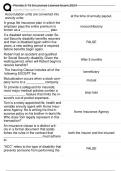
= Has already Come Up on a previous paper
(Although unlikely to repeat specification points on questions,
please don’t entirely rule this out!)
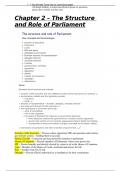
Chapter 2 – The Structure
and Role of Parliament
Scrutiny of the Executive = Process where opposition MPs ask questions and criticise
government actions – holding them to account
House of Lords = Unelected and least powerful chamber in parliament
House of Commons = Elected chamber of Parliament, where most power lies
MP = Person formally and directly elected by voters to sit in the House of Commons
Lord = Member of the House of Lords, unelected and chosen for life
Peer = Another term for a Lord
Delegate = Elected official authorised as a mouthpiece for their constituents
, Trustee = Elected official who takes into account the needs of their constituents before
exercising their own judgement
Burkean or Trustee Theory = Elected officials are purely representatives of voters
Delegate Theory = MPs are bound by the wishes of their constituents
Mandate Theory = MPs are primarily in their position to represent and carry out their party’s
policies and manifestos
Parliamentary Privilege = Exemption of MPs and Peers from the laws of slander to uphold
principle of free speech within parliament
Opposition = Parties not in government
Legislation = Measures put before parliament that, once passed, become law
Debate = discussions in the main chamber that take place during the passage of a bill
Redress of Grievances = process where individuals can approach MPs with complaints about
government and its agencies (e.g., local councils)
Campaign = Working in an organised way towards a political goal
Referendum = A direct public vote on a policy measure
Areas that have already come up:
2019 – Parliament being an effective check on the executive
2020 – Influences on MPs when voting in Commons
2021 – House of Lords
2022 – Official Opposition challenging Commons
(Although unlikely to repeat specification points on questions,
please don’t entirely rule this out!)
Chapter 2 – The Structure
and Role of Parliament
Scrutiny of the Executive = Process where opposition MPs ask questions and criticise
government actions – holding them to account
House of Lords = Unelected and least powerful chamber in parliament
House of Commons = Elected chamber of Parliament, where most power lies
MP = Person formally and directly elected by voters to sit in the House of Commons
Lord = Member of the House of Lords, unelected and chosen for life
Peer = Another term for a Lord
Delegate = Elected official authorised as a mouthpiece for their constituents
, Trustee = Elected official who takes into account the needs of their constituents before
exercising their own judgement
Burkean or Trustee Theory = Elected officials are purely representatives of voters
Delegate Theory = MPs are bound by the wishes of their constituents
Mandate Theory = MPs are primarily in their position to represent and carry out their party’s
policies and manifestos
Parliamentary Privilege = Exemption of MPs and Peers from the laws of slander to uphold
principle of free speech within parliament
Opposition = Parties not in government
Legislation = Measures put before parliament that, once passed, become law
Debate = discussions in the main chamber that take place during the passage of a bill
Redress of Grievances = process where individuals can approach MPs with complaints about
government and its agencies (e.g., local councils)
Campaign = Working in an organised way towards a political goal
Referendum = A direct public vote on a policy measure
Areas that have already come up:
2019 – Parliament being an effective check on the executive
2020 – Influences on MPs when voting in Commons
2021 – House of Lords
2022 – Official Opposition challenging Commons