TOPIC 16: REPRODUCTION
16.1 ASEXUAL REPRODUCTION
→Asexual reproduction: a process resulting in the production of genetically identical offspring from one parent.
-Asexual reproduction does not involve sex cells or fertilisation.
-Only one parent is required so there is no fusion of gametes and no mixing of genetic information
-As a result, the offspring are genetically identical to the parent and to each other (clones)
i.e. BACTERIA
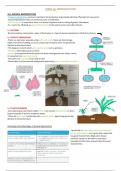
-Bacteria produce exact genetic copies of themselves in a type of asexual reproduction called binary fission:
i.e. PLANTS (TUBERS/BUDS)
-Plants can reproduce asexually using bulbs and tubers; these are food storage
organs from which budding can occur, producing new plants which are genetically
identical to the parent plant.
-This happens in plants which grow underground such as potatoes.
-Swellings called tubers grow on them.
-Sucrose is transported from the leaves into these underground stem tubers, where
its converted into starch and stored.
-The tubers are harvested to be used as food.
-These tubers are then planted underground where they grow a new identical plant.
i.e. PLANTS (RUNNERS)
-Some plants grow side shoots called runners that contain tiny plantlets on them
(a good example of this are strawberry plants.
-These will grow roots and develop into separate plants, again being genetically
identical to the parent plant.
Advantages & Disadvantages of Asexual Reproduction
-Specifically, in crop plants, asexual reproduction
can be advantageous as it means that a plant that
has good characteristics (high yield, disease-
resistant, hardy) can be made to reproduce
asexually and the entire crop will show the same
characteristics
, 16.2 SEXUAL REPRODUCTION
→Sexual reproduction: a process involving the fusion of the nuclei of two gametes (sex cells) to form a zygote (fertilised egg
cell) and the production of offspring that are genetically different from each other.
→Fertilisation: the fusion of gamete nuclei, and as each gamete comes from a different parent, there is variation in the offspring
-In sexual reproduction, the parent organism produces sex cells called gametes. (i.e. egg and sperm cells)
-Two gametes join in fertilisation to form a zygote.
Gametes & Zygotes
-A gamete is a sex cell (in animals: sperm and ovum; in plants pollen nucleus and ovum)
-Gametes differ from normal cells as they contain half the number of chromosomes found in other body cells – we say they have
a haploid nucleus
-This is because they only contain one copy of each chromosome, rather than the two copies found in other body cells
-In human beings, a normal body cell contains 46 chromosomes but each gamete contains 23 chromosomes
-When the male and female gametes fuse, they become a zygote (fertilised egg cell)
-This contains the full 46 chromosomes, half of which came from the father and half from the mother – we say the zygote has a
diploid nucleus.
Advantages & Disadvantages of Sexual Reproduction
-Most crop plants reproduce sexually and this is an advantage as it means variation is increased and a genetic variant may be
produced which is better able to cope with weather changes, or produces significantly higher yield
-The disadvantage is that the variation may lead to offspring that are less successful than the parent plant at growing well or
producing a good harvest
16.3 SEXUAL REPRODUCTION IN PLANTS
-Flowers are the reproductive organ of the plant
-They usually contain both male and female reproductive parts
-Plants produce pollen which contains a nucleus inside that is the male gamete
-Unlike the male gamete in humans (sperm), pollen is not capable of locomotion (moving from one place to another)
-This means plants have to have mechanisms in place to transfer pollen from the anther to the stigma
-This process is known as pollination and there are two main mechanisms by which it occurs: transferred by insects (or other
animals like birds) or transferred by wind.
-The structure of insect and wind-pollinated flowers is slightly different as each is adapted for their specific function.
16.1 ASEXUAL REPRODUCTION
→Asexual reproduction: a process resulting in the production of genetically identical offspring from one parent.
-Asexual reproduction does not involve sex cells or fertilisation.
-Only one parent is required so there is no fusion of gametes and no mixing of genetic information
-As a result, the offspring are genetically identical to the parent and to each other (clones)
i.e. BACTERIA
-Bacteria produce exact genetic copies of themselves in a type of asexual reproduction called binary fission:
i.e. PLANTS (TUBERS/BUDS)
-Plants can reproduce asexually using bulbs and tubers; these are food storage
organs from which budding can occur, producing new plants which are genetically
identical to the parent plant.
-This happens in plants which grow underground such as potatoes.
-Swellings called tubers grow on them.
-Sucrose is transported from the leaves into these underground stem tubers, where
its converted into starch and stored.
-The tubers are harvested to be used as food.
-These tubers are then planted underground where they grow a new identical plant.
i.e. PLANTS (RUNNERS)
-Some plants grow side shoots called runners that contain tiny plantlets on them
(a good example of this are strawberry plants.
-These will grow roots and develop into separate plants, again being genetically
identical to the parent plant.
Advantages & Disadvantages of Asexual Reproduction
-Specifically, in crop plants, asexual reproduction
can be advantageous as it means that a plant that
has good characteristics (high yield, disease-
resistant, hardy) can be made to reproduce
asexually and the entire crop will show the same
characteristics
, 16.2 SEXUAL REPRODUCTION
→Sexual reproduction: a process involving the fusion of the nuclei of two gametes (sex cells) to form a zygote (fertilised egg
cell) and the production of offspring that are genetically different from each other.
→Fertilisation: the fusion of gamete nuclei, and as each gamete comes from a different parent, there is variation in the offspring
-In sexual reproduction, the parent organism produces sex cells called gametes. (i.e. egg and sperm cells)
-Two gametes join in fertilisation to form a zygote.
Gametes & Zygotes
-A gamete is a sex cell (in animals: sperm and ovum; in plants pollen nucleus and ovum)
-Gametes differ from normal cells as they contain half the number of chromosomes found in other body cells – we say they have
a haploid nucleus
-This is because they only contain one copy of each chromosome, rather than the two copies found in other body cells
-In human beings, a normal body cell contains 46 chromosomes but each gamete contains 23 chromosomes
-When the male and female gametes fuse, they become a zygote (fertilised egg cell)
-This contains the full 46 chromosomes, half of which came from the father and half from the mother – we say the zygote has a
diploid nucleus.
Advantages & Disadvantages of Sexual Reproduction
-Most crop plants reproduce sexually and this is an advantage as it means variation is increased and a genetic variant may be
produced which is better able to cope with weather changes, or produces significantly higher yield
-The disadvantage is that the variation may lead to offspring that are less successful than the parent plant at growing well or
producing a good harvest
16.3 SEXUAL REPRODUCTION IN PLANTS
-Flowers are the reproductive organ of the plant
-They usually contain both male and female reproductive parts
-Plants produce pollen which contains a nucleus inside that is the male gamete
-Unlike the male gamete in humans (sperm), pollen is not capable of locomotion (moving from one place to another)
-This means plants have to have mechanisms in place to transfer pollen from the anther to the stigma
-This process is known as pollination and there are two main mechanisms by which it occurs: transferred by insects (or other
animals like birds) or transferred by wind.
-The structure of insect and wind-pollinated flowers is slightly different as each is adapted for their specific function.