TOPIC 9: TRANSPORT IN ANIMALS
9.1 CIRCULATION
→Circulatory system: the system of blood vessels with a pump and valves to ensure one-way flow of blood
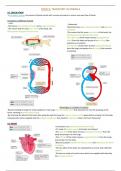
Circulation in Different Animals
→Fish: →Mammals:
-Fish have a two-chambered heart and a single circulation -Mammals have a four-chambered heart and a double
-This means that for every one circuit of the body, the circulation
blood passes through the heart once. -This means that for every one circuit of the body, the
blood passes through the heart twice
-The right side of the heart receives deoxygenated
blood from the body and pumps it to the lungs (the
pulmonary circulation)
-The left side of the heart receives oxygenated blood
from the lungs and pumps it to the body (the systemic
circulation)
Advantages of a Double Circulation
-Blood travelling through the small capillaries in the lungs loses a lot of pressure that was given to it by the pumping of the
heart, meaning it cannot travel as fast
-By returning the blood to the heart after going through the lungs its pressure can be raised again before sending it to the body,
meaning cells can be supplied with the oxygen and glucose they need for respiration faster and more frequently
9.2 HEART
-Its function is to pump blood around the body
-It’s made of cardiac muscle (contracts and relaxes).
-The right side of the heart receives deoxygenated blood from the
body and pumps it to the lungs.
-The left side of the heart receives oxygenated blood from the lungs
and pumps it to the body
-Blood is pumped towards the heart in veins and away from the heart
in arteries
-The two sides of the heart are separated by a muscle wall called the
septum
-The heart is made of muscle tissue which are supplied with blood by
the coronary arteries
, Heart Structure
-The ventricles have thicker muscle walls than the atria as they are pumping blood out of the heart and so need to generate a
higher pressure
-The left ventricle has a thicker muscle wall than the right ventricle as it has to pump blood at high pressure around the entire
body, whereas the right ventricle is pumping blood at lower pressure to the lungs
-The septum separates the two sides of the heart and so prevents mixing of oxygenated and deoxygenated blood
The Function of Valves
-The basic function of all valves is to prevent blood flowing backwards
-There are two sets of valves in the heart:
→The atrioventricular valves separate the atria from the ventricles
-The valve in the right side of the heart is called the TRICUSPID and the valve in the left side is called the BICUSPID
-These valves are pushed open when the atria contract but when the ventricles contract they are pushed shut to
prevent blood flowing back into the atria
→The semilunar valves are found in the two blood arteries that come out of the top of the heart
-They are unusual in that they are the only two arteries in the body that contain valves
-These valves open when the ventricles contract so blood squeezes past them out of the heart, but then shut to avoid
blood flowing back into the heart
Pathway of Blood through the Heart
1) Deoxygenated blood coming from the body flows into the right atrium via the vena cava
2) Once the right atrium has filled with blood the heart gives a little beat and the blood is pushed through the tricuspid
(atrioventricular) valve into the right ventricle
3) The walls of the ventricle contract and the blood is pushed into the pulmonary artery through the semilunar valve
which prevents blood flowing backwards into the heart
4) The blood travels to the lungs and moves through the capillaries past the alveoli where gas exchange takes place (this
is why there has to be low pressure on this side of the heart – blood is going directly to capillaries which would burst
under higher pressure)
5) Oxygen-rich blood returns to the left atrium via the pulmonary vein
6) It passes through the bicuspid (atrioventricular) valve into the left ventricle
7) The thicker muscle walls of the ventricle contract strongly to push the blood forcefully into the aorta and all the way
around the body
8) The semilunar valve in the aorta prevents the blood flowing back down into the heart
9.3 HEART DISEASE & EXERCISE
-Heart activity can be monitored by using an ECG (electrocardiograph: electrodes stuck to body), measuring pulse rate or
listening to the sounds of valves closing using a stethoscope.
-Heart rate (and pulse rate) is measured in beats per minute (bpm)
-To investigate the effects of exercise on heart rate:
1) record the pulse rate at rest for a minute
2) Immediately after they do some exercise
3) Record the pulse rate every minute until it returns to the resting rate
-This experiment will show that during exercise the heart rate increases and may take several minutes to return to normal
Why does Heart Rate Increase during Exercise?
-So that sufficient blood is taken to the working muscles to provide them with enough nutrients and oxygen for increased
respiration
-An increase in heart rate also allows for waste products to be removed at a faster rate
-Following exercise, the heart continues to beat faster for a while to ensure that all excess waste products are removed from
muscle cells.
-It is also likely that muscle cells have been respiring anaerobically during exercise and so have built up an oxygen debt
-This needs to be ‘repaid’ following exercise and so the heart continues to beat faster to ensure that extra oxygen is still being
delivered to muscle cells
-The extra oxygen is used to break down the lactic acid that has been built up in cells as a result of anaerobic respiration.
9.1 CIRCULATION
→Circulatory system: the system of blood vessels with a pump and valves to ensure one-way flow of blood
Circulation in Different Animals
→Fish: →Mammals:
-Fish have a two-chambered heart and a single circulation -Mammals have a four-chambered heart and a double
-This means that for every one circuit of the body, the circulation
blood passes through the heart once. -This means that for every one circuit of the body, the
blood passes through the heart twice
-The right side of the heart receives deoxygenated
blood from the body and pumps it to the lungs (the
pulmonary circulation)
-The left side of the heart receives oxygenated blood
from the lungs and pumps it to the body (the systemic
circulation)
Advantages of a Double Circulation
-Blood travelling through the small capillaries in the lungs loses a lot of pressure that was given to it by the pumping of the
heart, meaning it cannot travel as fast
-By returning the blood to the heart after going through the lungs its pressure can be raised again before sending it to the body,
meaning cells can be supplied with the oxygen and glucose they need for respiration faster and more frequently
9.2 HEART
-Its function is to pump blood around the body
-It’s made of cardiac muscle (contracts and relaxes).
-The right side of the heart receives deoxygenated blood from the
body and pumps it to the lungs.
-The left side of the heart receives oxygenated blood from the lungs
and pumps it to the body
-Blood is pumped towards the heart in veins and away from the heart
in arteries
-The two sides of the heart are separated by a muscle wall called the
septum
-The heart is made of muscle tissue which are supplied with blood by
the coronary arteries
, Heart Structure
-The ventricles have thicker muscle walls than the atria as they are pumping blood out of the heart and so need to generate a
higher pressure
-The left ventricle has a thicker muscle wall than the right ventricle as it has to pump blood at high pressure around the entire
body, whereas the right ventricle is pumping blood at lower pressure to the lungs
-The septum separates the two sides of the heart and so prevents mixing of oxygenated and deoxygenated blood
The Function of Valves
-The basic function of all valves is to prevent blood flowing backwards
-There are two sets of valves in the heart:
→The atrioventricular valves separate the atria from the ventricles
-The valve in the right side of the heart is called the TRICUSPID and the valve in the left side is called the BICUSPID
-These valves are pushed open when the atria contract but when the ventricles contract they are pushed shut to
prevent blood flowing back into the atria
→The semilunar valves are found in the two blood arteries that come out of the top of the heart
-They are unusual in that they are the only two arteries in the body that contain valves
-These valves open when the ventricles contract so blood squeezes past them out of the heart, but then shut to avoid
blood flowing back into the heart
Pathway of Blood through the Heart
1) Deoxygenated blood coming from the body flows into the right atrium via the vena cava
2) Once the right atrium has filled with blood the heart gives a little beat and the blood is pushed through the tricuspid
(atrioventricular) valve into the right ventricle
3) The walls of the ventricle contract and the blood is pushed into the pulmonary artery through the semilunar valve
which prevents blood flowing backwards into the heart
4) The blood travels to the lungs and moves through the capillaries past the alveoli where gas exchange takes place (this
is why there has to be low pressure on this side of the heart – blood is going directly to capillaries which would burst
under higher pressure)
5) Oxygen-rich blood returns to the left atrium via the pulmonary vein
6) It passes through the bicuspid (atrioventricular) valve into the left ventricle
7) The thicker muscle walls of the ventricle contract strongly to push the blood forcefully into the aorta and all the way
around the body
8) The semilunar valve in the aorta prevents the blood flowing back down into the heart
9.3 HEART DISEASE & EXERCISE
-Heart activity can be monitored by using an ECG (electrocardiograph: electrodes stuck to body), measuring pulse rate or
listening to the sounds of valves closing using a stethoscope.
-Heart rate (and pulse rate) is measured in beats per minute (bpm)
-To investigate the effects of exercise on heart rate:
1) record the pulse rate at rest for a minute
2) Immediately after they do some exercise
3) Record the pulse rate every minute until it returns to the resting rate
-This experiment will show that during exercise the heart rate increases and may take several minutes to return to normal
Why does Heart Rate Increase during Exercise?
-So that sufficient blood is taken to the working muscles to provide them with enough nutrients and oxygen for increased
respiration
-An increase in heart rate also allows for waste products to be removed at a faster rate
-Following exercise, the heart continues to beat faster for a while to ensure that all excess waste products are removed from
muscle cells.
-It is also likely that muscle cells have been respiring anaerobically during exercise and so have built up an oxygen debt
-This needs to be ‘repaid’ following exercise and so the heart continues to beat faster to ensure that extra oxygen is still being
delivered to muscle cells
-The extra oxygen is used to break down the lactic acid that has been built up in cells as a result of anaerobic respiration.