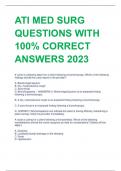
ATI MED SURG QUESTIONS WITH 100% CORRECT ANSWERS 2023
ATI MED SURG QUESTIONS WITH 100% CORRECT ANSWERS 2023 A nurse is collecting data from a client following a bronchoscopy. Which of the following findings should the nurse report to the provider? A. Blood-tinged sputum B. Dry, nonproductive cough C. Sore throat D. Bronchospasms - ANSWERS A. Blood-tinged sputum is an expected finding following a bronchoscopy. B. A dry, nonproductive cough is an expected finding following a bronchoscopy. C. A sore throat is an expected finding following a bronchoscopy. D. CORRECT: Bronchospasms can indicate the client is having difficulty maintaining a patent airway. Notify the provider immediately. A nurse is caring for a client following a thoracentesis. Which of the following manifestations should the nurse recognize as risks for complications? (Select all that apply.) A. Dyspnea B. Localized bloody drainage on the dressing C. Fever D. Hypotension E. Report of pain at the puncture site - ANSWERS A. CORRECT: Dyspnea can indicate a pneumothorax or a reaccumulation of fluid. Notify the provider immediately. B. Localized bloody drainage contained on a dressing is an expected finding following a thoracentesis. C. CORRECT: Fever can indicate an infection. Notify the provider immediately. D. CORRECT: Hypotension can indicate intrathoracic bleeding. Notify the provider immediately. E. The client's report of pain at the puncture site is an expected finding following a thoracentesis. A nurse is caring for a client who has a chest tube and drainage system in place. The nurse observes that the chest tube was accidentally removed. Which of the following actions should the nurse take first? A. Obtain a chest x-ray. B. Apply sterile gauze or occlusive dressing to the insertion site. C. Place tape around the insertion site. D. Monitor respiratory status. - ANSWERS A. Obtaining a chest x-ray determines if the lung is inflated or if the client has a pneumothorax after the chest tube was accidentally pulled out is an appropriate action, but it is not the first action. B. CORRECT: Using the airway, breathing, and circulation (ABC) priority-setting framework, application of a sterile gauze to the site should be the first action to take. This allows air to escape and reduces the risk for development of a tension pneumothorax. C. Placing tape around the insertion site ensures that the sterile gauze remains intact and is an appropriate action, but it is not the first action. D. Monitoring respiratory status is an appropriate action, but it is not the first action. A nurse is collecting data from a client who has a chest tube and drainage system in place. Which of the following are expected findings? (Select all that apply) A. Continuous bubbling in the water seal chamber. B. Gentle constant bubbling in the suction control chamber C. Rise and fall in the level of water in the water seal chamber with inspiration and expiration D. Exposed sutures without dressing E. Drainage system upright at chest level - ANSWERS A. Continuous bubbling in the water seal chamber indicates an air leak. B. CORRECT: Gentle bubbling in the suction control chamber is an expected finding as air is being removed. C. CORRECT: A rise and fall of the fluid level in the water seal chamber upon inspiration and expiration indicates that the drainage system is functioning properly. D. Cover the sutures at the insertion site with an airtight dressing. E. The drainage system should be maintained in an upright position below the level of the client's chest. A nurse is assisting a provider with the removal of a chest tube. Which of the following actions should the nurse take? A. Instruct the client to lie prone with arms by the sides B. Complete a surgical checklist on the client. C. Remind the client that there is minimal discomfort during the removal process. D. Place an occlusive dressing over the site once the tube is removed. - ANSWERS A. The position the client should assume during removal of a chest tube depends upon the location of the insertion site. The client would need to ensure the arm Is not covering the ribs on the side of insertion. B. Chest tubes are removed by the provider at the client's bedside. C. Removal of a chest tube can be painful. D. CORRECT: Place an occlusive dressing over the site once A nurse is caring for a client who has a new prescription for oxygen therapy of 4 L/min using a nasal cannula. Which of the following actions should the nurse take? A. Provide humidification. B. Remove the cannula during meal times. C. Establish an alternative means of communication. D. Lubricate the nares with 0.9% sodium chloride. - ANSWERS A. CORRECT: Humidification should be provided for flow rates of 3 L/min or greater. B. The client is able to eat while the nasal cannula is in place. C. The client is able to talk and communicate while the cannula is in place. D. Use water-soluble gel to prevent dry nares. A nurse is caring for a client who is experiencing respiratory distress. Which of the following early manifestations of hypoxemia should the nurse recognize? (Select all that apply.) A. Confusion B. Pale skin C. Bradycardia D. Hypotension E. Elevated blood pressure - ANSWERS A. Confusion is a late manifestation of hypoxemia. B. CORRECT: Pale skin is an early manifestation of hypoxemia. C. Bradycardia is a late manifestation of hypox
Written for
- Institution
- ATI MED SURG
- Course
- ATI MED SURG
Document information
- Uploaded on
- October 12, 2023
- Number of pages
- 31
- Written in
- 2023/2024
- Type
- Exam (elaborations)
- Contains
- Questions & answers
Subjects
-
ati med surg questions with 100 correct
-
ati med surg questions with 100 correct answers

Also available in package deal