

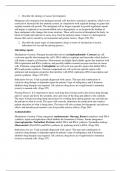
1. Describe the etiology of cancer development. Malignant cells originate from damaged normal cells that have sustained a mutation, which is not corrected or destroyed by the immune system, in conjunction with acquired damage to genes that regulate normal cell growth . The malignant cell no longer responds to growth regulation signals and begins to replicate at an uncontrollab le rate in hyperplasia, or in dysplasia the buildup of these malignant cells changes the tissue structure. These cells can travel throughout the body via blood or lymph and replicate in areas away from the primary tumor. Cancer is a heterogenous disease that can be caused by environmental and genetic factors. (Pages 250 -251) 2. Describe the major types of antineoplastic drugs in terms of mechanism of action, indications for use and the nursing process. Alkylating Agents Mechanism of action: Nitrogen mustard derivatives ( cyclophosphamide - Cytoxan) are cell cycle non -specific that interrupt the cell’s DNA ability to replicate and transcribe which leads to cell death or impairs cell function. Nitrosoureas are highly lipid soluble agents that interfere with DNA replication and RNA synthesis, and possibly inhibit essential enzyme reactions in cancer cells. Platinum compounds ( Carboplatin ) are cell cycle non -specific agents that inhibit DNA, RNA and protein synthesis. Triazene compounds are c ell cycle non -specific agents with antitumor and mutagenic prop erties that interfere with DNA replication , RNA transcription and protein synthesis. (Pages 253 -256) Indications for use: Used in people diagnosed with cancer. The type and combination of cytotoxic drug therapy is dependent upon the patient’s type of malignancy and if hormone inhibitor drug therapies are required. All cytotoxic drug doses are weight based to minimize toxicity to normal cells. (Page 257) Nursing Process: It is important to know each drug that is being used in the chosen drug therapy plan for cancer and know the schedule, dose and route of the drug and adhere to the schedule. The nurse will prevent drug -drug interactions by avoiding them during patient care and educate the patient on what to avoid. The nurse will correctly administer the medication and conduct patient education of what is being done. The nurse will also evaluate for therapeutic and adverse effects and introduce preventative care for possible adverse effects. (Page 268) Antimetabolites Mechanism of action: Folate antagonist ( methotrexate - Otrexup, Rasuvo ) interferes with DNA synthesis, repair and replication which inhibits the formation of folates. Purine antagonists (mercaptopurine - Purinethol, Purixan ) inhibit DNA and RNA synthesis. Pyrimidine analogs (fluorouracil ) affect DNA and RNA synthesis by replacing uracil in RNA. (Page 256) Indications for use: Used in people diagnosed with cancer. The type and combination of cytotoxic drug therapy is dependent upon the patient’s type of malignancy and if hormone inhibitor drug therapies are required. All cytotoxic drug doses are weight based to minimize toxicity to normal cells. (Page 257)
Preview 1 out of 3 pages
Other
Pharmacology, RNSG 1301, Chapter 14 Objectives- Questions and Answers
Preview 1 out of 3 pages
Document includes the questions and answers for Chapter 14 Objectives in Abrams' Clinical Drug Therapy (ISBN-13: 9781975136130) textbook, and answers include page numbers. This textbook is used in Pharmacology RNSG 1301 at El Paso Community College.
Content preview
Connected book
Document information
- Uploaded on
- October 11, 2023
- Number of pages
- 3
- Written in
- 2023/2024
- Type
- Other
- Person
- Unknown
$8.49
Wrong document? Swap it for free
Within 14 days of purchase and before downloading, you can choose a different document. You can simply spend the amount again.
Written by students who passed
Immediately available after payment
Read online or as PDF


