10/10/23, 8:01 AM P Hysics 1A03 - Midterm 2 Review
Midterm 2 - Test Review
Lectures 5A/B (Forces)
1. Forces
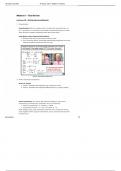
Force: A vector representing an interaction between two objects which influences
their motion (and can be produced with OR without contact). Some forces include:
a. Normal (N) - The force perpendicular to a surface that keeps an object from
falling through
b. Tension (T) - The force directed along a taut rope/string (tension is the same
along the whole rope!)
c. Friction (f) - The force parallel to a surface that prevents an object from
sliding
d. Gravity (w or Fg)
e. Spring Force (Fs) - The force that tries to restore a pulled spring to its
equilibrium (original) position: its magnitude = kx
2. Newton’s Laws
Laws of Motion
1. If an object’s acceleration is 0, the net force is 0 (Fnet = 0)
2. If an object’s acceleration ISN’T 0, F = ma
3. Forces occur in pairs - two objects will exert equal but opposite forces on
each other
3. Friction
Static Friction (fS): When an object isn’t moving, the friction force is equal to the
force being applied. The maximum static friction possible (when the object is
about to move) is equal to usN
Kinetic Friction (fK): When an object is moving, the friction force is equal to ukN -
this is slightly less than the maximum static friction force possible!
Lectures 6A/B (Work, Energy, Power)
1. Energy/Work
Energy: The capacity to do work. Energy is measured in Joules, and can be
transferred between different forms (when energy is transferred, the object’s
motion changes!):
a. Kinetic Energy (K) - The energy a moving object has due to its motion
b. Potential Energy (U) - The energy an object has stored due to its position
about:blank 1/3
Midterm 2 - Test Review
Lectures 5A/B (Forces)
1. Forces
Force: A vector representing an interaction between two objects which influences
their motion (and can be produced with OR without contact). Some forces include:
a. Normal (N) - The force perpendicular to a surface that keeps an object from
falling through
b. Tension (T) - The force directed along a taut rope/string (tension is the same
along the whole rope!)
c. Friction (f) - The force parallel to a surface that prevents an object from
sliding
d. Gravity (w or Fg)
e. Spring Force (Fs) - The force that tries to restore a pulled spring to its
equilibrium (original) position: its magnitude = kx
2. Newton’s Laws
Laws of Motion
1. If an object’s acceleration is 0, the net force is 0 (Fnet = 0)
2. If an object’s acceleration ISN’T 0, F = ma
3. Forces occur in pairs - two objects will exert equal but opposite forces on
each other
3. Friction
Static Friction (fS): When an object isn’t moving, the friction force is equal to the
force being applied. The maximum static friction possible (when the object is
about to move) is equal to usN
Kinetic Friction (fK): When an object is moving, the friction force is equal to ukN -
this is slightly less than the maximum static friction force possible!
Lectures 6A/B (Work, Energy, Power)
1. Energy/Work
Energy: The capacity to do work. Energy is measured in Joules, and can be
transferred between different forms (when energy is transferred, the object’s
motion changes!):
a. Kinetic Energy (K) - The energy a moving object has due to its motion
b. Potential Energy (U) - The energy an object has stored due to its position
about:blank 1/3