Genito-Urinary System Disorders-Renal calculus
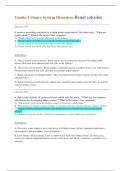
Genito-Urinary System Disorders-Renal calculus ________________________________________ Question 259: A nurse is providing education to a client about renal calculi. The client asks, "What are renal calculi?" What is the nurse's best response? A. "Renal calculi are bacterial infections in the kidneys." B. "Renal calculi are kidney stones made of mineral and acid salts." C. "Renal calculi are benign tumors that form in the kidneys." D. "Renal calculi are blood clots that block the urinary tract." Explanation A. This is not the correct answer. Renal calculi are not bacterial infections but rather solid masses that form from mineral and acid salts in the kidneys. B. This is the correct answer. Renal calculi, commonly known as kidney stones, are solid masses formed from mineral and acid salts that accumulate in the kidneys. C. Renal calculi are not benign tumors. They are distinct from tumors and do not have the same characteristics. D. Renal calculi are not blood clots. Blood clots can block the urinary tract, but they are not the same as kidney stones. ________________________________________ Question 260: A client with a history of recurrent renal calculi asks the nurse, "What are the common risk factors for developing kidney stones?" What is the nurse's best response? A. "The primary risk factor for kidney stones is excessive water intake." B. "Risk factors for kidney stones include a sedentary lifestyle and low dietary calcium intake." C. "Family history, high protein diet, and dehydration are common risk factors for kidney stones." D. "Kidney stones are mostly caused by consuming too many fruits and vegetables." Explanation A. Excessive water intake is not a risk factor for kidney stones. In fact, adequate hydration is encouraged to prevent kidney stone formation. B. Low dietary calcium intake is not a common risk factor for kidney stones. In some cases, excessive calcium supplementation may be a risk factor, but dietary calcium is generally not a concern.
Written for
- Institution
- Genito-Urinary System Disorders-Renal calculus
- Course
- Genito-Urinary System Disorders-Renal calculus
Document information
- Uploaded on
- October 9, 2023
- Number of pages
- 28
- Written in
- 2023/2024
- Type
- Exam (elaborations)
- Contains
- Questions & answers
Subjects
- renal calculus
-
genito urinary system disorders renal calculus

Also available in package deal