Genito-Urinary System Disorders - Chronic renal failure
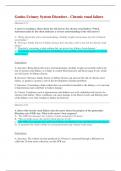
Genito-Urinary System Disorders - Chronic renal failure ________________________________________ Question 121: A nurse is teaching a client about the risk factors for chronic renal failure. Which statement made by the client indicates a correct understanding of the risk factors? A. "Being physically active and maintaining a healthy weight can increase my risk of chronic renal failure." B. "Having a family history of kidney disease does not play a role in my risk for chronic renal failure." C. "Regularly consuming a high-sodium diet can protect my kidneys from damage." D. "Conditions such as hypertension and diabetes can contribute to the development of chronic renal failure." Explanation A. Incorrect. Being physically active and maintaining a healthy weight can actually reduce the risk of chronic renal failure, as it helps to control blood pressure and blood sugar levels, which are risk factors for kidney disease. B. Incorrect. Having a family history of kidney disease can increase the risk of chronic renal failure, as genetics can play a role in the development of kidney problems. C. Incorrect. Consuming a high-sodium diet can actually be harmful to the kidneys, as it can lead to hypertension and contribute to kidney damage. D. Correct. Conditions such as hypertension and diabetes are well-established risk factors for chronic renal failure. These conditions can cause damage to the blood vessels and filtering units of the kidneys over time, leading to kidney dysfunction. ________________________________________ Question 122: A client with chronic renal failure asks the nurse about the purpose of the glomerular filtration rate (GFR) test. What is the nurse's best response? A. "The GFR test measures the volume of urine produced in 24 hours." B. "This test helps assess the client's blood glucose levels." C. "The GFR test evaluates how well your kidneys are filtering waste and fluids from the blood." D. "It measures the client's ability to excrete potassium and sodium in the urine." Explanation A. Incorrect. The volume of urine produced in 24 hours is measured through a different test called the 24-hour urine collection, not the GFR test.
Written for
- Institution
- GenitoUrinary SYS Disorders-Chronic renal failure
- Course
- GenitoUrinary SYS Disorders-Chronic renal failure
Document information
- Uploaded on
- October 9, 2023
- Number of pages
- 28
- Written in
- 2023/2024
- Type
- Exam (elaborations)
- Contains
- Questions & answers
Subjects
- chronic renal failure
-
genitourinary sys disorderse chronic renal failure
-
genito urinary system disorders

Also available in package deal