Speculative Betas
HARRISON HONG and DAVID A. SRAER
Low-beta stocks outperformed high beta stocks over the past 30 years.
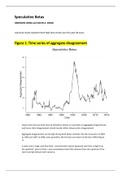
Figure 1. Time series of aggregate disagreement
- Stocks with very low beta have by definition almost no sensitivity to aggregate disagreement,
and hence their disagreement should mostly reflect idiosyncratic disagreement.
- Aggregate disagreement can be high during both down-markets, like the recessions of 1981
to 1982 and 2007 to 2008, and upmarkets, like the dot-com boom of the late 1990s (Figure
1).
- A stock with a large cash flow beta—and therefore whose expected cash flow is high from
the optimists’ point of view—may nonetheless have little demand from the optimists if the
stock has high idiosyncratic variance.
, - In equilibrium, this low demand from optimists will drive down the price and make
pessimists long this asset.
I. Model
A. Static Setting
Setting of the economy
- We consider an economy populated with a continuum of investors of mass one.
- There are two periods, t = 0, 1.
- There are N risky assets and the risk-free rate is exogenously set at r.
- Risky asset i delivers a dividend d˜i at date 1, which is given by
- The common factor in stock i’s dividend is z˜
- The idiosyncratic component in stock i’s dividend is €˜i,
- The cash flow beta of asset i is bi and assumed to be strictly positive
- Each asset i is in supply si = 1/N and we assume w.l.o.g. that:
- Assets in the economy are indexed by their cash flow betas, which are increasing in i.
, - Investors are divided into two groups.
- Investors in group A are the optimists and investors in group B the pessimists.
- Alpha are the arbitrageurs.
- group A optimists who think that earnings will increase and negative are
Group B the pessimists who think that earnings will decrease.
- - represents disagreement
- Investors maximize their date-1 wealth and have mean-variance preferences:
Where and is investors’ risk tolerance.
- Investors in group A or B maximize under the constraint that their holding of stocks has to be
greater than zero.
, B. Equilibrium
- Alpha are the arbitrageurs.
- The main intuition underlying the equilibrium is that there is more disagreement among
investors about the expected dividends of high-bi assets relative to low-bi assets
- These high-b stocks thus experience a speculative premium since their price reflects
disproportionately the belief of the optimists, that is, investors in group A.
- As aggregate disagreement grows, the cash flow beta of the marginal asset—the asset above
which group B investors are sidelined—decreases and a larger fraction of assets experiences
overpricing.
When short-sales constraints are binding the difference between the equilibrium price and
the price that would prevail in the absence of short-sales constraints is given by:
HARRISON HONG and DAVID A. SRAER
Low-beta stocks outperformed high beta stocks over the past 30 years.
Figure 1. Time series of aggregate disagreement
- Stocks with very low beta have by definition almost no sensitivity to aggregate disagreement,
and hence their disagreement should mostly reflect idiosyncratic disagreement.
- Aggregate disagreement can be high during both down-markets, like the recessions of 1981
to 1982 and 2007 to 2008, and upmarkets, like the dot-com boom of the late 1990s (Figure
1).
- A stock with a large cash flow beta—and therefore whose expected cash flow is high from
the optimists’ point of view—may nonetheless have little demand from the optimists if the
stock has high idiosyncratic variance.
, - In equilibrium, this low demand from optimists will drive down the price and make
pessimists long this asset.
I. Model
A. Static Setting
Setting of the economy
- We consider an economy populated with a continuum of investors of mass one.
- There are two periods, t = 0, 1.
- There are N risky assets and the risk-free rate is exogenously set at r.
- Risky asset i delivers a dividend d˜i at date 1, which is given by
- The common factor in stock i’s dividend is z˜
- The idiosyncratic component in stock i’s dividend is €˜i,
- The cash flow beta of asset i is bi and assumed to be strictly positive
- Each asset i is in supply si = 1/N and we assume w.l.o.g. that:
- Assets in the economy are indexed by their cash flow betas, which are increasing in i.
, - Investors are divided into two groups.
- Investors in group A are the optimists and investors in group B the pessimists.
- Alpha are the arbitrageurs.
- group A optimists who think that earnings will increase and negative are
Group B the pessimists who think that earnings will decrease.
- - represents disagreement
- Investors maximize their date-1 wealth and have mean-variance preferences:
Where and is investors’ risk tolerance.
- Investors in group A or B maximize under the constraint that their holding of stocks has to be
greater than zero.
, B. Equilibrium
- Alpha are the arbitrageurs.
- The main intuition underlying the equilibrium is that there is more disagreement among
investors about the expected dividends of high-bi assets relative to low-bi assets
- These high-b stocks thus experience a speculative premium since their price reflects
disproportionately the belief of the optimists, that is, investors in group A.
- As aggregate disagreement grows, the cash flow beta of the marginal asset—the asset above
which group B investors are sidelined—decreases and a larger fraction of assets experiences
overpricing.
When short-sales constraints are binding the difference between the equilibrium price and
the price that would prevail in the absence of short-sales constraints is given by: