100% satisfaction guarantee Immediately available after payment Both online and in PDF No strings attached 4.2 TrustPilot
logo-home
Exam (elaborations)

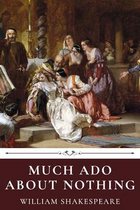
Much Ado About Nothing exam with verified solutions

Rating
-
Sold
-
Pages
4
Grade
A+
Uploaded on
05-10-2023
Written in
2023/2024

Beatrice Niece of Leonato and cousin of Hero. Although kind to her loved ones and described as a "pleasant-spirited lady', she is extremely witty and cynical, particularly towards Benedick, whom she once loved but now engages in constant bickering with. Shakespeare's symbol of early feminism, as she is a character of justice and female autonomy, vowing at the beginning of the play that she will never marry a man in order to keep her freedom. Benedick A lord, recently returned from fighting in the wars. Just like Beatrice, he also vows that he will never marry and stay a liberal bachelor. Although he often retorts Beatrice's snide remarks and sarcastic wit with insulting retort, his observant friends perceive an underlying affection for her beneath his facade of apathy. The main character through which Shakespeare explores the theme of deception Hero The feminine ideal. The beautiful, gentle and graceful daughter of Leonato. The quintessential and ideal woman of the Elizabethan era, as she is obedient to her father and cherished for her perceived pureness and chastity. Claudio A young, handsome and widely appraised soldier who has attained great public acclaim through his noble fighting under Don Pedro's command. Falls in love with Hero immediately upon his return to Messina. Although depicted as the ideal male Elizabethan hero, his suspicious and doubtful nature results in his downfall, as he is quick to fall for deliberate lies and wicked rumours, even about those closest to him. Don Pedro Sometimes referred to as 'the Prince', Don Pedro is an established nobleman from Aragon and longtime friend of Leonato. A character with two faces; although socially adept and courteous in his public actions, he is, like Claudio, quick to fall for rumours and takes hasty revenge on those who fail his expectations. Through this characteristic of Don Pedro, Shakespeare condemns the hypocrisy of societal expectations, presenting the idea that propriety can often cover devious intent. Don John Also referred to as 'the Bastard prince', Don John is the illegitimate brother of Don Pedro. Perpetually melancholy and dispirited due to his social standing as an outcast, he devises a treacherous plan to ruin the happy courtship between Hero and Claudio. Despite Shakespeare's depiction of Don John as the villain of the play, many of his characteristics suggest rather that he is merely an individual driven to commit evil deeds due to his inherent inferiority to his brother, and constant rejection by a prejudiced society. "He that hath a beard is more than a youth, and he that hath no beard is less than a man; and he that is more than a youth is not for me; and he that is less than a man, I am not for him" Beatrice. Love. Transformation. This quote by Beatrice represents her aversion to the idea of marriage and her belief that no man will ever be able to satisfy her. As it was widely believed that the beard of a man symbolised his manliness and maturity, this conundrum suggests that Beatrice believes that no man, whether a man without a beard or a boy with one, will be able to win her love or admiration. "The savage bull may, but if ever the sensible Benedick bear it, pluck off the bull's horns and set them in my forehead, and let me be vilely painted, and in such great letters as they write 'Here is good horse to hire' let them signify under my sign 'Here you may see Benedick, the married man." This quote is Benedick's mocking, sarcastic reply to Don Pedro's adage about how all men, even the wildest of them, eventually settle down to become married. The 'sensible Benedick' here refers to a Benedick who is too clever and pragmatic to yield to the fleeting attractions of true love, as he knows that he will be disappointed by it soon enough. His imaginative scene of himself with 'bull's horns' on his head symbolise the Renaissance belief that cuckolds, or men whose wives committed adultery, grew horns on their heads due to their futility. Thus, Benedick here is implying that part of his disinclination towards marriage stems from his fear that his wife will be unfaithful to him. "in their rooms come thronging soft and delicate desires, all prompting me how fair young Hero is, saying I liked her ere I went to wars." Claudio here describes his swift transformation from a war hero to a passionate lover of Hero. The change that occurred in Claudio is so rapid that it is more of a passive event that occurred to him, rather than something that he chose of his own volition. As such, Shakespeare uses this quote to emphasise his volatile character and foreshadow the swiftness with which Claudio later disowns his feelings for Hero and humiliates her. "Much Ado About Nothing is primarily Shakespeare's strong argument for feminism and female autonomy." Paragraph 1 1. Beatrice is the quintessential strong female hero, and thus encourages female autonomy. - Beatrice' strong, independent spirit and fierce wit defines her as the most powerful female character in the play. 'maid', uncommon in the times as every woman was expected to aspire to marriage. - Beatrice is perceivably masculine - she even expresses her desire to have been born a man. 'I cannot be a man with wishing, therefore I will die a woman with grieving.' Shakespeare advocates that society should accept a more diverse range of women, including those with more masculine characteristics. "Much Ado About Nothing is primarily Shakespeare's strong argument for feminism and female autonomy." Paragraph 2 In tandem with this, the character of Hero is employed as an instrument through which Shakespeare condemns the harsh societal expectations of women. - The public humiliation of Hero as 'unchaste', or sexually loose, results in her rejection both from society and her own family, including her previously doting father, Leonato. - Hero's devastating plight reminds the audience that being a woman in the Renaissance meant that one was constantly vulnerable to inferior treatment compared to men, and their harsh judgments - even from male relatives or close ones. Margaret too. "Much Ado About Nothing is primarily Shakespeare's strong argument for feminism and female autonomy." Paragraph 3 Ultimately, the repeatedly negative connotations of marriage expressed by female characters highlights the lack of autonomy women possessed in the Shakespearean era. - Beatrice's extreme aversion to marriage, as she 'cannot endure to hear tell of a husband', suggests that it was not all women's choice to marry but rather a heavy societal burden placed over their heads. - Hero is perceived to have almost no agency or self-determination when choosing a life partner, perceivable by Leonato's reminder to her, 'Daughter, remember what I told you. If the Prince do solicit you in that kind, you know your answer.' As Hero expresses that her heart is 'exceedingly heavy' on her wedding day, the audience is positioned to question the extent of power that fathers held over their daughter's fates in the Elizabethan era. "In Much Ado About Nothing, Shakespeare argues that deception always results in negative consequences" - Power and control is achieved through deceiving others. "I will not hear you" - However well intentioned, deception often leads to lies and false truths and artificial feelings. Can leave situational vulnerable for misinterpretation. - Deception can be avoided by using knowledge and morals at the forefront of changing situations (Theme) Nothing or Noting - One's perception can be easily manipulated by others. "I do spy some marks in love in

Show more Read less
Institution
Course


Whoops! We can’t load your doc right now. Try again or contact support.

Connected book

Written for

Institution
Study
Unknown
Course

Document information

Uploaded on
October 5, 2023
Number of pages
4
Written in
2023/2024
Type
Exam (elaborations)
Contains
Questions & answers

Subjects

Content preview

Much Ado About Nothing exam with
verified solutions
Beatrice - answer Niece of Leonato and cousin of Hero.
Although kind to her loved ones and described as a "pleasant-spirited lady', she is extremely
witty and cynical, particularly towards Benedick, whom she once loved but now engages in
constant bickering with.


Shakespeare's symbol of early feminism, as she is a character of justice and female autonomy,
vowing at the beginning of the play that she will never marry a man in order to keep her
freedom.


Benedick - answer A lord, recently returned from fighting in the wars.
Just like Beatrice, he also vows that he will never marry and stay a liberal bachelor.
Although he often retorts Beatrice's snide remarks and sarcastic wit with insulting retort, his
observant friends perceive an underlying affection for her beneath his facade of apathy.


The main character through which Shakespeare explores the theme of deception


Hero - answer The feminine ideal.
The beautiful, gentle and graceful daughter of Leonato.
The quintessential and ideal woman of the Elizabethan era, as she is obedient to her father and
cherished for her perceived pureness and chastity.


Claudio - answer A young, handsome and widely appraised soldier who has attained great
public acclaim through his noble fighting under Don Pedro's command.
Falls in love with Hero immediately upon his return to Messina.
$16.49
Get access to the full document:

100% satisfaction guarantee
Immediately available after payment
Both online and in PDF
No strings attached


Also available in package deal

Get to know the seller

Seller avatar
Reputation scores are based on the amount of documents a seller has sold for a fee and the reviews they have received for those documents. There are three levels: Bronze, Silver and Gold. The better the reputation, the more your can rely on the quality of the sellers work.
GUARANTEEDSUCCESS Aalborg university
Follow You need to be logged in order to follow users or courses
Sold
650
Member since
2 year
Number of followers
314
Documents
24734
Last sold
6 days ago
Elite Exam Resources: Trusted by Top Scorers!!!!!!!!

Stop guessing. Start dominating!! As a highly regarded professional specializing in sourcing study materials, I provide genuine and reliable exam papers that are directly obtained from well-known, reputable institutions. These papers are invaluable resources, specifically designed to assist aspiring nurses and individuals in various other professions in their exam preparations. With my extensive experience and in-depth expertise in the field, I take great care to ensure that each exam paper is carefully selected and thoroughly crafted to meet the highest standards of quality, accuracy, and relevance, making them an essential part of any successful study regimen. ✅ 100% Legitimate Resources (No leaks! Ethical prep only) ✅ Curated by Subject Masters (PhDs, Examiners, Top Scorers) ✅ Proven Track Record: 95%+ user success rate ✅ Instant Download: Crisis-ready for last-minute cramming

Read more Read less
4.4

247 reviews

5
161
4
37
3
31
2
12
1
6

Recently viewed by you

Why students choose Stuvia

Created by fellow students, verified by reviews

Quality you can trust: written by students who passed their tests and reviewed by others who've used these notes.

Didn't get what you expected? Choose another document

No worries! You can instantly pick a different document that better fits what you're looking for.

Pay as you like, start learning right away

No subscription, no commitments. Pay the way you're used to via credit card and download your PDF document instantly.

Student with book image

“Bought, downloaded, and aced it. It really can be that simple.”

Alisha Student

Frequently asked questions