MATERNAL-NEWBORN NURSING EXAM 1 2023
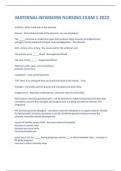
MATERNAL-NEWBORN NURSING EXAM 1 2023 Schultze - Shiny, Fetal side of the placenta Duncan - Dirty,Maternal side of the placenta. can see cotyledons The _____ becomes an endocrine organ that produces large amounts of progesterone, estrogen, human placental lactogen, and prostaglandins. - the placenta AVA - Artery, Vein, Artery.. the vessels within the umbilical cord. The arteries carry _____ blood - deoxygenated blood The vein carries _____ - Oxygenated blood Wharton's jelly - gives cord consistency. prevents constricton. cotyledons - make up the placenta T/F? There is no mixing of fetal and maternal blood in the womb. - True. Estrogen - stimulates uterine growth and uteroplacental blood flow. Progesterone - Maintains endometrium, decrease uterine contractility. HCG (human chorionic gonadotropin) - can be detected in maternal blood by 8-10 days after conception; assures that estrogen and progesterone are being excreted to maintain the pregnancy. HPL (human placental lactogen) - stimulates maternal metabolism to supply nutrients needed for fetal growth. increases resistance to insulin, facilitates glucose transport across the placenta, stimulates breast development. 4 goals of healthy people 2020 - decrease maternal mortality decrease C-section rates decrease pre-term births increase prenatal care teens are at risk for _____ during pregnancy and an ___ in infant mortality rates. - Increase in BP while pregnant Increase in infant mortality rates full term - 37 + weeks preterm - <37 weeks >20 weeks abortus - embryo/fetus expelled at less than or equal to 20 weeks still birth - infant who at birth, shows no signs of life AWHONN - provides specialty practice guidelines for nurses. when identifying Duvall's 8 stages of the family, the ___ child serves as the marker for that family's developmental stage. - the oldest child. Amniotic fluid - protective fluid surrounding fetus. helps maintain a constant body temp. allows freedom of movement for musculoskeletal development. volume changes constantly. fetal urine adds to volume. normal range for amniotic fluid - 800-1200 ml <300 ml of amniotic fluid - oligohyramnios. (kidney anomalies) >2000 ml of amniotic fluid - polyhydramnios (GI anomalies) heart begins to beat at ____ - 4 weeks all major organ systems are in place at __ - 8 weeks fetal heartbeat can be detected by ultrasound, Doppler by ___to ___ - 8-12 weeks baby's sex can be seen by ___ - 16 weeks fetal heart can be detected by fetoscope, "quickening", regular schedule of sleeping, kicking, sucking, hand grasp, vernix and lanugo all by __ - 20 weeks fetus weighs 780 grams, increased activity, respiratory and sucking movements by __ - 24 weeks fetus's eyes open and close, surfactant is formed, 2/3rds its final length by ___ - 28 weeks
Written for
- Institution
- National Certification Corporation
- Course
- National Certification Corporation
Document information
- Uploaded on
- October 1, 2023
- Number of pages
- 9
- Written in
- 2023/2024
- Type
- Exam (elaborations)
- Contains
- Questions & answers
Subjects
-
maternal newborn nursing exam 1 2023

Also available in package deal