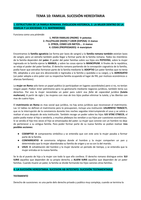
TEMA 10: FAMILIA. SUCESIÓN HEREDITARIA
1. ESTRUCTURA DE LA FAMILA ROMANA. EVOLUCION HISTORICA, 2. LA MUJER DENTRO DE LA
FAMILIA Y LA SOCIEDAD. Y 3. MATRIMONIO.
Funciona como una pirámide:
1. PATER FAMILIAS (PADRE) → potestas
2. FILLI/FILLIAE (HIJOS) Y UXOR (ESPOSA) → manus
3. OTROS, COMO LOS NIETOS... → manus
4. COSAS (PROPIEDADES) → mancipium
Encontramos la familia agnaticia (se forma por lazos de sangre) y la familia romana también existían lazos
de sangre, pero un extraño también podía llegar a formar parte de la familia romana. Todos los miembros
de la familia dependen del pater. El poder del pater familias sobre sus hijos era POTESTAS, sobre la mujer
ingresada en la familia ejerce la MANUS, y sobre las cosas ejerce la MANCIPIUM. A finales de la república,
se relaja el poder del pater familias. El derecho romano partiendo de la concepción cognaticia de la familia,
podía hacer que extraños formaran parte de la familia mediante la ADOPTIO (un pater familias que no tenia
filli, adoptaba a uno que era desconocido e ingresaba a la familia y quedaba a su cargo), y la ADROGATIO
(un pater adopta a otro pater con su respectiva familia ocupando el lugar de filli, por motivos económicos o
alianzas familiares).
La mujer en Roma solo tiene un papel publico (si participaban en lugares sacerdotales) pero si no, no tenían
ningún papel. Podían tener patrimonio pero no gestionarlo mediante negocios jurídicos, también tenía sus
derechos. Por eso la mujer necesitaba un pater para cubrir esa falta de capacidad jurídica (tutela
mulierum). A partir de siglo I, las mujeres con mas de tres hijos podían eliminar la tutela, y las libertas con
mas de cuatro hijos.
El matrimonio en Roma es mas social que jurídico, no hay actos jurídicos que reconozcan el matrimonio.
Las 12 tablas no definen el matrimonio pero lo presuponen, incluye una institución USURPATIO TRINOCTI,
que es la interrupción de la convivencia durante tres noches seguidas interrumpiendo el usus y se volvía a
realizar el usus después de esta institución. También recoge un poder sobre los hijos IUS VITAE ETNECIS, el
padre podía matar al hijo o venderlo, y muchos plebeyos los vendían a sus hijos por cuestiones económicas.
Si se vendía el hijo tres veces el hijo se emancipaba del pater. La mujer que convive con un hombre no deja
de pertenecer a su antigua familia. Para poder formar parte de su nueva familia se podían realizar tres
posibles acciones:
COEMPTIO → compraventa simbólica y se entendía que con este acto la mujer pasaba a formar
parte de la familia.
CONFARREATIO → ceremonia religiosa donde el hombre y la mujer comparten un pan y
determinaba que la mujer abandonaba su familia de origen y se va con la del marido.
USUS → cohabitación del hombre y la mujer durante un periodo de tiempo, y se entendía que la
mujer entraba en la nueva familia.
Se le da el puesto de hija a la mujer con todo lo que ello conlleva. El derecho romano distingue entre SUI
IURIS aquellos que dependen de su propio derecho, y ALIENI IURIS aquellos que dependen de un pater
familias. Cuando muere un pater, la familia se divide formando los hijos varones otras familias.
4. LA SUCESIÓN HEREDITARIA. SUCESION AB INTESTATO. SUCESIÓN TESTAMENTARIA
TESTAMENTO
Derecho de sucesiones: es una parte delv derecho privado y publico muy compleja, cuando se termina la
1. ESTRUCTURA DE LA FAMILA ROMANA. EVOLUCION HISTORICA, 2. LA MUJER DENTRO DE LA
FAMILIA Y LA SOCIEDAD. Y 3. MATRIMONIO.
Funciona como una pirámide:
1. PATER FAMILIAS (PADRE) → potestas
2. FILLI/FILLIAE (HIJOS) Y UXOR (ESPOSA) → manus
3. OTROS, COMO LOS NIETOS... → manus
4. COSAS (PROPIEDADES) → mancipium
Encontramos la familia agnaticia (se forma por lazos de sangre) y la familia romana también existían lazos
de sangre, pero un extraño también podía llegar a formar parte de la familia romana. Todos los miembros
de la familia dependen del pater. El poder del pater familias sobre sus hijos era POTESTAS, sobre la mujer
ingresada en la familia ejerce la MANUS, y sobre las cosas ejerce la MANCIPIUM. A finales de la república,
se relaja el poder del pater familias. El derecho romano partiendo de la concepción cognaticia de la familia,
podía hacer que extraños formaran parte de la familia mediante la ADOPTIO (un pater familias que no tenia
filli, adoptaba a uno que era desconocido e ingresaba a la familia y quedaba a su cargo), y la ADROGATIO
(un pater adopta a otro pater con su respectiva familia ocupando el lugar de filli, por motivos económicos o
alianzas familiares).
La mujer en Roma solo tiene un papel publico (si participaban en lugares sacerdotales) pero si no, no tenían
ningún papel. Podían tener patrimonio pero no gestionarlo mediante negocios jurídicos, también tenía sus
derechos. Por eso la mujer necesitaba un pater para cubrir esa falta de capacidad jurídica (tutela
mulierum). A partir de siglo I, las mujeres con mas de tres hijos podían eliminar la tutela, y las libertas con
mas de cuatro hijos.
El matrimonio en Roma es mas social que jurídico, no hay actos jurídicos que reconozcan el matrimonio.
Las 12 tablas no definen el matrimonio pero lo presuponen, incluye una institución USURPATIO TRINOCTI,
que es la interrupción de la convivencia durante tres noches seguidas interrumpiendo el usus y se volvía a
realizar el usus después de esta institución. También recoge un poder sobre los hijos IUS VITAE ETNECIS, el
padre podía matar al hijo o venderlo, y muchos plebeyos los vendían a sus hijos por cuestiones económicas.
Si se vendía el hijo tres veces el hijo se emancipaba del pater. La mujer que convive con un hombre no deja
de pertenecer a su antigua familia. Para poder formar parte de su nueva familia se podían realizar tres
posibles acciones:
COEMPTIO → compraventa simbólica y se entendía que con este acto la mujer pasaba a formar
parte de la familia.
CONFARREATIO → ceremonia religiosa donde el hombre y la mujer comparten un pan y
determinaba que la mujer abandonaba su familia de origen y se va con la del marido.
USUS → cohabitación del hombre y la mujer durante un periodo de tiempo, y se entendía que la
mujer entraba en la nueva familia.
Se le da el puesto de hija a la mujer con todo lo que ello conlleva. El derecho romano distingue entre SUI
IURIS aquellos que dependen de su propio derecho, y ALIENI IURIS aquellos que dependen de un pater
familias. Cuando muere un pater, la familia se divide formando los hijos varones otras familias.
4. LA SUCESIÓN HEREDITARIA. SUCESION AB INTESTATO. SUCESIÓN TESTAMENTARIA
TESTAMENTO
Derecho de sucesiones: es una parte delv derecho privado y publico muy compleja, cuando se termina la