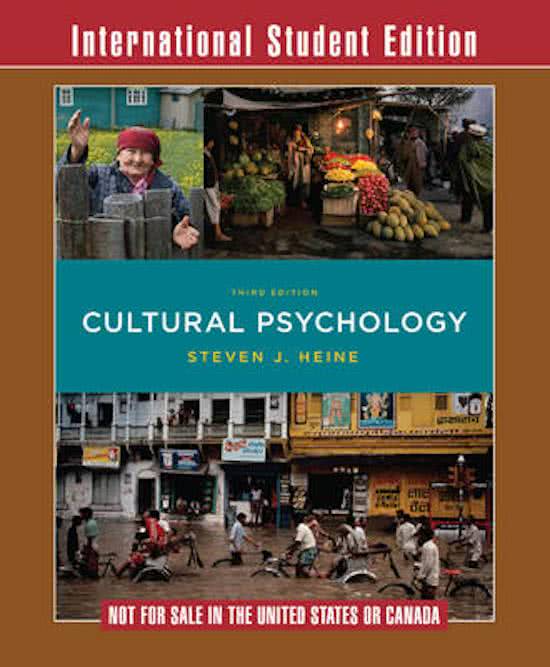
Cultural Psychology (Slides Milena Juana Feldkamp)
Chapter 6: Self and personality and Chapter 11: Interpersonal
Attraction and Close Relationships
There is a discussion about what exactly the self is:
- A physical, tangible entity rooted in the body. A more objective approach:
Trait and temper are relatively stable psychological dispositions. Personality is rooted
in traits and we are born with certain predispositions. Characteristics are consistent
over time and situations.
- An abstract construct that is socially constructed. A more subjective approach:
The self is a mental representation of individual self-perception and experience.
Values, characteristics are ascribed to oneself by themselves. Your personality is
dynamic fluid and open for change.
Both views on what differentiates people from each other se the environment as playing a
role, even though the two approaches differ in the importance they give the context.
Self
= The self refers to the mental apparatus that allows people to think consciously about
themselves.
= The capacity for self-reflection.
Identity
= A set of meaningful definitions that are ascribed or attached to the self, including
social roles, reputation, a structure of values and priorities and a conception of one’s
potential.
= Making sense of the self.
Coding categories for the self:
- Personal characteristics (How you typically act, think or feel)
- Interests and activities
- Roles and memberships
- Abstract identifications (Ideological or belief references)
- Material references (Possessions, body image)
- Systemic Senses of Self (Sense of moral worth, determination etc.)
- External meanings (Judgement imputed by others)
- Ascribed characteristics (Sex, age, name etc.)
Independent view of self
= A model of the self in which identity is thought to come from inner attributes that
reflect a unique essence of the individual and that remain stable across situations and
across lifespan. Self is distinct from others.
Chapter 6: Self and personality and Chapter 11: Interpersonal
Attraction and Close Relationships
There is a discussion about what exactly the self is:
- A physical, tangible entity rooted in the body. A more objective approach:
Trait and temper are relatively stable psychological dispositions. Personality is rooted
in traits and we are born with certain predispositions. Characteristics are consistent
over time and situations.
- An abstract construct that is socially constructed. A more subjective approach:
The self is a mental representation of individual self-perception and experience.
Values, characteristics are ascribed to oneself by themselves. Your personality is
dynamic fluid and open for change.
Both views on what differentiates people from each other se the environment as playing a
role, even though the two approaches differ in the importance they give the context.
Self
= The self refers to the mental apparatus that allows people to think consciously about
themselves.
= The capacity for self-reflection.
Identity
= A set of meaningful definitions that are ascribed or attached to the self, including
social roles, reputation, a structure of values and priorities and a conception of one’s
potential.
= Making sense of the self.
Coding categories for the self:
- Personal characteristics (How you typically act, think or feel)
- Interests and activities
- Roles and memberships
- Abstract identifications (Ideological or belief references)
- Material references (Possessions, body image)
- Systemic Senses of Self (Sense of moral worth, determination etc.)
- External meanings (Judgement imputed by others)
- Ascribed characteristics (Sex, age, name etc.)
Independent view of self
= A model of the self in which identity is thought to come from inner attributes that
reflect a unique essence of the individual and that remain stable across situations and
across lifespan. Self is distinct from others.