Assessment 2
Question 1
Question text
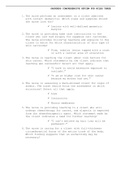
In which one of the following circumstances can the condictio sine causa specialis be used?
a.
As a general enrichment action.
b.
Where property is transferred on the grounds of a valid cause which later falls away.
c.
Where a contract is terminated due to a resolutive condition.
d.
Where property has been transferred in terms of an illegal agreement.
e.
Where undue payment was made due to an excusable error.
Question 2
Question text
In which of the following case/s did the court rule that there should no longer be a distinction
between error of fact and error of law for purposes of condictio indebiti?
a.
Rooth v The State 1888 2 SAR 259.
b.
Willis Faber Enthoven (Pty) Ltd v Receiver of Revenue 1992 (4) SA 202 (A).
c.
Kommissaris van Binnelandse Inkomste v Willers 1994 (3) SA 283 (A).
d.
CIR v First National Industrial Bank Ltd 1900 (3) SA 641 (A).
e.
Question 1
Question text
In which one of the following circumstances can the condictio sine causa specialis be used?
a.
As a general enrichment action.
b.
Where property is transferred on the grounds of a valid cause which later falls away.
c.
Where a contract is terminated due to a resolutive condition.
d.
Where property has been transferred in terms of an illegal agreement.
e.
Where undue payment was made due to an excusable error.
Question 2
Question text
In which of the following case/s did the court rule that there should no longer be a distinction
between error of fact and error of law for purposes of condictio indebiti?
a.
Rooth v The State 1888 2 SAR 259.
b.
Willis Faber Enthoven (Pty) Ltd v Receiver of Revenue 1992 (4) SA 202 (A).
c.
Kommissaris van Binnelandse Inkomste v Willers 1994 (3) SA 283 (A).
d.
CIR v First National Industrial Bank Ltd 1900 (3) SA 641 (A).
e.