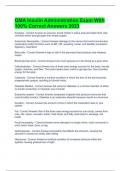
QMA Insulin Administration Exam With 100% Correct Answers 2023
QMA Insulin Administration Exam With 100% Correct Answers 2023 Amylase an enzyme, found chiefly in saliva and pancreatic fluid, that converts starch and glycogen into simple sugars. Autonomic Neuropathy damage to the nerves that control involuntary (automatic) bodily functions such as BP, HR, sweating, bowel, and bladder processes, digestion, respiration Beta cells a type of cell in the pancreas that produces and releases insulin Blood glucose level how much glucose is in the blood at a given time Carbohydrates one of three main energy sources for the body; include sugars, starches, and fiber. The body breaks down carbs to get glucose, then provides energy for the body Cataracts a medical condition in which the lens of the eye becomes progressively opaque, resulting in blurred vision. Diabetes Mellitus full name for diabetes; is a chronic disorder of either no insulin production or improper use of insulin Endocrine system comprised of glands that produce hormones that control bodily function. Diabetes is an endocrine disorder because insulin is a hormone Duration the amount of time in which the medication lasts in your system Fat One of the three main energy sources for your body; comes from nuts, oils, olives, avocado, butter, fried foods, and fatty meat (bacon, sausage, red meat) Focal neuropathy nerve damage to a single nerve, most commonly in one's hand, head, torso, or leg. Gastroparesis neuropathy that affects the stomach, causing the stomach to empty too slowly after eating Glaucoma a medical condition of increased pressure within the eyeball, causing gradual loss of sight Glucagon a hormone made by the pancreas. It raises the blood glucose level, so it counteracts the effects of the hormone insulin. Glucose A sugar that the body uses for energy. In order to use it properly, the body must have enough of the hormone insulin Hyperglycemia too much glucose in the blood Hypoglycemia too little glucose in the blood Insulin A hormone that helps the body use glucose. Insulin allows glucose to enter the cells that need it, especially the muscles. Insulin resistance when the body does not respond as well as it should to insulin. It is an early sign of Type II diabetes. Intermidiate acting insulin (NPH) a type of insulin that starts to act within the first hour of injecting, followed by a period of peak activity lasting up to 7 hours. Islets of Langerhans The area in the pancreas that houses the beta cells Ketoacidosis Aka diabetic ketoacidosis (DKA) happens when the body starts breaking down fat too quickly. Ketones when the body starts to break down fat in order to get energy, ketones are a byproduct. When too many ketones build up in the blood, it makes the blood acidic, which can lead to ketoacidosis Lipase A pancreatic enzyme that initiates the breakdown of fats to fatty acids and glycerol or other alcohols Long lasting insulin a type of insulin that keeps working to keep sugar under control throughout daily routine; usually lasts up to 24 hours
Written for
- Institution
- QMA
- Course
- QMA
Document information
- Uploaded on
- September 11, 2023
- Number of pages
- 3
- Written in
- 2023/2024
- Type
- Exam (elaborations)
- Contains
- Questions & answers
Subjects
-
qma insulin administration exam with 100 correct

Also available in package deal