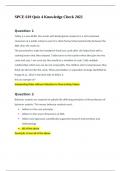
SPCE 619 Quiz 4 Knowledge Check 2022
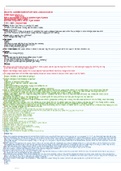
Question 1
Tabby is a new BCBA. She works with kindergarten students in a self-contained
classroom at a public school as part of a clinic/home/school partnership between the
ABA clinic she works at.
The preschoolers make her handprint thank you cards after she helps them with a
cooking lesson that they enjoyed. Tabby turns to the teacher when they give her the
cards and says, I am sorry but this would be a violation of code 1.06b multiple
relationships which says we do not accept gifts. The children start crying because they
think she did not like the cards. What assimilation or separation strategy identified by
Knapp et al., 2013 in the Dark Side of Ethics is
this an example of?
Interpreting Rules without Attention to Overarching Values
Question 2
Behavior analysts are required to uphold the affirming principles of the profession of
behavior analysis. This means behavior analysts must:
Adhere to the core principles
Adhere to the seven dimensions of ABA
Utilize only rigorously scientifically supported research interventions and
methodology
All of the above
Great job. It was all of the above
, Question 3
pts
Over lunch, Jeff, a new BCBA, tells you, a friend, that he couldn’t sleep after finding out
that another BCBA had been charging for services she did not deliver. According to
Kirsch, Jeff’s statements is an example of:
Moral character
Moral persona
Moral sensitivity
Moral judgement
Moral Sensitivity (recognize situation)
Question 4
pts
If a colleague is not adhering to the BACB Guidelines, what is the most appropriate
action?
Inform the behavior analysis certification board of the breaking of the guidelines.
Contact the employer/supervisor of the individual and inform them of the
situation.
It is the responsibility of the person to know when they are not in adherence to
the guidelines.
Inform the individual of the issue and try to find a resolution.
The most appropriate action is to inform the individual of the issue and try to find a
resolution.
Question 1
Tabby is a new BCBA. She works with kindergarten students in a self-contained
classroom at a public school as part of a clinic/home/school partnership between the
ABA clinic she works at.
The preschoolers make her handprint thank you cards after she helps them with a
cooking lesson that they enjoyed. Tabby turns to the teacher when they give her the
cards and says, I am sorry but this would be a violation of code 1.06b multiple
relationships which says we do not accept gifts. The children start crying because they
think she did not like the cards. What assimilation or separation strategy identified by
Knapp et al., 2013 in the Dark Side of Ethics is
this an example of?
Interpreting Rules without Attention to Overarching Values
Question 2
Behavior analysts are required to uphold the affirming principles of the profession of
behavior analysis. This means behavior analysts must:
Adhere to the core principles
Adhere to the seven dimensions of ABA
Utilize only rigorously scientifically supported research interventions and
methodology
All of the above
Great job. It was all of the above
, Question 3
pts
Over lunch, Jeff, a new BCBA, tells you, a friend, that he couldn’t sleep after finding out
that another BCBA had been charging for services she did not deliver. According to
Kirsch, Jeff’s statements is an example of:
Moral character
Moral persona
Moral sensitivity
Moral judgement
Moral Sensitivity (recognize situation)
Question 4
pts
If a colleague is not adhering to the BACB Guidelines, what is the most appropriate
action?
Inform the behavior analysis certification board of the breaking of the guidelines.
Contact the employer/supervisor of the individual and inform them of the
situation.
It is the responsibility of the person to know when they are not in adherence to
the guidelines.
Inform the individual of the issue and try to find a resolution.
The most appropriate action is to inform the individual of the issue and try to find a
resolution.