Britain Revision Guide April 2017
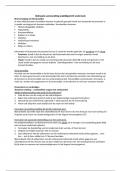
The Tories were particularly keen to defend the power of the monarch and the Church of
England. Nearly all Tories came from landowning backgrounds. They were more
protective of the privileges of the Church of England and were more resistant to the
change and more fearful ideas of the French Revolution.
The Whigs were more likely to question the power of the monarch and to defend the
power of parliament. Although their leaders were mostly landowners, an increasing
number of Whig MP’s came from industrial or commercial backgrounds. They were
more sympathetic to and had more support from nonconformists. The Whigs began to
demand reform of the parliament in the late 1820s.
Who could vote?
All adult males who paid ‘scot and lot’ local tax such as rates for the relief of
the poor could vote
All men who occupied a house and boiled a pot could vote
All men who owned burgages could vote
All men who were granted the title “freeman” could vote and this status could
be inherited from one’s parents.
Pocket Boroughs
In some boroughs with only small electorates, the biggest landowners in the area had a
huge influence and were able to get himself or his nominee elected. These boroughs
were known as ‘pocket boroughs’ as the landowners were seen to have them in their
pockets. The voters may have voted for the landowner because they were his tenants or
their jobs depended on being employed by him.
Rotten boroughs
In some extreme cases , there were only ten or twenty voters in a borough. This might
be because what had been a town had now been decayed and contained very little
The Tories were particularly keen to defend the power of the monarch and the Church of
England. Nearly all Tories came from landowning backgrounds. They were more
protective of the privileges of the Church of England and were more resistant to the
change and more fearful ideas of the French Revolution.
The Whigs were more likely to question the power of the monarch and to defend the
power of parliament. Although their leaders were mostly landowners, an increasing
number of Whig MP’s came from industrial or commercial backgrounds. They were
more sympathetic to and had more support from nonconformists. The Whigs began to
demand reform of the parliament in the late 1820s.
Who could vote?
All adult males who paid ‘scot and lot’ local tax such as rates for the relief of
the poor could vote
All men who occupied a house and boiled a pot could vote
All men who owned burgages could vote
All men who were granted the title “freeman” could vote and this status could
be inherited from one’s parents.
Pocket Boroughs
In some boroughs with only small electorates, the biggest landowners in the area had a
huge influence and were able to get himself or his nominee elected. These boroughs
were known as ‘pocket boroughs’ as the landowners were seen to have them in their
pockets. The voters may have voted for the landowner because they were his tenants or
their jobs depended on being employed by him.
Rotten boroughs
In some extreme cases , there were only ten or twenty voters in a borough. This might
be because what had been a town had now been decayed and contained very little