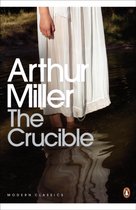
GRADE 12 ENGLISH LITERATURE ESSAY
THE CRUCIBLE
Arthur Miller’s, ‘The Crucible’, is a play whereby the raging theme of vengeance is a
continued presence that ultimately leads to the catastrophic consequences experienced
by the Salem society. Antagonist, Abigail Williams, whom still possesses strong feelings
for John Proctor, uses the witch trials as a jealous attempt to overthrow Elizabeth and
will not fear to demolish any obstructions to her path. The escalation of the witch hunt
exposes the Putnams’ acrimonious nature; Thomas seeks retribution for the inability of
his brother in law to become minister of Salem while Ann seeks someone to blame for
the death of her children.
Firstly, the witch trials acts as the catalyst to fuel Abigail’s purpose to bring about mass
destruction. Abigail’s malicious and resentful nature leads her to believe that once
Elizabeth is executed, she will be able to rekindle her romance with John. Thus, she
directs her vengeance against Elizabeth and hopes to ‘dance with [John on his] wife’s
grave!’ Abigail is the ringleader of the girls and threatens them that she will ‘bring a
pointy reckoning that will shudder [them]’ if they don't keep up the pretense of their
allegations. Abigail’s vindictiveness is evident and this is the sole reason that hysteria
breaks out in Salem.
Furthermore, Thomas Putnam desires to avenge for his brother in law not being
appointed as the minister of Salem. To exact revenge, Putnam has put the man that
qualifies for the position as minister in jail for debts that he is not even entitled
to.Thomas feels that ‘his own name and the honor of his family had been smirched by
the village’ and deems it necessary that he ‘meant to right matters however he could’.
Lastly, Ann Putnam is envious of Rebecca Nurse’s extensive family as she had lost 7
children and the only one that survived is now sickly. While Rebecca tries significantly to
soothe the situation and to not to look at unnatural causes for the source, Ann vents out
her frustration on her that 'You think it God's work you should never lose a child, nor
grandchild either, and I bury all but one?’ In spite of Rebecca’s prestigious position in
society, this accusation made by Ann that Rebecca is responsible for killing her children,
results in Rebecca’s arrest and sentence to be hung.
To conclude, ‘The Crucible’ successfully ties together that the revenge exerted by the
core character is closely linked to the ultimate crippling of the society of Salem. It is the
personal vengefulness that sets the tone for the results of the mass hysteria and
destruction that spreads rapidly through the community.
THE CRUCIBLE
Arthur Miller’s, ‘The Crucible’, is a play whereby the raging theme of vengeance is a
continued presence that ultimately leads to the catastrophic consequences experienced
by the Salem society. Antagonist, Abigail Williams, whom still possesses strong feelings
for John Proctor, uses the witch trials as a jealous attempt to overthrow Elizabeth and
will not fear to demolish any obstructions to her path. The escalation of the witch hunt
exposes the Putnams’ acrimonious nature; Thomas seeks retribution for the inability of
his brother in law to become minister of Salem while Ann seeks someone to blame for
the death of her children.
Firstly, the witch trials acts as the catalyst to fuel Abigail’s purpose to bring about mass
destruction. Abigail’s malicious and resentful nature leads her to believe that once
Elizabeth is executed, she will be able to rekindle her romance with John. Thus, she
directs her vengeance against Elizabeth and hopes to ‘dance with [John on his] wife’s
grave!’ Abigail is the ringleader of the girls and threatens them that she will ‘bring a
pointy reckoning that will shudder [them]’ if they don't keep up the pretense of their
allegations. Abigail’s vindictiveness is evident and this is the sole reason that hysteria
breaks out in Salem.
Furthermore, Thomas Putnam desires to avenge for his brother in law not being
appointed as the minister of Salem. To exact revenge, Putnam has put the man that
qualifies for the position as minister in jail for debts that he is not even entitled
to.Thomas feels that ‘his own name and the honor of his family had been smirched by
the village’ and deems it necessary that he ‘meant to right matters however he could’.
Lastly, Ann Putnam is envious of Rebecca Nurse’s extensive family as she had lost 7
children and the only one that survived is now sickly. While Rebecca tries significantly to
soothe the situation and to not to look at unnatural causes for the source, Ann vents out
her frustration on her that 'You think it God's work you should never lose a child, nor
grandchild either, and I bury all but one?’ In spite of Rebecca’s prestigious position in
society, this accusation made by Ann that Rebecca is responsible for killing her children,
results in Rebecca’s arrest and sentence to be hung.
To conclude, ‘The Crucible’ successfully ties together that the revenge exerted by the
core character is closely linked to the ultimate crippling of the society of Salem. It is the
personal vengefulness that sets the tone for the results of the mass hysteria and
destruction that spreads rapidly through the community.