Part 1: Two systems
Chapter 1: the characters of the story
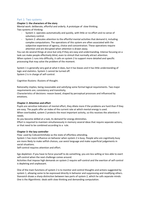
Mental work: deliberate, effortful and orderly. A prototype of slow thinking.
Two systems of thinking:
- System 1: operates automatically and quickly, with little or no effort and no sense of
voluntary control.
- System 2: allocates attention to the effortful mental activities that demand it, including
complex computations. The operations of this system are often associated with the
subjective experience of agency, choice and concentration. These operations require
attention and are disrupted when attention is drawn away.
You can do several things at once but only if they are easy and undermanding. Intense focusing on a
task can make people effectively blind, even to stimuli that normally attract attention.
When system 1 runs into difficulty, it calls on system 2 to support more detailed and specific
processing that may solve the problem of the moment.
System 1 is generally very god at what it does, but it has biases and it has little understanding of
logic and statistics. System 1 cannot be turned off.
System 2 is in charge of self-control.
Cognitive illusions: illusions of thought.
Rationality implies; being reasonable and satisfying some formal logical requirements. Two major
requirements are; consistency and transitivity.
Characteristics of decisions: reason based, shaped by perceptual processes and influenced by
emotions.
Chapter 2: Attention and effort
Pupils are sensitive indicators of mental effort, they dilate more if the problems are hard than if they
are easy. The pupils offer an index of the current rate at which mental energy is used.
When overloaded, system 2 protects the most important activity, so this receives the attention it
needs.
As you become skilled at a task, its demand for energy diminishes.
Effort is required to maintain simultaneously in memory several ideas that require separate actions,
or that need to be combined according to a rule.
Chapter 3: the lazy controller
Flow: used by Csikszentimihalyi as the state of effortless attending.
System 1 has more influence on behavior when system 2 is busy. People who are cognitively busy
are more likely to make selfish choices, use sexist language and make superficial judgements in
social situations.
Self-control requires attention and effort.
Ego depletion: if you have to force yourself to do something, you are less willing or less able to exert
self-control when the next challenge comes around.
Activities that impose high demands on system 2 require self-control and the exertion of self-control
is depleting and unpleasant.
One of the main functions of system 2 is to monitor and control thoughts and actions suggested by
system 1, allowing some to be expressed directly in behavior and suppressing and modifying others.
Stanovich draws a sharp distinction between two parts of system 2, which he calls separate minds:
One is the Algorithmic: deals with slow thinking and demanding computation.
Chapter 1: the characters of the story
Mental work: deliberate, effortful and orderly. A prototype of slow thinking.
Two systems of thinking:
- System 1: operates automatically and quickly, with little or no effort and no sense of
voluntary control.
- System 2: allocates attention to the effortful mental activities that demand it, including
complex computations. The operations of this system are often associated with the
subjective experience of agency, choice and concentration. These operations require
attention and are disrupted when attention is drawn away.
You can do several things at once but only if they are easy and undermanding. Intense focusing on a
task can make people effectively blind, even to stimuli that normally attract attention.
When system 1 runs into difficulty, it calls on system 2 to support more detailed and specific
processing that may solve the problem of the moment.
System 1 is generally very god at what it does, but it has biases and it has little understanding of
logic and statistics. System 1 cannot be turned off.
System 2 is in charge of self-control.
Cognitive illusions: illusions of thought.
Rationality implies; being reasonable and satisfying some formal logical requirements. Two major
requirements are; consistency and transitivity.
Characteristics of decisions: reason based, shaped by perceptual processes and influenced by
emotions.
Chapter 2: Attention and effort
Pupils are sensitive indicators of mental effort, they dilate more if the problems are hard than if they
are easy. The pupils offer an index of the current rate at which mental energy is used.
When overloaded, system 2 protects the most important activity, so this receives the attention it
needs.
As you become skilled at a task, its demand for energy diminishes.
Effort is required to maintain simultaneously in memory several ideas that require separate actions,
or that need to be combined according to a rule.
Chapter 3: the lazy controller
Flow: used by Csikszentimihalyi as the state of effortless attending.
System 1 has more influence on behavior when system 2 is busy. People who are cognitively busy
are more likely to make selfish choices, use sexist language and make superficial judgements in
social situations.
Self-control requires attention and effort.
Ego depletion: if you have to force yourself to do something, you are less willing or less able to exert
self-control when the next challenge comes around.
Activities that impose high demands on system 2 require self-control and the exertion of self-control
is depleting and unpleasant.
One of the main functions of system 2 is to monitor and control thoughts and actions suggested by
system 1, allowing some to be expressed directly in behavior and suppressing and modifying others.
Stanovich draws a sharp distinction between two parts of system 2, which he calls separate minds:
One is the Algorithmic: deals with slow thinking and demanding computation.