Bloodborne and Airborne Pathogens 2023/24 update
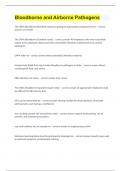
The OSHA Bloodborne Standard requires training for appropriate employees every: 12 months The OSHA Bloodborne Standard covers: All employees who may reasonably expect to be exposed to blood and other potentially infectious material that may contain pathogens. OPIM refers to other potentially infectious material Human body fluids that may contain bloodborne pathogens include: blood, cerebrospinal fluid, and semen HBV infection can cause: liver cancer The OSHA bloodborne standard requires that: all appropriate employees must be offered the HBV vaccine free. HCV can be transmited by: sharing needles for drug injections, dirty body piercing tools, and sharing a toothbrush You can help prevent HIV transmission with: regular handwashing, use of barriers, and universal precautions. eye wash stations are an example of: an engineering control biohazard warning labels must be prominently displayed on: laundry bags used to hold and transport contaminated clothing proper handwashing technique includes: removing jewelry before washing, keeping hands lower than elbows during washing, and using a paper towel o turn off the water. An example of an effective disinfectant is a : 10% bleach soluion After use, dispose of contaminated medical exam gloves in: a biohazard container When should you follow universal precautions? when in proximity to any body fluid from any persons If blood from a victim receiving first aid splashes in your eye, you should first: flush the area with running water for 20 minutes If blood from a victim receiving fist aid splashes in your eye, your employer is required to: identify and document the victim who is the source of the blood, obtain consent to test the victims blood, and arrange for you to have your blood tested if you consent. An employers Exposure Control Plan is required to: Identify which emplyees must receive bloodborne pathogen training. The signs and symptoms of TB disease include: weight loss and fever TB disease is treated with: antibiotics Flu infection can be prevented through: hand hygiene, respiratory hygiene, and social distancing.
Written for
- Institution
- OSHA BLOOD BORNE PATHOGENS
- Course
- OSHA BLOOD BORNE PATHOGENS
Document information
- Uploaded on
- September 5, 2023
- Number of pages
- 2
- Written in
- 2023/2024
- Type
- Exam (elaborations)
- Contains
- Questions & answers
Subjects
-
bloodborne and airborne pathogens

Also available in package deal