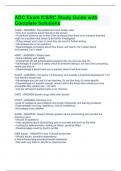
ADC Exam IC&RC Study Guide with Complete Solutions
CAGE - ANSWER-• The briefest and most widely used. • Only four questions asked directly to the person. • If someone answers yes to one of the questions then there is an indicator that their might be a problem that needs to be further investigated. • If they answer yes to two or more they are sent for further testing. • Advantages-yes or no questions • Disadvantages-not asking about time frame, self report, not in depth about environment, not in depth MAST - ANSWER-• Widely used • Good reliability and validity • Original had 25 self administered questions the one now has only 22. • Advantages-it could be a reality check to someone taking it, not very time consuming, simple yes and no • Disadvantage-it doesn't ask you to explain, doesn't ask time frame AUDIT - ANSWER-• Ten items 1-3 frequency and quantity 4-6 alcohol dependence 7-10 how harmful alcohol use. • Advantages-you can use it in an interview, it's not that long, it's more specific • Disadvantage-not specific enough, doesn't add in the times when drinking is more acceptable like vacation etc., not valid • Can be self report questionnaire or an interview DAST - ANSWER-Screen drugs other than alcohol POSIT - ANSWER-139 items on it Used for substance use problems and social, behavioral, and learning problems Disadvantages-too long, repetitious, lack of consistency Advantages-more detailed SASSI - ANSWER-• Doesn't directly question about alcohol/drug use (not like the previous ones) • Around 50 questions • Asks questions about alcohol/drug use on one side and don't on the other • Looking for defensiveness, looking at others, personal affect • Disadvantages-could be hard to profile DSM Axises - ANSWER-o Axis I-Clinical syndromes • Alcohol abuse, cannabis dependency o Axis II-Personality disorders/mental retardation • Not used very often in alcohol or chemical use o Axis III-Medical Conditions • Psuerosis of the liver o Axis IV-Psychosocial/environmental stressors • Losing kids because of substance abuse, lacks good social support system o Axis V-Global assessment of functioning • 0-100 how the person is functioning overall Narcotics possible effects - ANSWER-Euphoria, drowsiness, respiratory depression, constricted pupils, nausea Narcotics effects of OD - ANSWER-Slow/shallow breathing, clammy skin, convulsions, coma, and possible death Narcotics withdrawal syndrome - ANSWER-Water eyes, runny nose, yawning, loss of appetite, irritability, tremors, panic, cramps, nausea, chills, sweating. Narcotics - ANSWER-Heroin, Morphine, Hydrocodone, Hydro-morphone, Oxycodone, Codeine Depressants - ANSWER-Hydroxybutyric Acid, gamma, Benzodiazepines etc. Depressant effects - ANSWER-slurred speech, disorientation, drunken behavior without odor of alc., imparired membory of events, interacts with alc. Depressant overdose - ANSWER-shallow respiration, clammy skin, dilated pupils, weak and rapid pulse, coma, and possible death. Depressant withdrawal - ANSWER-Anxiety, insomnia, tremors, delirium, convulsions, possible death. Stimulants - ANSWER-Cocaine half life=one hour, Amphetamine=6-12 hours, Methylphenidate=2 hours Stimulant effects - ANSWER-Increased alertness, excitation, euphoria, increased pulse rate, increased blood pressure, insomnia, and loss of appetite, dialated pupils. Stimulant OD - ANSWER-Agitation, increased body temperature, hallucinations, convulsions, and possible death Stimulant withdrawal - ANSWER-Apathy, long periods of sleep, irritability, depression (possible with suicidal potential), and disorientation, increased appetite, anhedonia (absence of pleasure) and craving. Hallucinogens - ANSWER-MDMA and Analogs, LSD, Phencyclidine, Hallucinogen signs and symptoms - ANSWER-Increased reflexes, tremors, weakness, flushing and chills, seizures, inappropriate mood, elation, hallucinations, bizarre behafvior, diorientation, confusion, delusions, and impaired judgement. Hallucinogen OD - ANSWER-Increased body temp, electorlyte imbalance, cardiac arrest, unable to direct movement, feel pain, or remember. Hallucinogen withdrawal - ANSWER-Muscle aches, drowsiness, depression, acne, and drug seeking behavior. Cannabis effects - ANSWER-Euphoria, relaxed inhibitions, increased appetitie, disorientation, Cannabis problems - ANSWER-impairment of ability to learn. Medical effects wth prolonged use include respiratory problems, possible impaired immune function and possible reproductive problems includinglow birth weight infants. Cannabis withdrawal - ANSWER-Rare. Appear limited to some heavy users. Possible irritability, restlessness, craving, loss of appetite, nausea, diarrhea, muscle twitching, overt aggression and depression. Anabolic Steroids effects - ANSWER-Virilization, edema, testicular atrophy, gyneco-mastia, acne aggressive behavior Anabolic Steroids withdrawal - ANSWER-Possible depression Inhalants effects - ANSWER-flushing, hypotension, headache, cardiac depressants leading to "sudden sniffing death. Inhalants signs and symptoms - ANSWER-possible asphyxiation and frostbite of nose, lips, or larynx if inhaled from a tank, loss of motor control, nausea, ataxia, muscle weakness, dysarthia, nystagmus, diminished reflexes. Inhalants withdrawal - ANSWER-Agitation -pyschological but no known physical symptoms Alcohol common problems - ANSWER-Tolorance, Dependence, Depression, neurologic deficits, hypertension, liver and heart disease. Alcohol OD - ANSWER-Vomiting, respiratory depression, loss of consciousness, possible death. Alcohol Withdrawal - ANSWER-Trembling, autonomic hyperactivity, Anxiety, insomnia, vitamin deficiency, confusion, hallucination, and convulsions.
Written for
- Institution
- ADC IC&RC
- Course
- ADC IC&RC
Document information
- Uploaded on
- September 4, 2023
- Number of pages
- 97
- Written in
- 2023/2024
- Type
- Exam (elaborations)
- Contains
- Questions & answers
Subjects
- adc exam icrc
-
adc exam icrc study guide with complete solutions

Also available in package deal