TEST BANK Canadian Fundamentals of Nursing All chapters 1-48
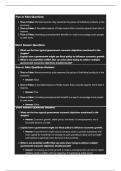
1. The nurse is using the population health promotion model to develop actions for improving health. After asking, “On what should we take action?”; “How should we take action?”; and “Why should we take action?” the nurse will ask which of the following questions? a. “With whom should we act?” b. “When should we take action?” c. “Which government should take action?” d. “Where should we first act?” ANS: A The next question to ask when using the population health model approach is “With whom should we act?” The other choices are not questions included in this model. DIF: Apply REF: 13 (Figure 1-5) OBJ: Contrast distinguishing features of health promotion and disease prevention. TOP: Implementation MSC: NCLEX: Health Promotion and Maintenance 2. The principle “Health promotion is multisectoral” means which of the following? a. Relationships between individual, social, and environmental factors must be recognized. b. Physical, mental, social, ecological, cultural, and spiritual aspects of health must be recognized. c. In order to change unhealthy living and working conditions, areas other than health must also be involved. d. Health promotion uses knowledge from disciplines such as social, economic, political, environmental, medical, and nursing sciences, as well as from first-hand experience. ANS: C The statement “Health promotion is multisectoral” is the principle explained by the necessity to involve areas other than health in order to change unhealthy living and working conditions. DIF: Understand REF: 11 OBJ: Contrast distinguishing features of health promotion and disease prevention. TOP: Planning MSC: NCLEX: Health Promotion and Maintenance 3. According to the World Health Organization, what is the best description of “health”? a. Simply the absence of disease. b. Involving the total person and environment. c. Strictly personal in nature. d. Status of pathological state. ANS: B Test Bank - Canadian Fundamentals of Nursing, 6e (Potter, Perry) 2 | P a g e WHO defines health as “. . .the extent to which an individual or group is able, on the one hand, to realize aspirations and satisfy needs; and, on the other hand, to change or cope with the environment. Health is, therefore, seen as a resource for everyday life, not the objective of living; it is a positive concept emphasizing social and personal resources, as well as physical capacities.” Nurses’ attitudes toward health and illness should consider the total person, as well as the environment in which the person lives. People free of disease are not equally healthy. Views of health have broadened to include mental, social, and spiritual well-being, as well as a focus on health at family and community levels. Conditions of life, rather than pathological states, are what determine health. DIF: Knowledge REF: 2 OBJ: Discuss ways that definitions of health have been conceptualized. TOP: Evaluate MSC: NCLEX: Health Promotion and Maintenance 4. What priority strategy for health promotion in Canada is optional but seen as important to incorporate in nursing education curricula? a. Knowledge of disease prevention. b. Strategies for health promotion. c. Policy advocacy. d. Concepts of determinants of health. ANS: C Increasingly, policy advocacy is incorporated into nursing role statements and nursing education curricula. Nurses should think about policies that have contributed to health problems, policies that would help alleviate health problems, and how nurses champion public policies. Disease prevention, health promotion, and concepts of determinants of health are integral parts of nursing curricula. DIF: Understand REF: 11| 12 OBJ: Analyze how the nature and scope of nursing practice are influenced by different conceptualizations of health and health determinants. TOP: Planning MSC: NCLEX: Health Promotion and Maintenance 5. Which of the following is a prerequisite for health, as identified by the Ottawa Charter for Health Promotion? a. Education. b. Social support. c. Self-esteem. d. Physical environment. ANS: A Education is one of the nine prerequisites for health that were identified in the Ottawa Charter for Health Promotion. Lack of social support and low self-esteem were identified as psychosocial risk factors by Labonte (1993). Dangerous physical environments were identified as socioenvironmental risk factors by Labonte (1993). DIF: Understand REF: 4 OBJ: Discuss contributions of the following Canadian publications to conceptualizations of health and health determinants: Lalonde Report, Ottawa Charter, Epp Report, Strategies for Population Health, Jakarta Declaration, Bangkok Charter, Toronto Charter. TOP: Planning MSC: NCLEX: Health Promotion and Maintenance
Written for
- Institution
- Fundamentals of Nursing
- Course
- Fundamentals of Nursing
Document information
- Uploaded on
- September 4, 2023
- Number of pages
- 553
- Written in
- 2023/2024
- Type
- Exam (elaborations)
- Contains
- Questions & answers
Subjects
- fundamentals of nursing
- canadian nursing
-
canadian fundamentals of nursing
-
test bank canadian fundamentals of nursing
-
test bank canadian fundamentals of nursing all cha

Also available in package deal