Komal Hassan
Unit 5: Meeting Individual Care and Support Needs
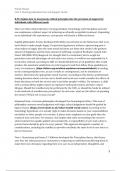
B.P3: Explain how to incorporate ethical principles into the provision of support for
individuals with different needs
There are three ethical theories: Consequentialism, Deontology and Principlism and each
one emphasises a distinct aspect of achieving an ethically acceptable treatment. Depending
on an individual's life experiences, each person will choose a different theory.
English philosopher Jeremy Bentham (1748-1832) concentrated on the behaviours that were
most likely to make people happy. If experiencing pleasure without experiencing pain is
what makes us happy, then the most moral decisions are those that result in the greatest
amount of happiness and the least amount of suffering. A pupil of Bentham's named John
Stuart Mill (1806-1873) disagreed. He thought that if a community had to weigh the
particular costs and advantages of each and every action, it would be too impossible for it
to function. Instead, according to Mill, we should identify the set of guidelines that would
produce the maximum satisfaction over the long term and then follow those guidelines in
every circumstance. (https://ethics.org.au/ethics-explainer-consequentialism/) According
to the consequentialism view, an act's results or consequences, not its intentions or
motives, determine the appropriate moral reaction. According to this theory, professionals
making decisions about a service user's health and social care would consider the effects of
those decisions on both the service user's and other people's welfare. For instance, a child
with a serious illness might require an expensive medical procedure and have a short
lifespan. Should the tonsillectomy be performed by the NHS, or should the funds be utilised
to do hundreds of tonsillectomy procedures? In each case, what are the effects of spending
the money? Which one is most crucial?
Immanuel Kant, a German philosopher developed the deontological ethics. This area of
philosophy connects moral judgement with logic; ethical judgement should be guided by
logical reason. (https://www.ukcbc.ac.uk/ethics-health-social-care/) According to the
deontology hypothesis, it is morally right to make decisions based on your responsibilities
and duties to other people or to society. It places more emphasis on your goals than the
results of your activities. For instance, this implies that rules surrounding who receives
what treatment be equally applied and consistently. A responsibility of care and a duty to
prevent harm should be given to every patient. This approach disregards a number of
considerations, including the inability to provide everybody the same level of care due to a
lack of resources.
Tom L. Beauchamp and James F. Childress developed the Principlism theory, this theory
uses four key ethical practices: Autonomy is respecting an individual and allowing them to
make their own decisions regarding their own care in an independent, thoughtful, and
1
, Komal Hassan
Unit 5: Meeting Individual Care and Support Needs
educated manner. Beneficence is the act of acting in a way that benefits the patient and
advances the wellbeing of others by weighing the benefits of therapies against the risk and
costs. For instance, treating one patient for a year with the cancer medication trastuzumab
costs twenty-two thousand pounds. Would it be preferable to use this money to save the
countless people who suffer from heart attacks every year? Non-maleficence is when one
avoids doing harm. For instance, by ensuring that any negative consequences of a
treatment do not outweigh its positive advantages. Justice is doing what is morally right
and fair, allocating benefits fairly, abiding by the law, and considering the rights of the
parties involved. (PubMed)
B.M3: Analyse how an ethical approach to providing support would benefit specific
individuals with different needs
Nurses in the community hospital should try and build a positive relationship with
Tremayne as he suffers from Autism. Social and communication difficulties are common in
autistic people. They may have trouble conversing and be oblivious to social signs. Some
autistic individuals may not speak at all, while others may not have any issue speaking. All
autistic individuals experience some level of communication difficulty. (ASHA)
Nurses in the community hospital can use the principlism ethical approach to help
Tremayne deal with his autism. Promoting principlism and autonomy is crucial as this
actively supports decision making and seeks to increase Tremaynes capacity to make his
own decisions. Tremayne would benefit from this since his autism makes it difficult for him
to communicate; with the nurse's assistance, he would be able to express his feelings and
his needs will be met more effectively. The community nurses can ensure that there are
reasonable adjustments being made to help Tremayne to make decisions; they can do this
by providing information in accessible formats and also have quiet times so Tremayne can
make his decisions. Decisions may include what Tremayne wants to eat, wear or what type
of care he is comfortable with. Autonomy helps Tremayne to be more independent without
being patronising.
The cold, wet weather on the streets worsened Billy's asthma, which he already suffers due
to his homelessness. Billy living on the streets is made more challenging by the fact that he
is visually impaired. Social workers can use the consequentialism ethical theory,
consequentialism is an action that brings more benefit that it brings harm which is good
whereas bringing more harm than benefit is bad (www.ethicsunwrapped). The social
worker can request accommodation from the council for Billy. The social worker promotes
consequentialism by requesting for accommodation, this would have a more beneficial
effect on Billy because having a roof over his head Billy would be safe from the dangers
from the streets and also his health will improve as asthma would get better, this would
bring more good than harm.This would be beneficial for Billy as leaving the streets would
2
Unit 5: Meeting Individual Care and Support Needs
B.P3: Explain how to incorporate ethical principles into the provision of support for
individuals with different needs
There are three ethical theories: Consequentialism, Deontology and Principlism and each
one emphasises a distinct aspect of achieving an ethically acceptable treatment. Depending
on an individual's life experiences, each person will choose a different theory.
English philosopher Jeremy Bentham (1748-1832) concentrated on the behaviours that were
most likely to make people happy. If experiencing pleasure without experiencing pain is
what makes us happy, then the most moral decisions are those that result in the greatest
amount of happiness and the least amount of suffering. A pupil of Bentham's named John
Stuart Mill (1806-1873) disagreed. He thought that if a community had to weigh the
particular costs and advantages of each and every action, it would be too impossible for it
to function. Instead, according to Mill, we should identify the set of guidelines that would
produce the maximum satisfaction over the long term and then follow those guidelines in
every circumstance. (https://ethics.org.au/ethics-explainer-consequentialism/) According
to the consequentialism view, an act's results or consequences, not its intentions or
motives, determine the appropriate moral reaction. According to this theory, professionals
making decisions about a service user's health and social care would consider the effects of
those decisions on both the service user's and other people's welfare. For instance, a child
with a serious illness might require an expensive medical procedure and have a short
lifespan. Should the tonsillectomy be performed by the NHS, or should the funds be utilised
to do hundreds of tonsillectomy procedures? In each case, what are the effects of spending
the money? Which one is most crucial?
Immanuel Kant, a German philosopher developed the deontological ethics. This area of
philosophy connects moral judgement with logic; ethical judgement should be guided by
logical reason. (https://www.ukcbc.ac.uk/ethics-health-social-care/) According to the
deontology hypothesis, it is morally right to make decisions based on your responsibilities
and duties to other people or to society. It places more emphasis on your goals than the
results of your activities. For instance, this implies that rules surrounding who receives
what treatment be equally applied and consistently. A responsibility of care and a duty to
prevent harm should be given to every patient. This approach disregards a number of
considerations, including the inability to provide everybody the same level of care due to a
lack of resources.
Tom L. Beauchamp and James F. Childress developed the Principlism theory, this theory
uses four key ethical practices: Autonomy is respecting an individual and allowing them to
make their own decisions regarding their own care in an independent, thoughtful, and
1
, Komal Hassan
Unit 5: Meeting Individual Care and Support Needs
educated manner. Beneficence is the act of acting in a way that benefits the patient and
advances the wellbeing of others by weighing the benefits of therapies against the risk and
costs. For instance, treating one patient for a year with the cancer medication trastuzumab
costs twenty-two thousand pounds. Would it be preferable to use this money to save the
countless people who suffer from heart attacks every year? Non-maleficence is when one
avoids doing harm. For instance, by ensuring that any negative consequences of a
treatment do not outweigh its positive advantages. Justice is doing what is morally right
and fair, allocating benefits fairly, abiding by the law, and considering the rights of the
parties involved. (PubMed)
B.M3: Analyse how an ethical approach to providing support would benefit specific
individuals with different needs
Nurses in the community hospital should try and build a positive relationship with
Tremayne as he suffers from Autism. Social and communication difficulties are common in
autistic people. They may have trouble conversing and be oblivious to social signs. Some
autistic individuals may not speak at all, while others may not have any issue speaking. All
autistic individuals experience some level of communication difficulty. (ASHA)
Nurses in the community hospital can use the principlism ethical approach to help
Tremayne deal with his autism. Promoting principlism and autonomy is crucial as this
actively supports decision making and seeks to increase Tremaynes capacity to make his
own decisions. Tremayne would benefit from this since his autism makes it difficult for him
to communicate; with the nurse's assistance, he would be able to express his feelings and
his needs will be met more effectively. The community nurses can ensure that there are
reasonable adjustments being made to help Tremayne to make decisions; they can do this
by providing information in accessible formats and also have quiet times so Tremayne can
make his decisions. Decisions may include what Tremayne wants to eat, wear or what type
of care he is comfortable with. Autonomy helps Tremayne to be more independent without
being patronising.
The cold, wet weather on the streets worsened Billy's asthma, which he already suffers due
to his homelessness. Billy living on the streets is made more challenging by the fact that he
is visually impaired. Social workers can use the consequentialism ethical theory,
consequentialism is an action that brings more benefit that it brings harm which is good
whereas bringing more harm than benefit is bad (www.ethicsunwrapped). The social
worker can request accommodation from the council for Billy. The social worker promotes
consequentialism by requesting for accommodation, this would have a more beneficial
effect on Billy because having a roof over his head Billy would be safe from the dangers
from the streets and also his health will improve as asthma would get better, this would
bring more good than harm.This would be beneficial for Billy as leaving the streets would
2