AMLS Latest Update Already Graded A+
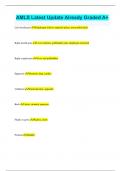
AMLS Latest Update Already Graded A+ Left should pain Diaphragm irrition, ruptured spleen, myocardial jnfart Right should pain Liver irritation, gallbladder pain, diaphragm irrational Right scapular pin Liver and gallbladder Epigastric Stomach, lung, cardiac Umbilical Small intestine, appendix Back Aorta, stomach, pancreas Flanks to groin Kidney, uriter Perineal Bladder Suprapubic Bladder, colon Secondary survey Physical exam Rhonchi Coarse low pitched, may clear with cough Wheeze Whistling high pitch Bronchial Coarse, loud, heard with consolidation Rub Scratchy, high-pitched Crackles Fine crackling, high pitched Bronchovesicular Combination bronchial and vesicular normal on some areas Vesicular High pitched breezy Blood pressure Flow*resistance McBurney point Area over R side of ABD that is 3rd of the distance from anterior superior iliac spine to umbilicus. Tenderness acute appendicitis Rovsing sign Palp LLQ makes pain in RLQ indicates appendicitis Upper ABD T7, T8 and T9 Lower ABD T10 and T11 Cremasteric T12, L1 and L2 Planter L4, L5 S1 and S2 Babinski Check Nero in conscious pt. run pen along bottom of foot and toes move toward nose is a positive Neurogenic shock vasodilation Neurogenic shock Warm, dry, pink skin, Hypotension, Bradycardia and bradypnea, May have normal cap refill Septic Shock vasodilation Septic Shock Hypotension, Altered mental status, Hyper or hypothermic Anaphylaxis Shock vasodilation Anaphylaxis Shock Hypotension, Tachycardia, Anxiety, Urticaria, angioedema, Wheezing Hypovolemic Shock loss of plasma or blood Hypovolemic Shock Cool, pale, clammy skin, Hypotension - late sign, Altered mental status, Delayed cap refill Cardiogenic shock loss of pump function Cardiogenic shock Cool, clammy, pale skin. May also be cyanotic, Increased or decreased heart rate or dysrhythmia, Hypotension, Altered mental status, Decreased cap refill, May have pulmonary edema - crackles Obstructive shock tamponade, tension pneumo, pulmonary embolus Obstructive shock JVD, Tracheal deviation in pneumothorax, Muffled heart tones in tamponade, Pulsus pardoxus Compensated shock the renin-angiotension-aldosterone system is activated when the blood pressure drops. This causes an increase in preload through reabsorption of water and sodium. Increased preload will also increase afterload. COPD patients acute onset of SOB may have a pulmonary embolism Clinical findings of a pulmonary embolism Clear breath sounds, Sudden sharp, localized chest pain, Tachypnea, Hypotension (poor outcome), 12 lead changes Narcotic overdose causes respiratory acidosis Acute Respiratory Distress Syndrome (ARDS) caused a breakdown of the alveolar-capillary membrane. Indications for CPAP COPD, Asthma - if not responding to beta agonists, CHF CPAP use only in patients who can follow commands and clear their own airway secretions Respiratory Alkalosis may result from: Infections, fever & anxiety Respiratory Acidosis may result from: Narcotic overdose, Benzodiazepines, Pneumonia, Foreign body Ageing have a decreased lung compliance Left heart failure causes fluid back up in the lungs causing dyspnea at night or paroxysmal nocturnal dyspnea Asthma patients usually present with respiratory distress, no fever, increased expiratory phase of breathing, wheezing COPD patients may present with pursed lip breathing, increased respiratory effort upon exertion, rhonchi, no JVD, wheezing Pericarditis presentation ST elevation in all leads - global ST elevation Cardiac Tamponade S&S Low amplitude EKG, Muffled heart tones, Pulsus Paradoxus, Hypotension stent placement Concerning in pt with chest pain 12 lead should be obtained in patients with Chest pain or any possible cardiovascular complaint Signs of hyperglycemia Polydipsia, Polyphagia, Polyuria, AMS, Tachycardia, Rapid, deep breathing ( Kussmauls ) Signs of hypoglycemia Cold, clammy skin, Diaphoresis, AMS, Seizures Metabolic acidosis Decreased pH, Normal or abnormal CO2, Decreased bicarbonate and carbonic acid HHNS stands for hyperglycemic hyperosmolar non ketotic syndrome HHNS Common with Type II diabetics, Become severely dehydrated, Require aggressive fluid resuscitation Allergic reactions Mild - IV, O2, monitor Graves disease overactive thyroid Graves disease treatment Beta Blockers Graves disease S&S tachycardia, tremors, anxiety mild Hypothermia shivering, increased HR and decreased temp Anaphylaxis causes relative hypovolemia by vasodilation HHNS hyperosmolar hyperglycemic nonketonic syndrome and is a very high blood glucose level HHNS most common in Type II diabetics Big difference between HHNS and DKA HHNS pt does not have "fruit breath" due to ketones not being produced and will not see Kussmauls respiration HHNS S&S low grade fever for several days and lethargy Treatment of HHNS Initial fluid bolus of 1-2L (20ml/kg peds), frequent BGL checks, EKG EKG in HHNS monitor for hyperkalemia, wide QRS and bradycardia Crucial findings in a stroke patient time of onset of neurological deficits or onset of symptoms Subarachnoid hemorrhage S&S sudden, severe headache ( described as like a thunderclap ), possible AMS, elevated blood pressure, blurred vision, seizures, nausea and photophobia Meningitis S&S Nuchal rigidity, Fever & chills, Photophobia, AMS, Positive Brudzinski sign (legs flex when neck flexed ) tuberculosis S&S Night sweats, Weight loss, Headache, Persistent cough (2-3 weeks) and Chest pain Upper GI Bleed S&S Melena is black, tarry stools appendicitis S&S Diffuse abdominal pain (peri-umbilical) nausea, vomiting that progresses to a precise pinpoint pain when rt. Leg is extended from hip (called positive psoas sign) Cullen's sign discoloration or bruising around the umbilicus and is associated with an intra-abdominal bleed Pt over 50 w/ vague complaints of indigestion, aching between the shoulders and weakness should have a 12 lead EKG performed Differential diagnosis of L lower ABD pain a. Diverticulitis b. Ectopic pregnancy c. Aortic aneurysm d. Ovarian cyst e. PID f. Endometriosis g. Renal calculi (kidney stones) h. Psoas abscess (appendicitis) i. UTI Pt who dose not benefit from staying on scene ABD Pain. Look for life threats and relevant information and transport. Pancreatitis S&S nausea, vomiting, fever and constant mid-epigastric pain and may have a history of gall stones and heavy alcohol use. Gastroenteritis S&S diffuse abdominal cramping, vomiting and diarrhea Beta Blockers overdose causes Bradycardia, Hypotension, Hypoglycemia, Heart Blocks and AMS Organophosphate (AKA nerve agent) S&S bradycardia, Incontinence, Nausea/vomiting, Dyspnea, Increased oral secretions, Seizures (treat w/ midazolam) Acetaminophen OD side effects Abdominal pain, nausea and vomiting, Pallor and diaphoresis, Hypotension, Late signs - jaundice Cyanide Poisoning S&S Hyperventilation (early), Restlessness, anxiety, Headache, confusion, Bradycardia then tachycardia, Bitter almond smell and Confusion Tricyclic antidepressant overdose S&S May have no symptoms early in ingestion, Dysrhythmias, Hypotension, Altered mental status Treatment of seizures caused by nerve agent valium, midazolam, or versed
Written for
- Institution
- AMLS
- Course
- AMLS
Document information
- Uploaded on
- August 30, 2023
- Number of pages
- 13
- Written in
- 2023/2024
- Type
- Exam (elaborations)
- Contains
- Questions & answers
Subjects
-
amls latest update already graded a

Also available in package deal