Practical 1
Caffeine Concentration:
To investigate the effect of caffeine on heart rate
Hypothesis:
The higher the concentration of caffeine,the higher amount of heartbeats per minute
Caffeine is a natural stimulant, most commonly located in tea, coffee and cacao plants and works by
stimulating the brain and nervous system. After it is consumed, caffeine is absorbed into the
bloodstream via the gut. Its main effect is on the brain, due to blocking the effects of adenosine, which
is a neurotransmitter that relaxes the brain and makes you feel tired. It may also increase blood
adrenaline levels and increase brain activity of the neurotransmitters dopamine and norepinephrine,
further stimulating the brain.[1]
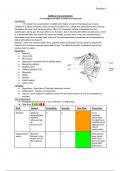
Daphnia, which are common water fleas, possess a less developed nervous system compared to
humans and so have a reduced awareness of pain. The daphnia are also transparent and so the
beating heart is visible.
Equipment:
● Daphnia
● Cavity slide
● Microscope
● Daphnia(in a container full of distilled water)
● Measuring cylinder
● Distilled water
● Caffeine solution 0.5%
● Stopwatch
● Clicker
● Pipettes
● Small beakers
● Cotton wool
Variables:
● Dependent - Heart rate of Daphnia (beats per minute)
● Independent - Caffeine Concentration
● Control - leave Daphnia in caffeine solution for the same amount of time to acclimatise (5
minutes)
Risk Assessment:
➔ Probability/severity of risk: 1-Low, 2-Medium, 3-High/Likely
➔ Total Risk: 1, 2, 3, 4, 6, 9
Risk: Hazard: Probability: Severity: Total Risk: Precaution
Daphnia Daphnia 2 2 4 Try to
harmed/killed; minimise
daphnia stress;store
stressed due the daphnia in
to conditions that
environment replicate their
natural
environment
Daphnia/pond Bacteria 1 1 2 Wear gloves;
water located in the keep hands
water and on away from
the Daphnia face and wash
hands after
experiment
Caffeine Concentration:
To investigate the effect of caffeine on heart rate
Hypothesis:
The higher the concentration of caffeine,the higher amount of heartbeats per minute
Caffeine is a natural stimulant, most commonly located in tea, coffee and cacao plants and works by
stimulating the brain and nervous system. After it is consumed, caffeine is absorbed into the
bloodstream via the gut. Its main effect is on the brain, due to blocking the effects of adenosine, which
is a neurotransmitter that relaxes the brain and makes you feel tired. It may also increase blood
adrenaline levels and increase brain activity of the neurotransmitters dopamine and norepinephrine,
further stimulating the brain.[1]
Daphnia, which are common water fleas, possess a less developed nervous system compared to
humans and so have a reduced awareness of pain. The daphnia are also transparent and so the
beating heart is visible.
Equipment:
● Daphnia
● Cavity slide
● Microscope
● Daphnia(in a container full of distilled water)
● Measuring cylinder
● Distilled water
● Caffeine solution 0.5%
● Stopwatch
● Clicker
● Pipettes
● Small beakers
● Cotton wool
Variables:
● Dependent - Heart rate of Daphnia (beats per minute)
● Independent - Caffeine Concentration
● Control - leave Daphnia in caffeine solution for the same amount of time to acclimatise (5
minutes)
Risk Assessment:
➔ Probability/severity of risk: 1-Low, 2-Medium, 3-High/Likely
➔ Total Risk: 1, 2, 3, 4, 6, 9
Risk: Hazard: Probability: Severity: Total Risk: Precaution
Daphnia Daphnia 2 2 4 Try to
harmed/killed; minimise
daphnia stress;store
stressed due the daphnia in
to conditions that
environment replicate their
natural
environment
Daphnia/pond Bacteria 1 1 2 Wear gloves;
water located in the keep hands
water and on away from
the Daphnia face and wash
hands after
experiment