KRM 310(B) - UNIT 8
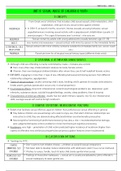
UNIT 8: SEXUAL ABUSE OF CHILDREN & YOUTH
1) CONCEPTS
From Greek word ‘child love’ that includes child sexual assault, child molestation, child
exploitation, child porn & any sexual crimes against children
PAEDOPHILIA In DSM-5: at least 6 months, recurrent, intense sexually arousing fantasies, sexual
urges/behaviours involving sexual activity with a prepubescent child/children (usually 13
years/younger) = The urges & fantasies aren’t criminal the acts are
HEBEPHILIA Sexual contact by adults with young adolescents (usually between age 13-15)
INCEST Intra-familial child molestation = sexual contact with minor by person in the immediate family
EXTRAFAMILIA L CHI LD Sexual contact with minor child by someone outside the immediate family (ex. soccer coach
MOLESTA TION etc.)
PARAPHILIA Parachute term for all atypical sexual fantasy types (different kinds exist)
2) SITUATIONAL & VICTIMISATION CHARACTERISTICS
Although child sex offending is mainly committed by males = females also commit
Men: more often step-children/distant relatives & mostly female victims
Women: their own biological children/children after whom they care & half male/half female victims
CROSSOVER : engaging in more than 1 type of sex-offending behaviour/victimising persons from different
relationship categories, ages/genders
Types of sexual contact: usually caressing child’s body, fondling child’s genitals & includes child asked to
fondle adult’s genitals (penetration occurs only in small proportion)
Psychological effects: long-term interpersonal, social & psychological problems (ex. depression, guilt,
inferiority, substance abuse, suicidal thoughts/feelings, anxiety, sleep problems, fears & trauma)
Characteristics of child sex offender: usually has low adult intimacy capacity, low IQ, low interpersonal
skills, average sexual self-control & high recidivism
3) COGNITIVE DISTORTIONS (NEUROCOGNITIVE FUNCTIONS)
Beliefs that facilitate sexual offences against children that justify/excuse sexual offending in general
May believe children are sexual beings who seek to enjoy sex; that adult-child sex relationships are
instructive to child; they are demonstrating affection/children are intentionally provocative
Neurocognitive functioning & prefrontal processing may play a role = neurodevelopmental damage,
poor judgement/impulse control, problems in brain functioning & cognitive processing
Recidivism: very high – penetration of child victim predicted higher incidence of recidivism (higher than
rapists) & offenders may exhibit psychopathy/sexual preoccupation features (more troublesome)
4) CLASSIFICATION PATTERNS
Typology by MTC:
FIXATED Don’t want to hurt children choose children as social & sexual companions
(IMMATURE) SEX Not been able to develop mature relationship with adult peers (didn’t have normal childhood)
OFFENDER Wishes to caress, fondle, touch & taste child (rarely genital intercourse)
REGRESSED SEX Feelings of masculine inadequacy sexual act is usually precipitated by jolt to offender’s
OFFENDER sexual inadequacy & seeks genital sex
UNIT 8: SEXUAL ABUSE OF CHILDREN & YOUTH
1) CONCEPTS
From Greek word ‘child love’ that includes child sexual assault, child molestation, child
exploitation, child porn & any sexual crimes against children
PAEDOPHILIA In DSM-5: at least 6 months, recurrent, intense sexually arousing fantasies, sexual
urges/behaviours involving sexual activity with a prepubescent child/children (usually 13
years/younger) = The urges & fantasies aren’t criminal the acts are
HEBEPHILIA Sexual contact by adults with young adolescents (usually between age 13-15)
INCEST Intra-familial child molestation = sexual contact with minor by person in the immediate family
EXTRAFAMILIA L CHI LD Sexual contact with minor child by someone outside the immediate family (ex. soccer coach
MOLESTA TION etc.)
PARAPHILIA Parachute term for all atypical sexual fantasy types (different kinds exist)
2) SITUATIONAL & VICTIMISATION CHARACTERISTICS
Although child sex offending is mainly committed by males = females also commit
Men: more often step-children/distant relatives & mostly female victims
Women: their own biological children/children after whom they care & half male/half female victims
CROSSOVER : engaging in more than 1 type of sex-offending behaviour/victimising persons from different
relationship categories, ages/genders
Types of sexual contact: usually caressing child’s body, fondling child’s genitals & includes child asked to
fondle adult’s genitals (penetration occurs only in small proportion)
Psychological effects: long-term interpersonal, social & psychological problems (ex. depression, guilt,
inferiority, substance abuse, suicidal thoughts/feelings, anxiety, sleep problems, fears & trauma)
Characteristics of child sex offender: usually has low adult intimacy capacity, low IQ, low interpersonal
skills, average sexual self-control & high recidivism
3) COGNITIVE DISTORTIONS (NEUROCOGNITIVE FUNCTIONS)
Beliefs that facilitate sexual offences against children that justify/excuse sexual offending in general
May believe children are sexual beings who seek to enjoy sex; that adult-child sex relationships are
instructive to child; they are demonstrating affection/children are intentionally provocative
Neurocognitive functioning & prefrontal processing may play a role = neurodevelopmental damage,
poor judgement/impulse control, problems in brain functioning & cognitive processing
Recidivism: very high – penetration of child victim predicted higher incidence of recidivism (higher than
rapists) & offenders may exhibit psychopathy/sexual preoccupation features (more troublesome)
4) CLASSIFICATION PATTERNS
Typology by MTC:
FIXATED Don’t want to hurt children choose children as social & sexual companions
(IMMATURE) SEX Not been able to develop mature relationship with adult peers (didn’t have normal childhood)
OFFENDER Wishes to caress, fondle, touch & taste child (rarely genital intercourse)
REGRESSED SEX Feelings of masculine inadequacy sexual act is usually precipitated by jolt to offender’s
OFFENDER sexual inadequacy & seeks genital sex