Social factors:
- Region
- Age
- Gender
- Class (class dealignment)
- Ethnicity
Individual voting behaviour: (partisan (class) dealignment)
- Valence
- Rational choice
- Issue voting
- Tactical voting 1979- Margaret Thatcher v James Callaghan (after winter of discontent
- Party leaders where labour was in power)
1997- John Major v Tony Blair (Tories were in power for 18 years before)
The media: 2019- Boris Johnson v Jo Swinson v Corbyn (Brexit)
- Social media
- Opinion polls
- Broadcast media
- The press
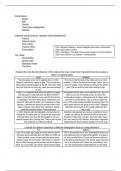
Evaluate the view that the influence of the media is the most crucial factor that determines the success or
failure of a political party.
Agree Disagree
The press plays a key role in shaping views. In 1997, This may not be the case as the media acts as an echo
Murdoch switched his support to Blair. The sun and many chamber- it reflects the view for the media. Labour was on
other papers switched support to the left. The labour party course for a large victory anyway according to the opinion
then won that year as many tory voters were encouraged polls. The sun and the press were reacting to this.
to vote.
media- it is unregulated and allows the parties to engage Demographic factors play a more significant role. Age- the
with the public in ways that were not able to be done older you are the more likely you are to vote for the
before. In the 1979 election, it was used for the first time conservatives. Region- urban areas vote for labour while
in campaigns. This led to many press conferences and rural vote for conservatives. This is used to explain the
speeches. Although the media was not allowed to shape win in 1979 as less people identified as working class- the
opinions, it allowed the citizens to become closer to the labour party relied on this group for their votes. Callaghan
parties and learn more about their manifestos- people looked like the favourite so this would explain why this
found the economic reforms Tories promised. was a miss.
In 2019, Opinion polls had indicated a conservative win Individual voting tactics play more of a significant role as
throughout- this along with the Facebook ads meant that people use valence and rational choices to make their
left wing voters may have felt discouraged to vote as it decision of where their vote lies. This is the main reason
seemed hopeless thus causing more Tories to turn up and the Tories won the 2019 election- many labour supporters
vote which led to an 80-seat majority. realised that the issue of Brexit had gone on for too long.
Evaluate the relative importance of different demographic factors in voting behaviour.
For Against
Age- the younger age groups are more likely to vote for This is not important on its own. Demographic factors are
the labour party especially after the 1980s and 1990s as only significant when considered all together. At a glance,
Britain became a more service-based economy where we may consider that an 18-year-old woman would vote
position counts for more in jobs. This meant it is hard for for the labour party however, she may be upper class and
them to afford housing and tory policies would not apply to live in a rural area which makes her more likely to vote
them. As you go older, tory policies about pensions apply. tory. We cannot predict voting behaviour on one single
- Region
- Age
- Gender
- Class (class dealignment)
- Ethnicity
Individual voting behaviour: (partisan (class) dealignment)
- Valence
- Rational choice
- Issue voting
- Tactical voting 1979- Margaret Thatcher v James Callaghan (after winter of discontent
- Party leaders where labour was in power)
1997- John Major v Tony Blair (Tories were in power for 18 years before)
The media: 2019- Boris Johnson v Jo Swinson v Corbyn (Brexit)
- Social media
- Opinion polls
- Broadcast media
- The press
Evaluate the view that the influence of the media is the most crucial factor that determines the success or
failure of a political party.
Agree Disagree
The press plays a key role in shaping views. In 1997, This may not be the case as the media acts as an echo
Murdoch switched his support to Blair. The sun and many chamber- it reflects the view for the media. Labour was on
other papers switched support to the left. The labour party course for a large victory anyway according to the opinion
then won that year as many tory voters were encouraged polls. The sun and the press were reacting to this.
to vote.
media- it is unregulated and allows the parties to engage Demographic factors play a more significant role. Age- the
with the public in ways that were not able to be done older you are the more likely you are to vote for the
before. In the 1979 election, it was used for the first time conservatives. Region- urban areas vote for labour while
in campaigns. This led to many press conferences and rural vote for conservatives. This is used to explain the
speeches. Although the media was not allowed to shape win in 1979 as less people identified as working class- the
opinions, it allowed the citizens to become closer to the labour party relied on this group for their votes. Callaghan
parties and learn more about their manifestos- people looked like the favourite so this would explain why this
found the economic reforms Tories promised. was a miss.
In 2019, Opinion polls had indicated a conservative win Individual voting tactics play more of a significant role as
throughout- this along with the Facebook ads meant that people use valence and rational choices to make their
left wing voters may have felt discouraged to vote as it decision of where their vote lies. This is the main reason
seemed hopeless thus causing more Tories to turn up and the Tories won the 2019 election- many labour supporters
vote which led to an 80-seat majority. realised that the issue of Brexit had gone on for too long.
Evaluate the relative importance of different demographic factors in voting behaviour.
For Against
Age- the younger age groups are more likely to vote for This is not important on its own. Demographic factors are
the labour party especially after the 1980s and 1990s as only significant when considered all together. At a glance,
Britain became a more service-based economy where we may consider that an 18-year-old woman would vote
position counts for more in jobs. This meant it is hard for for the labour party however, she may be upper class and
them to afford housing and tory policies would not apply to live in a rural area which makes her more likely to vote
them. As you go older, tory policies about pensions apply. tory. We cannot predict voting behaviour on one single