Antibiotics
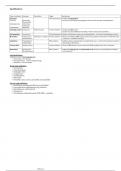
Type of antibiotic Examples Side effects Target Mechanisms
β lactams: Cell wall synthesis • Inhibits transpeptidase
Penicillin Amoxicillin • Prevents cross linking of peptidoglycan chains which disrupts transpeptidation
Flucloxacillin
Cephalosporins Cefuroxime
Ceftriaxone
Carbapenems Imipenem
Aminoglycosides Gentamicin Nephrotoxicity Protein synthesis • Targets the 30S subunit
• Causes inaccurate mRNA proofreading - leads to faulty protein synthesis
Glycopeptides Vancomycin Cell wall synthesis • Binds to sidechains and prevents transpeptidation - cross links of peptidoglycan chains
Macrolides Erythromycin Cholestasis - jaundice Protein synthesis • Binds to 23S rRNA of 50S subunit and prevents peptide bond formation within EPA sites
Clarithromycin (resistance = 23SrRNA mutation)
Antifolates Trimethoprim DNA synthesis • Inhibits enzymes which produce tetrahydrofolic acid - a cofactor for enzymes involved in
Sulfonamides DNA synth & cell division
Tetracyclines Oxytetracycline Protein synthesis • Binds to 30S subunit, prevents aminoacyl-tRNA binding to the A site of ribosome
Quinolones Ciprofloxacin DNA synthesis • Inhibits the DNA gyrase and topoisomerase IV enzymes, preventing DNA unwinding
Fluroquinolones and replication
Contraindications:
Antibiotics not used during pregnancy:
• Tetracycline - liver damage
• Fluoroquinolones - causes cartilage damage
• Antifolates - in first trimester
Broad range antibiotics:
• Tetracyclines
• Fluoroquinolones
• Aminoglycosides
• Carbapenems
• Cephalosporins
• Macrolides
• Penicillins (some, such as amoxicillin and ampicillin)
Narrow range antibiotics:
• Penicillinase-resistant penicillins (e.g. methicillin)
• First-generation cephalosporins (e.g. cefazolin)
• Macrolides (e.g. erythromycin)
• Clindamycin
• Trimethoprim-sulfamethoxazole (TMP-SMX) - antifolate
I^MD Page 1
Type of antibiotic Examples Side effects Target Mechanisms
β lactams: Cell wall synthesis • Inhibits transpeptidase
Penicillin Amoxicillin • Prevents cross linking of peptidoglycan chains which disrupts transpeptidation
Flucloxacillin
Cephalosporins Cefuroxime
Ceftriaxone
Carbapenems Imipenem
Aminoglycosides Gentamicin Nephrotoxicity Protein synthesis • Targets the 30S subunit
• Causes inaccurate mRNA proofreading - leads to faulty protein synthesis
Glycopeptides Vancomycin Cell wall synthesis • Binds to sidechains and prevents transpeptidation - cross links of peptidoglycan chains
Macrolides Erythromycin Cholestasis - jaundice Protein synthesis • Binds to 23S rRNA of 50S subunit and prevents peptide bond formation within EPA sites
Clarithromycin (resistance = 23SrRNA mutation)
Antifolates Trimethoprim DNA synthesis • Inhibits enzymes which produce tetrahydrofolic acid - a cofactor for enzymes involved in
Sulfonamides DNA synth & cell division
Tetracyclines Oxytetracycline Protein synthesis • Binds to 30S subunit, prevents aminoacyl-tRNA binding to the A site of ribosome
Quinolones Ciprofloxacin DNA synthesis • Inhibits the DNA gyrase and topoisomerase IV enzymes, preventing DNA unwinding
Fluroquinolones and replication
Contraindications:
Antibiotics not used during pregnancy:
• Tetracycline - liver damage
• Fluoroquinolones - causes cartilage damage
• Antifolates - in first trimester
Broad range antibiotics:
• Tetracyclines
• Fluoroquinolones
• Aminoglycosides
• Carbapenems
• Cephalosporins
• Macrolides
• Penicillins (some, such as amoxicillin and ampicillin)
Narrow range antibiotics:
• Penicillinase-resistant penicillins (e.g. methicillin)
• First-generation cephalosporins (e.g. cefazolin)
• Macrolides (e.g. erythromycin)
• Clindamycin
• Trimethoprim-sulfamethoxazole (TMP-SMX) - antifolate
I^MD Page 1