W2 CH 2 - Functional Neuroanatomy and the Evolution of the
Nervous System
Anatomical Directions and Planes of Section
Protecting and Supplying the Nervous System
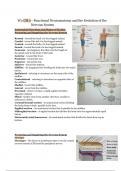
Rostral - toward the head of a four-legged animal.
Caudal - toward the tail of a four-legged animal.
Ventral - toward the belly of a four-legged animal.
Dorsal - toward the back of a four legged animal.
Neuraxis - An imaginary line that runs the length of
the spinal cord to the front of the brain.
Anterior - toward the front.
Posterior - toward the rear.
Superior - toward the top.
Inferior - toward the bottom.
Midline - An imaginary line dividing the body into two equal
halves.
Ipsilateral - referring to structures on the same side of the
midline.
Contralateral - referring to structures on opposite sides of
the midline.
Medial - toward the midline.
Lateral - away from the midline.
Proximal - closer to center; usually applied to limbs;
opposite of distal.
Distal - farther away from another structure, usually in
reference to limbs.
Coronal/frontal section - An anatomical section dividing
the brain front to back, parallel to the face.
Sagittal section - An anatomical section that is parallel to the midline
Midsagittal section - A sagittal section that divides the brain into two approximately equal
halves.
Horizontal/axial/transverse - An anatomical section that divides the brain from top to
bottom.
Protecting and Supplying the Nervous System
Meninges
Meninges - The layers of membranes that cover the central
nervous system (CNS) and the peripheral nerves.
, Dura mater - The outermost of the three layers of meninges; found in both the central (CNS)
and peripheral nervous systems (PNS).
Arachnoid layer - The middle layer of the meninges covering the central nervous system
(CNS).
Pia mater - The innermost of the layers of meninges, found in both the CNS and the peripheral
nervous system (PNS).
Subarachnoid space - A space filled with cerebrospinal fluid (CSF) that lies between the
arachnoid and pia mater layers of the meninges in the central nervous system (CNS).
LINKING THE BRAIN AND THE IMMUNE SYSTEM:
- Used to be believed that the lymphatic system (immune sys) didn’t include the brain, but
was found that their Direct link was just Not discovered, after examining for autism and
alzheimers etc.
- For decades, anatomists had overlooked the existence of a meningeal lymphatic drainage
system because they lacked the methods needed to see one. Anthoine Louveau found a
new method of preserving the meninges of a mouse brain, making the discovery possible.
- The researchers discovered lymphatic vessels in the meninges that possessed many of
the same features that characterize conventional peripheral lymphatic vessels.
- The discovery of a somewhat conventional lymphatic system in the brain will allow
researchers to rethink the roles of the gut microbiome and immune system function in a
number of neurological conditions.
The Meningeal Lymphatic System => Fluid components
of the cerebrospinal fluid (CSF) drain into the blood supply
while immune cells and proteins drain to the deep cervical
lymph nodes via the newly discovered meningeal lymphatic
system. This system connects the brain's immune system with
the immune system serving the rest of the body.
Cerebrospinal Fluid
Cerebrospinal fluid (CSF) - The special plasma-like fluid circulating within the ventricles of
the brain, the central canal of the spinal cord, and the subarachnoid space.
Ventricle - One of four hollow spaces within the brain that contain cerebrospinal fluid (CSF).
Choroid plexus - The lining of the ventricles, which secretes the cerebrospinal fluid (CSF).
Central canal - The small midline channel in the spinal cord that contains cerebrospinal fluid
(CSF).
- CSF is secreted within hollow spaces in the brain known as ventricles. Within the lining
of the ventricles, the choroid plexus converts material from the nearby blood supply into
CSF. CSF circulates through the central canal of the spinal cord and four ventricles in
the brain: the two lateral ventricles, one in each hemisphere, and the third and fourth
ventricles in the brain stem.
Nervous System
Anatomical Directions and Planes of Section
Protecting and Supplying the Nervous System
Rostral - toward the head of a four-legged animal.
Caudal - toward the tail of a four-legged animal.
Ventral - toward the belly of a four-legged animal.
Dorsal - toward the back of a four legged animal.
Neuraxis - An imaginary line that runs the length of
the spinal cord to the front of the brain.
Anterior - toward the front.
Posterior - toward the rear.
Superior - toward the top.
Inferior - toward the bottom.
Midline - An imaginary line dividing the body into two equal
halves.
Ipsilateral - referring to structures on the same side of the
midline.
Contralateral - referring to structures on opposite sides of
the midline.
Medial - toward the midline.
Lateral - away from the midline.
Proximal - closer to center; usually applied to limbs;
opposite of distal.
Distal - farther away from another structure, usually in
reference to limbs.
Coronal/frontal section - An anatomical section dividing
the brain front to back, parallel to the face.
Sagittal section - An anatomical section that is parallel to the midline
Midsagittal section - A sagittal section that divides the brain into two approximately equal
halves.
Horizontal/axial/transverse - An anatomical section that divides the brain from top to
bottom.
Protecting and Supplying the Nervous System
Meninges
Meninges - The layers of membranes that cover the central
nervous system (CNS) and the peripheral nerves.
, Dura mater - The outermost of the three layers of meninges; found in both the central (CNS)
and peripheral nervous systems (PNS).
Arachnoid layer - The middle layer of the meninges covering the central nervous system
(CNS).
Pia mater - The innermost of the layers of meninges, found in both the CNS and the peripheral
nervous system (PNS).
Subarachnoid space - A space filled with cerebrospinal fluid (CSF) that lies between the
arachnoid and pia mater layers of the meninges in the central nervous system (CNS).
LINKING THE BRAIN AND THE IMMUNE SYSTEM:
- Used to be believed that the lymphatic system (immune sys) didn’t include the brain, but
was found that their Direct link was just Not discovered, after examining for autism and
alzheimers etc.
- For decades, anatomists had overlooked the existence of a meningeal lymphatic drainage
system because they lacked the methods needed to see one. Anthoine Louveau found a
new method of preserving the meninges of a mouse brain, making the discovery possible.
- The researchers discovered lymphatic vessels in the meninges that possessed many of
the same features that characterize conventional peripheral lymphatic vessels.
- The discovery of a somewhat conventional lymphatic system in the brain will allow
researchers to rethink the roles of the gut microbiome and immune system function in a
number of neurological conditions.
The Meningeal Lymphatic System => Fluid components
of the cerebrospinal fluid (CSF) drain into the blood supply
while immune cells and proteins drain to the deep cervical
lymph nodes via the newly discovered meningeal lymphatic
system. This system connects the brain's immune system with
the immune system serving the rest of the body.
Cerebrospinal Fluid
Cerebrospinal fluid (CSF) - The special plasma-like fluid circulating within the ventricles of
the brain, the central canal of the spinal cord, and the subarachnoid space.
Ventricle - One of four hollow spaces within the brain that contain cerebrospinal fluid (CSF).
Choroid plexus - The lining of the ventricles, which secretes the cerebrospinal fluid (CSF).
Central canal - The small midline channel in the spinal cord that contains cerebrospinal fluid
(CSF).
- CSF is secreted within hollow spaces in the brain known as ventricles. Within the lining
of the ventricles, the choroid plexus converts material from the nearby blood supply into
CSF. CSF circulates through the central canal of the spinal cord and four ventricles in
the brain: the two lateral ventricles, one in each hemisphere, and the third and fourth
ventricles in the brain stem.