Excavation, trenching and shoring Questions with correct Answers
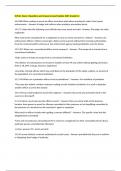
Excavation, trenching and shoring Questions with correct Answers What is an excavation? An excavation is a man-made cut, cavity or depression in the earth's surface. What is a trench? An excavation that is deeper than it is wide with a depth of no more than 15 ft. What are hazards associated with trenches/excavations? - Cave ins or soil collapses - Slips, trips, and falls around the excavation site - flooding ir water accumulation - Exposure to hazardous atmospheres - Contact with utilities - Being struck by machinery or objects - Hazards related to materials handling In an excavation, boiling is evidence that there is _____. Upward water flow** Unstable soil A chance of a cave-in An issue with the shielding Hazardous atmospheres, groundwater infiltration, water accumulation, changing soil conditions, contaminated water or soil, stability of adjacent structures, and falling objects are all hazards when performing excavation work. True** False What are the types of soil classification? Stable rock Type A Type B Type C How much does a cubic foot of soil weigh? 100 lbs** 50 lbs 25 lbs 75lbs Which class of soil consists of natural soil mineral water matter that can be excavated, and the sides will remain intact while exposed? Stable rock** Type A Type B Type C ___ class soil does not contain enough particles and clay so that the soil will stick together. It contains a mix of gravel, slit, loam and clay. Stable rock Type A Type B** Type C ______ class soil is the least stable. It usually consists of gravel, sand and loamy sand. Stable rock Type A Type B Type C** What is the difference between shoring and trench boxes? Shoring prevents collapses of sidewalls, while trench boxes just protect the workers. How much should a trench box stick out from the trench? 16in 17in 18in** 19in ______ is a method of protecting workers from excavation and trench cave-ins by excavating soil at an angle away from the base of the excavation. Trenching Sloping** Shoring Sheeting There are _____ types of excavation sheeting typically used. Two Three* Four Five Timber sheet piling, steel sheet piling, and precast concrete sheet piling are the type of sheeting typically used in construction. True* False Trench boxes are typically used in ___ areas. Open** Shallow Deep Cramped Which is the first, best practice when trenching, excavating, sheeting, shoring and shielding? - Provide guardrails and barriers to prevent anything from falling into the trench. - Provide adequate methods of egress** - Excavate no further than two feet below the trench box - Keep excavation material at least two feet from the edge. Ladders used for egress should extend at least _____ ft minimum above sheeting, shoring or trench boxes. Two Three** Four Five Ladders used for egress should be placed no further than ____ ft apart. 5 10 15 25** Classification of soil, inspection of protective systems, assessment of overall excavation conditions, monitoring water removal equipment and inspection of the site should all be done by _____. A Safety Professional A Competent Person** A Capable Person A Skilled Person Excavation inspections should be performed _____. Daily** Weekly Monthly Bi-Weekly
Written for
- Institution
- Excavation
- Course
- Excavation
Document information
- Uploaded on
- August 18, 2023
- Number of pages
- 3
- Written in
- 2023/2024
- Type
- Exam (elaborations)
- Contains
- Questions & answers
Subjects
-
excavation trenching and shoring questions with c
-
what is an excavation an excavation is a man made
-
what are hazards associated with trenchesexcavati
-
in an excavation boiling is evidence that there i