Forensic Science Death Investigation Questions Answered 100% correct
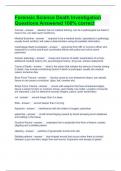
Forensic Science Death Investigation Questions Answered 100% correct Coroner elected, has no medical training, can be a pathologists but doesn't have to be, can take sworn testimony Medical Examiner required to be a medical doctor, specializes in pathology, usually board certified, will make a determination using all available information. medicolegal death investigator personnel from ME or Corner's officer who responds to a crime scene and coordinates efforts with police and crime scene personnel. forensic pathology Cause and manner of death; examination of a body, additional medical history info, psychological history, drug use, witness statements Cause of Death what is the action that initiates the serious of events ending in death, may include contributing factors if death is prolonged. usually the medical reason someone dies Blunt Force Trauma injuries cause by non-sharpened object; can abrade tissue or can cause a contusion. (pipe, bat, crowbar etc) Sharp Force Trauma occurs with weapons that have sharpened edges, tissue is sliced not torn or crushed. knives, razor blade, box cutter. Location of wounds are important. Look for defensive wounds (fingers, palms, lower extremities) cut wound longer than it is deep Stab wound deeper than it is long Asphyxia interference with the intake of oxygen; petechiae petechiae small hemorrhaging caused by blood escaping burst capillaries and settling in the tissue Gunshot Wound originates from a projectile fired from a firearm; creates stippling and a stellate pattern stippling particles of gunpowder burned into skin Stellate patterns star-shaped wound that occurs when there is contact between a gun and skin; larger than exit wound. Expansion and escape of gases Post-Mortem Examination determination of cause of death done by performing an autopsy autopsy examination of a body post-mortem; record and photographs will be used during court proceedings evidence collected during an autopsy clothing, sexual assault kit, swabs of DNA/saliva, blood, projectiles, hair, fingernail scrapings 3 types of Post-Mortem Examination External, Internal, toxicology external examination general condition of body; sex, weight, tattoos, teeth, age, any abnormalities or deformities; condition of clothing, classification of injuries, trace evidence collection(bags on hands) internal examination y-shaped incision, removal and weight of organs, cranium examination, lungs, heart malformations/trauma, stomach contents. toxicological samples blood, stomach contents, bile, brain matter, liver, vitreous humor Manner of Death homicide, suicide, accidental, natural, undetermined homicide death at the hands of another; death though reckless, intentional or grossly negligent actions of another. suicide result of an individual taking his/her own life with lethal intention; must be able to show that the act was done alone and without outside help; must be intentional accidental must be no intent to cause harm or death through gross negligence. overdose, unintentional lethal combination of drugs natural disease, chronic drug/alcohol abuse, longtime exposure to toxins undetermined no rational classification can be determined; physical exam finds no mechanism of death, absence of meaningful findings in toxicological exam
Written for
- Institution
- Death Investigator
- Course
- Death Investigator
Document information
- Uploaded on
- August 16, 2023
- Number of pages
- 4
- Written in
- 2023/2024
- Type
- Exam (elaborations)
- Contains
- Questions & answers
Subjects
-
forensic science death investigation questions ans
-
coroner elected has no medical training can be a
-
forensic pathology cause and manner of death exam
-
stellate patterns star shaped wound that occurs wh

Also available in package deal