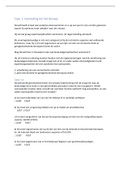
I have been asked to provide a detailed report for Jill and Jack to help explain the
hierarchy of the Civil and Criminal Courts.
Hierarchy of the Courts system
Supreme Court
Court of Appeal
Criminal Division Civil Division
High Court
Crown Court
Family Queens Bench Chancery
Magistrates’ Tribunals County
Court Courts
When dealing with civil cases, there are two Courts. These Courts are County
(established in 1846) and High Court (established in 1789). They are often referred
as by First Instance Courts. There are around 220 civil Courts in the United
Kingdom. The reason that County Courts were created was because their intention
was to deal with smaller cases and disagreements over business activities that
wouldn’t amount to large damages. This means that County Courts only hear claims
worth up to £50,000. These civil cases are generally heard by a district judge. A
district judge is a judge that is full time and is ranked as the lowest kind of judge.
However, if a case is considered to be too complicated for a district judge, then a
circuit judge will take their place. This is because they are generally more
experienced. The larger the cost and size of the claims in a civil case, will depend on
whether the case will be heard in the County Court or High Court and by either a
district judge or circuit judge. Cases with claims Higher than £50,000 must be heard
in the High Court and not in the County Court. This is mainly due to the fact that the
County Court has limited powers. An example of a case which would be heard in the
High Court would be a divorce involving large amounts of assets and especially if a
child is involved. It is a very complex process and varies case to case in what the
outcome is.
hierarchy of the Civil and Criminal Courts.
Hierarchy of the Courts system
Supreme Court
Court of Appeal
Criminal Division Civil Division
High Court
Crown Court
Family Queens Bench Chancery
Magistrates’ Tribunals County
Court Courts
When dealing with civil cases, there are two Courts. These Courts are County
(established in 1846) and High Court (established in 1789). They are often referred
as by First Instance Courts. There are around 220 civil Courts in the United
Kingdom. The reason that County Courts were created was because their intention
was to deal with smaller cases and disagreements over business activities that
wouldn’t amount to large damages. This means that County Courts only hear claims
worth up to £50,000. These civil cases are generally heard by a district judge. A
district judge is a judge that is full time and is ranked as the lowest kind of judge.
However, if a case is considered to be too complicated for a district judge, then a
circuit judge will take their place. This is because they are generally more
experienced. The larger the cost and size of the claims in a civil case, will depend on
whether the case will be heard in the County Court or High Court and by either a
district judge or circuit judge. Cases with claims Higher than £50,000 must be heard
in the High Court and not in the County Court. This is mainly due to the fact that the
County Court has limited powers. An example of a case which would be heard in the
High Court would be a divorce involving large amounts of assets and especially if a
child is involved. It is a very complex process and varies case to case in what the
outcome is.