® ENGLISH GCSE – ROMEO AND JULIET
Mercutio
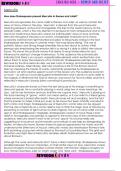
How does Shakespeare present Mercutio in Romeo and Juliet?
Mercutio encapsulates the comic relief in Romeo and Juliet, as well as contrast the
views of many others in the play. ‘Mercutio’ is derived from the word mercurial
meaning eloquent, active and changeable. This links to the metal mercury on the
periodic table, which is the only element to be liquid at room temperature and so this
stand out metal shows Mercutio’s stand out individualistic views on love and fate,
Mercutio throughout the play is an active, changeable character as his mood
constantly switches from light-hearted and jokey to firing insults, linking to the fact
Shakespeare sets the play in summer when ‘the mad blood stirring.’ The use of
pathetic fallacy and strong image intensifies the action about to unfold, whilst
perhaps also emphasising the emotion felt is so strong it is able to affect the natural
forces. This shows the activate nature that seems to erupt inside Mercutio and
influences his abstract change in behaviour. To the audience this automatically
indicates that there’s an unusual, unpredictable element which excites them and
allows them to enjoy the presence of his character. Shakespeare perhaps does this
because by the time Mercutio dies, we feel a loss of energy and simultaneously
immense sadness. Alternatively, Mercutio could be a link to the Roman God of
Mercury meaning the master of words, adamantly presented by Shakespeare as
Mercutio’s wit and creative speech is part of the reason why the audience loves him
so much – as well as it is providing great entertainment and a sense of comic relief to
the tragedy. Furthermore the God of mercury was known for his love affairs and this is
reflected in Mercutio’s bawdy jokes connoting his promiscuity.
Mercutio’s character stands out from the rest because of his energy in everything he
does and speaks. He is constantly playing in words using two or more meanings. He
says, ‘ask for me tomorrow and you shall fine me a grave man.’ Mercutio is playing on
the dual meaning of ‘grave,’ which can mean serious, or it can refer to a literal grave,
where someone is buried after death. Mercutio loves wit and wordplay, and the fact
that he pauses to make a final pun even as he knows he's been mortally wounded is
both comic and tragic. Shakespeare use of Mercutio’s comic side can be argued
that the role of Mercutio as a comic relief is only to think the tragic tone of the play by
presenting a contrast of light humour to dark tragedy, this use of comic relief can be
seen in all of Shakespeare’s tragedies. Shakespeare’s reason to have these comic
reliefs in his tragedies was perhaps to appeal to the lower class of the contemporary
audience. Mercutio doesn't want to let on how ‘grave’ his wounds really are,
suggesting an innocence and immaturity as he refuses to see help by disregarding his
injuries. As Mercutio knows, Romeo shares his special appreciation for words and will
understand the bitter irony of his pun. Mercutio's words also foreshadow Romeo's fate.
Both promising young men will be dead as the result of a pointless feud. The grief and
frustration we might feel at Mercutio's senseless death foreshadows how we will feel
about Romeo's.
Although the nurse and Mercutio don’t have a direct relationship, Shakespeare draws
parallels between the two characters, on their similar views on love. Mercutio's coarse
physical imagery and sexual jokes contrast sharply with Romeo's religious imagery for
love. Romeo describes Juliet as ‘bright angel’ and ‘dear saint.’ Shakespeare uses
®
Copyright © 2022 Revision Guru | All rights reserved
Mercutio
How does Shakespeare present Mercutio in Romeo and Juliet?
Mercutio encapsulates the comic relief in Romeo and Juliet, as well as contrast the
views of many others in the play. ‘Mercutio’ is derived from the word mercurial
meaning eloquent, active and changeable. This links to the metal mercury on the
periodic table, which is the only element to be liquid at room temperature and so this
stand out metal shows Mercutio’s stand out individualistic views on love and fate,
Mercutio throughout the play is an active, changeable character as his mood
constantly switches from light-hearted and jokey to firing insults, linking to the fact
Shakespeare sets the play in summer when ‘the mad blood stirring.’ The use of
pathetic fallacy and strong image intensifies the action about to unfold, whilst
perhaps also emphasising the emotion felt is so strong it is able to affect the natural
forces. This shows the activate nature that seems to erupt inside Mercutio and
influences his abstract change in behaviour. To the audience this automatically
indicates that there’s an unusual, unpredictable element which excites them and
allows them to enjoy the presence of his character. Shakespeare perhaps does this
because by the time Mercutio dies, we feel a loss of energy and simultaneously
immense sadness. Alternatively, Mercutio could be a link to the Roman God of
Mercury meaning the master of words, adamantly presented by Shakespeare as
Mercutio’s wit and creative speech is part of the reason why the audience loves him
so much – as well as it is providing great entertainment and a sense of comic relief to
the tragedy. Furthermore the God of mercury was known for his love affairs and this is
reflected in Mercutio’s bawdy jokes connoting his promiscuity.
Mercutio’s character stands out from the rest because of his energy in everything he
does and speaks. He is constantly playing in words using two or more meanings. He
says, ‘ask for me tomorrow and you shall fine me a grave man.’ Mercutio is playing on
the dual meaning of ‘grave,’ which can mean serious, or it can refer to a literal grave,
where someone is buried after death. Mercutio loves wit and wordplay, and the fact
that he pauses to make a final pun even as he knows he's been mortally wounded is
both comic and tragic. Shakespeare use of Mercutio’s comic side can be argued
that the role of Mercutio as a comic relief is only to think the tragic tone of the play by
presenting a contrast of light humour to dark tragedy, this use of comic relief can be
seen in all of Shakespeare’s tragedies. Shakespeare’s reason to have these comic
reliefs in his tragedies was perhaps to appeal to the lower class of the contemporary
audience. Mercutio doesn't want to let on how ‘grave’ his wounds really are,
suggesting an innocence and immaturity as he refuses to see help by disregarding his
injuries. As Mercutio knows, Romeo shares his special appreciation for words and will
understand the bitter irony of his pun. Mercutio's words also foreshadow Romeo's fate.
Both promising young men will be dead as the result of a pointless feud. The grief and
frustration we might feel at Mercutio's senseless death foreshadows how we will feel
about Romeo's.
Although the nurse and Mercutio don’t have a direct relationship, Shakespeare draws
parallels between the two characters, on their similar views on love. Mercutio's coarse
physical imagery and sexual jokes contrast sharply with Romeo's religious imagery for
love. Romeo describes Juliet as ‘bright angel’ and ‘dear saint.’ Shakespeare uses
®
Copyright © 2022 Revision Guru | All rights reserved