® ENGLISH GCSE – NON-FICTION TEXTS
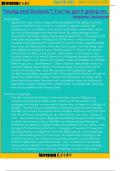
Young and Dyslexic? You’ve got it going on,
Benjamin Zephaniah
Anecdotes:
Zephaniah uses a lot of anecdotes throughout the extract it invite
our trust and first show us he isn’t a perfect person and by him
opening up to us it allows us to read more freely, understand what
he says and engage with the text more. By using dialogue and
anecdote, the writer makes the example seem much more real and
vivid and emphasises the injustice of the way in which he was
treated. The writer treats his teacher in a much more understanding
way than she treated him. 'She also had a point, but the thing was,
she called me stupid for even thinking about it.' Shows the narrow-
mindedness of the school system. Zephaniah’s anecdote to him
having ‘poems in his head’ shows an untapped creativity and that
just because he was black and dyslexic was just labelled as a failure,
likely to go be a ‘sportsperson’. There are also anecdotes about a
teacher talking about Africa's 'local savages' to show the implicit
racism of the teacher, and the injustice that Zephaniah got in
trouble for standing up against this. Throughout the extract we get a
sense that Zephaniah doesn’t blame the teachers for doing what
they did as because ‘the ones who wanted to have an individual
approach weren’t allowed to’ which shows us Zephaniah criticising
the school system over the teachers.
Emotive Language:
The first word of the extract is very emotive, heavy hitting and
creates a depressed, bleak tone to the rest of the extract, but
engages the reader as we want to know why so there’s a buildup of
tension. The line has connotations of extreme physical and mental
torment and make the reader feel unsettled whilst knowing from the
title this will have something to do with them in one way, shape, or
form. Zephaniah cleverly disguises everything he says by first making
us think wat he means(e.g. the title is a rhetorical question) and
therefore by making us guess make assumptions he can show us the
danger of not knowing the facts . Throughout the extract there is a
recurring theme of negativity with the triplet use of ‘no compassion,
no understanding and no humanity’. By Zephaniah refusing to be
positive he shows his criticism towards the reader and outlines his
shame. Zephaniah uses the pronoun ‘you’ to reassure the reader
refocus their attention to the extract and no matter if your dyslexic
or not he addresses you and has something to say to all types of
®
Copyright © 2022 Revision Guru | All rights reserved
Young and Dyslexic? You’ve got it going on,
Benjamin Zephaniah
Anecdotes:
Zephaniah uses a lot of anecdotes throughout the extract it invite
our trust and first show us he isn’t a perfect person and by him
opening up to us it allows us to read more freely, understand what
he says and engage with the text more. By using dialogue and
anecdote, the writer makes the example seem much more real and
vivid and emphasises the injustice of the way in which he was
treated. The writer treats his teacher in a much more understanding
way than she treated him. 'She also had a point, but the thing was,
she called me stupid for even thinking about it.' Shows the narrow-
mindedness of the school system. Zephaniah’s anecdote to him
having ‘poems in his head’ shows an untapped creativity and that
just because he was black and dyslexic was just labelled as a failure,
likely to go be a ‘sportsperson’. There are also anecdotes about a
teacher talking about Africa's 'local savages' to show the implicit
racism of the teacher, and the injustice that Zephaniah got in
trouble for standing up against this. Throughout the extract we get a
sense that Zephaniah doesn’t blame the teachers for doing what
they did as because ‘the ones who wanted to have an individual
approach weren’t allowed to’ which shows us Zephaniah criticising
the school system over the teachers.
Emotive Language:
The first word of the extract is very emotive, heavy hitting and
creates a depressed, bleak tone to the rest of the extract, but
engages the reader as we want to know why so there’s a buildup of
tension. The line has connotations of extreme physical and mental
torment and make the reader feel unsettled whilst knowing from the
title this will have something to do with them in one way, shape, or
form. Zephaniah cleverly disguises everything he says by first making
us think wat he means(e.g. the title is a rhetorical question) and
therefore by making us guess make assumptions he can show us the
danger of not knowing the facts . Throughout the extract there is a
recurring theme of negativity with the triplet use of ‘no compassion,
no understanding and no humanity’. By Zephaniah refusing to be
positive he shows his criticism towards the reader and outlines his
shame. Zephaniah uses the pronoun ‘you’ to reassure the reader
refocus their attention to the extract and no matter if your dyslexic
or not he addresses you and has something to say to all types of
®
Copyright © 2022 Revision Guru | All rights reserved