® ENGLISH GCSE – AN INSPECTOR CALLLS
Eric
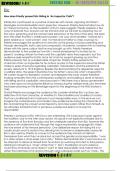
How does Priestly present Eric Birling in ‘An Inspector Calls’?
Initially Eric is portrayed as a positive character with morals, opposing his father’s
ideologies and individualistic ironic speeches. However, Priestly demonstrates how sin
isn’t beyond anyone, as the revelation of Eva’s rape suggests. Priestly explores a few
ways to illustrate how anyone can be immoral and we will start by exploring two of
the ways: parenting and the normal male behaviour at the time of the play. We learn
from the offset that Eric’s childhood has been ‘not cosy and homelike.’ Instead he’s
been raised by a ‘cold woman’ and ‘not the kind of father a chap could go to.’
Priestly encourages the audience to view Eric as the product of poor parenting and
through denying Eric both care and compassion, his parents condemn him to treating
others with the same callous that he was brought up with. Priestly therefore
demonstrates to the audience how Eric’s moral development is stunted by his
parents’ evoking criticism for them and the capitalist views they represent, but the
audience seek empathy for Eric since he’s had no support growing up and thus
Priestly presents him as a redeemable character. Priestly further presents the
character of Eric as forgivable for his actions as prior to the Inspectors arrival his father
makes a series of lectures regarding capitalism, individualism and the patriarchal
society adamant in 1912 England. Besides this demonstrating the desperate need for
a welfare state, the speech illustrates how his father’s views are what’s shaped Eric.
He’s been taught to disrespect women and disregard the lower classes therefore
evoking sympathy from the contemporary audience and building a sense of tension
with Birling and his capitalistic views because in 1946 there was a labour government
who were about to revolutionise Britain by introducing the welfare state, plus the there
had been planning on the Beveridge report for the beginning of the NHS started in
1942.
Overall Priestly encourages the audience this consider whether Eric’s actions are
reflective of his true character, or whether it’s the brutalities and cruelties of society
that has conditioned him to behave in such irresponsible ways. In the end we can
imagine the contemporary and modern day audience favouring the character of
Eric and blaming the corrupt social hierarchy and class system rather than himself, as
he ultimately transforms from a pompous juvenile and learns to accept his
responsibility.
Priestley’s portrayal of Eric with Eva is also interesting. This is because it goes against
the tradition, due to the inter-class nature. His abuse is not explicitly revealed due to
the absence of Eva from the play and the unreliable narration from Eric however the
audience will understand that through the vague euphemistic language Eric hides
the true extent of his immoral behaviour. One deliberate reason for hiding this is to
create doubt over his actions thus allowing him to remain a redeemable character.
Eric is also used by Priestly to convey to the audience they should not detach
themselves from what they’ve done but accept the greater social responsibility. ‘I was
in a state where a chap easily turns nasty.’ Priestly demonstrates Eric’s subconscious as
he attempts to distance himself from his actions by switching from first to third person,
referring to himself as a ‘chap’ rather than ‘I’. Eric’s trivialisation of such violence
could show immaturity as he doesn’t want to take responsibility and instead tries to
soften the harshness of his actions through using colloquial words such as ‘chap’. This
®
Copyright © 2022 Revision Guru | All rights reserved
Eric
How does Priestly present Eric Birling in ‘An Inspector Calls’?
Initially Eric is portrayed as a positive character with morals, opposing his father’s
ideologies and individualistic ironic speeches. However, Priestly demonstrates how sin
isn’t beyond anyone, as the revelation of Eva’s rape suggests. Priestly explores a few
ways to illustrate how anyone can be immoral and we will start by exploring two of
the ways: parenting and the normal male behaviour at the time of the play. We learn
from the offset that Eric’s childhood has been ‘not cosy and homelike.’ Instead he’s
been raised by a ‘cold woman’ and ‘not the kind of father a chap could go to.’
Priestly encourages the audience to view Eric as the product of poor parenting and
through denying Eric both care and compassion, his parents condemn him to treating
others with the same callous that he was brought up with. Priestly therefore
demonstrates to the audience how Eric’s moral development is stunted by his
parents’ evoking criticism for them and the capitalist views they represent, but the
audience seek empathy for Eric since he’s had no support growing up and thus
Priestly presents him as a redeemable character. Priestly further presents the
character of Eric as forgivable for his actions as prior to the Inspectors arrival his father
makes a series of lectures regarding capitalism, individualism and the patriarchal
society adamant in 1912 England. Besides this demonstrating the desperate need for
a welfare state, the speech illustrates how his father’s views are what’s shaped Eric.
He’s been taught to disrespect women and disregard the lower classes therefore
evoking sympathy from the contemporary audience and building a sense of tension
with Birling and his capitalistic views because in 1946 there was a labour government
who were about to revolutionise Britain by introducing the welfare state, plus the there
had been planning on the Beveridge report for the beginning of the NHS started in
1942.
Overall Priestly encourages the audience this consider whether Eric’s actions are
reflective of his true character, or whether it’s the brutalities and cruelties of society
that has conditioned him to behave in such irresponsible ways. In the end we can
imagine the contemporary and modern day audience favouring the character of
Eric and blaming the corrupt social hierarchy and class system rather than himself, as
he ultimately transforms from a pompous juvenile and learns to accept his
responsibility.
Priestley’s portrayal of Eric with Eva is also interesting. This is because it goes against
the tradition, due to the inter-class nature. His abuse is not explicitly revealed due to
the absence of Eva from the play and the unreliable narration from Eric however the
audience will understand that through the vague euphemistic language Eric hides
the true extent of his immoral behaviour. One deliberate reason for hiding this is to
create doubt over his actions thus allowing him to remain a redeemable character.
Eric is also used by Priestly to convey to the audience they should not detach
themselves from what they’ve done but accept the greater social responsibility. ‘I was
in a state where a chap easily turns nasty.’ Priestly demonstrates Eric’s subconscious as
he attempts to distance himself from his actions by switching from first to third person,
referring to himself as a ‘chap’ rather than ‘I’. Eric’s trivialisation of such violence
could show immaturity as he doesn’t want to take responsibility and instead tries to
soften the harshness of his actions through using colloquial words such as ‘chap’. This
®
Copyright © 2022 Revision Guru | All rights reserved