® ENGLISH GCSE – AN INSPECTOR CALLLS
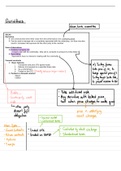
Inspector Google
® The inspector is a very ambiguous character from start to end, but is
still a likeable character by the way Priestly presents him. He has a
minimalistic dress sense and seems to be an ordinary police inspector.
® During the progression of the play the audience discovers the
supernatural nature to the Inspector, as suggested by the
homophone (two words with the same pronunciation but different
meanings) of Google(‘ghoul’)
® The vague physical appearance of the Inspector demonstrates to the
audience his appearance unimportant, as it is what he has to say
about upper-class people having responsibilities that makes a
difference to the play. ‘need not a big man but creates an impression
of massiveness, solidity and purposefulness’ [SD]
® Priestly deliberately times the Inspectors arrival to coincide with Mr
Birlings speech, where he talks about his negative view on capitalism.
It contains claims that the audience know through hindsight
(understanding a situation once its happened). The technical term is
dramatic irony of which Priestly uses a lot with the Mr Birling to make
him a dislikeable character as he’s overwhelmingly confident in his
arrogance (e.g. WW1 in 1912, Titanic sinks & the Great Depression)
® The Inspectors arrival marks a shift in authority from Birling to the
Inspector which is representative of the shift from capitalism to
socialism – which in 1945 would’ve been developing after the
Beveridge report and development of the NHS from 1942. Mr Birling
dominated the play with his dramatic monologues until the Inspector
arrives and the colour setting goes from ’pink and intimate’ [SD] to
‘brighter and harder’ [SD]. The pink shows fake-ness and so by washing
it out demonstrated the inspector exposing secrets
KEY POINTS:
Moral Force:
® The Inspector is resistant to the corruption of society, making him a
likeable character to the audience, deliberately done by Priestly to
make the audience consider his points about socialism. The Inspector
refuses a drink of port ‘no thank you […] I’m on duty’. Alcohol has
connotations of impurity and immoral behaviour as later seen by Eric’s
misuse of alcohol leading him to rape Eva Smith. The Inspector’s
refusal is symbolic of his refusal to act immorally and reinforces his
resistant to corruption. Since Mr Birling offers him the drink it’s an
attempt to corrupt the Inspector to which he refuses, showing he’s
®
Copyright © 2022 Revision Guru | All rights reserved
Inspector Google
® The inspector is a very ambiguous character from start to end, but is
still a likeable character by the way Priestly presents him. He has a
minimalistic dress sense and seems to be an ordinary police inspector.
® During the progression of the play the audience discovers the
supernatural nature to the Inspector, as suggested by the
homophone (two words with the same pronunciation but different
meanings) of Google(‘ghoul’)
® The vague physical appearance of the Inspector demonstrates to the
audience his appearance unimportant, as it is what he has to say
about upper-class people having responsibilities that makes a
difference to the play. ‘need not a big man but creates an impression
of massiveness, solidity and purposefulness’ [SD]
® Priestly deliberately times the Inspectors arrival to coincide with Mr
Birlings speech, where he talks about his negative view on capitalism.
It contains claims that the audience know through hindsight
(understanding a situation once its happened). The technical term is
dramatic irony of which Priestly uses a lot with the Mr Birling to make
him a dislikeable character as he’s overwhelmingly confident in his
arrogance (e.g. WW1 in 1912, Titanic sinks & the Great Depression)
® The Inspectors arrival marks a shift in authority from Birling to the
Inspector which is representative of the shift from capitalism to
socialism – which in 1945 would’ve been developing after the
Beveridge report and development of the NHS from 1942. Mr Birling
dominated the play with his dramatic monologues until the Inspector
arrives and the colour setting goes from ’pink and intimate’ [SD] to
‘brighter and harder’ [SD]. The pink shows fake-ness and so by washing
it out demonstrated the inspector exposing secrets
KEY POINTS:
Moral Force:
® The Inspector is resistant to the corruption of society, making him a
likeable character to the audience, deliberately done by Priestly to
make the audience consider his points about socialism. The Inspector
refuses a drink of port ‘no thank you […] I’m on duty’. Alcohol has
connotations of impurity and immoral behaviour as later seen by Eric’s
misuse of alcohol leading him to rape Eva Smith. The Inspector’s
refusal is symbolic of his refusal to act immorally and reinforces his
resistant to corruption. Since Mr Birling offers him the drink it’s an
attempt to corrupt the Inspector to which he refuses, showing he’s
®
Copyright © 2022 Revision Guru | All rights reserved