Basics of Pharmacology:
Pharmacodynamics
Pharmacodynamics are the reaction that the body
has on a drug.
Biology basics
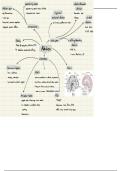
The elements of a cell
Cytoplasm- the land of the cell
Nucleus- cell headquarters
Mitochondria- energy plant
Golgi body- the sewers
Vacuoles- storage units
Endoplasmic reticulum (ER)- factories- smooth
makes lipids, rough makes ribosomes
Ribosomes- factories of proteins
Cell membrane- boarders of the cell
, The cell membrane
• Made of a double layer of lipids
• Has several functions such as protection and
giving shape to the cell.
• Transports materials in and out of the cell
• Sends and receives messages to other cells.
• These are mainly performed by proteins on the
cell membrane which act as channels to let
chemicals into and out of the cell. They also
act as receptors which are receivers of
chemical messages.
• Transmitters are molecules which send
messages to the cells in the body. There are 2
types: hormones and neurotransmitters.
Ion Channels
• Some proteins act as transport channels inside
the cell, some of them are specifically ion
channels.
• They let in certain ions such as Sodium (Na),
Calcium (Ca) and Potassium (K) inside and
outside the cell.
• Certain cells get activated with the entrance
or exit of a particular ion e.g. heart cells will
Pharmacodynamics
Pharmacodynamics are the reaction that the body
has on a drug.
Biology basics
The elements of a cell
Cytoplasm- the land of the cell
Nucleus- cell headquarters
Mitochondria- energy plant
Golgi body- the sewers
Vacuoles- storage units
Endoplasmic reticulum (ER)- factories- smooth
makes lipids, rough makes ribosomes
Ribosomes- factories of proteins
Cell membrane- boarders of the cell
, The cell membrane
• Made of a double layer of lipids
• Has several functions such as protection and
giving shape to the cell.
• Transports materials in and out of the cell
• Sends and receives messages to other cells.
• These are mainly performed by proteins on the
cell membrane which act as channels to let
chemicals into and out of the cell. They also
act as receptors which are receivers of
chemical messages.
• Transmitters are molecules which send
messages to the cells in the body. There are 2
types: hormones and neurotransmitters.
Ion Channels
• Some proteins act as transport channels inside
the cell, some of them are specifically ion
channels.
• They let in certain ions such as Sodium (Na),
Calcium (Ca) and Potassium (K) inside and
outside the cell.
• Certain cells get activated with the entrance
or exit of a particular ion e.g. heart cells will