SOCIAL INFLUENCE
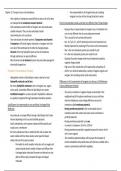
Types of conformity: internalisation, identification and compliance
Compliance: Compliance is the weakest type of conformity. It is where a person
publicly changes their behaviour and beliefs to fit that of a group and avoid
disapproval. However, privately, the person does not accept the behaviours and
beliefs of the group – they just comply with them.
Identification: Identification is a stronger type of conformity than compliance
because it involves the person both publicly and privately changing their behaviour
and beliefs to fit that of a group they want to be part of. However, the person only
identifies with these beliefs as long as they are associated with the group – upon
leaving the group, the original behaviours and beliefs return
Internalisation: Internalisation is the strongest type of conformity. It is where a
person both publicly and privately changes their behaviour and beliefs to those of a
group – but permanently. So, unlike identification, individuals who internalise beliefs
and behaviours maintain those beliefs and behaviours even after leaving the social
group.
Explanations for conformity: informational social influence and normative
social influence, and variables affecting conformity including group size,
unanimity and task difficulty as investigated by Asch.
Informational social influence: People like to feel that their opinions and beliefs
are correct.
Normative social influence: People want to be accepted by others and not be
rejected
Explanations for obedience: agentic state and legitimacy of authority, and
situational variables affecting obedience including proximity and location, as
investigated by Milgram, and uniform.
Autonomous state: When an individual is freely and consciously in control of their
actions and thus takes responsibility for them.
Agentic state: When an individual becomes de-individuated and considers
themselves an agent (tool) of an authority figure and thus not personally responsible
for their actions.
Dispositional explanation for obedience: the Authoritarian Personality
Authoritarian personality: people whose disposition makes them submissive to
authority and dominating of people with lower status within the hierarchy and
members of an out-group.
Explanations of resistance to social influence, including social support and
locus of control.
Social support: Having another person on your side.
,Locus of control: The extent to which they believe they are in control of their life
Internal locus of control: The person believes their own choices shape their life
External locus of control: The person believes their life is controlled by things
outside their control – such as luck, fate, and circumstance
, SOCIAL INFLUENCE
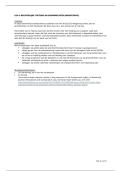
Types of conformity: Internalisation, Identification and Compliance.
AO1
Compliance is one explanation for conformity and is the weakest form.
Individuals may choose to go along with the group to try and gain the group’s
approval or to avoid their disapproval.
When compliance occurs, this may not result in any change in the person’s
underlying attitude, only in the views and behaviours they express publically.
Identification is another form of conformity which has traits of both compliance and
internalisation.
Identification is stronger than compliance but weaker than internalisation.
This influence may also be temporary and the individual’s behaviour may change
when they are out of the group.
Internalisation is another form of conformity and is the strongest form.
Internalisation occurs when individuals go along with the group because they accept
their viewpoint.
This can lead to the acceptance (i.e. internalisation) of the group’s viewpoint both
publically and privately.
Explanations for conformity: Informational Social influence and Normative
Social Influence
AO1: INFORMATIONAL
Informational social influence occurs when an individual accepts information from
others as evidence about reality.
AO3: INFORMATIONAL
Lucas et al (2006) conducted an experiment with a group of students and
gave them mathematical problems ranging from easy to difficult. The results
showed greater conformity with incorrect answers on difficult questions.
ISI assumes we all need to perceive reality correctly. However, Asch 1955
found students were less conformist (28%) than other ppts (37%).
AO1: NORMATIVE
Normative social influence refers to conformity when people may go along with the
group majority without them personally accepting their point of view.
AO3: NORMATIVE
Asch’s (1951) research demonstrates how individuals will conform with the
majority on an unambiguous line comparison test (even when they know their
Types of conformity: internalisation, identification and compliance
Compliance: Compliance is the weakest type of conformity. It is where a person
publicly changes their behaviour and beliefs to fit that of a group and avoid
disapproval. However, privately, the person does not accept the behaviours and
beliefs of the group – they just comply with them.
Identification: Identification is a stronger type of conformity than compliance
because it involves the person both publicly and privately changing their behaviour
and beliefs to fit that of a group they want to be part of. However, the person only
identifies with these beliefs as long as they are associated with the group – upon
leaving the group, the original behaviours and beliefs return
Internalisation: Internalisation is the strongest type of conformity. It is where a
person both publicly and privately changes their behaviour and beliefs to those of a
group – but permanently. So, unlike identification, individuals who internalise beliefs
and behaviours maintain those beliefs and behaviours even after leaving the social
group.
Explanations for conformity: informational social influence and normative
social influence, and variables affecting conformity including group size,
unanimity and task difficulty as investigated by Asch.
Informational social influence: People like to feel that their opinions and beliefs
are correct.
Normative social influence: People want to be accepted by others and not be
rejected
Explanations for obedience: agentic state and legitimacy of authority, and
situational variables affecting obedience including proximity and location, as
investigated by Milgram, and uniform.
Autonomous state: When an individual is freely and consciously in control of their
actions and thus takes responsibility for them.
Agentic state: When an individual becomes de-individuated and considers
themselves an agent (tool) of an authority figure and thus not personally responsible
for their actions.
Dispositional explanation for obedience: the Authoritarian Personality
Authoritarian personality: people whose disposition makes them submissive to
authority and dominating of people with lower status within the hierarchy and
members of an out-group.
Explanations of resistance to social influence, including social support and
locus of control.
Social support: Having another person on your side.
,Locus of control: The extent to which they believe they are in control of their life
Internal locus of control: The person believes their own choices shape their life
External locus of control: The person believes their life is controlled by things
outside their control – such as luck, fate, and circumstance
, SOCIAL INFLUENCE
Types of conformity: Internalisation, Identification and Compliance.
AO1
Compliance is one explanation for conformity and is the weakest form.
Individuals may choose to go along with the group to try and gain the group’s
approval or to avoid their disapproval.
When compliance occurs, this may not result in any change in the person’s
underlying attitude, only in the views and behaviours they express publically.
Identification is another form of conformity which has traits of both compliance and
internalisation.
Identification is stronger than compliance but weaker than internalisation.
This influence may also be temporary and the individual’s behaviour may change
when they are out of the group.
Internalisation is another form of conformity and is the strongest form.
Internalisation occurs when individuals go along with the group because they accept
their viewpoint.
This can lead to the acceptance (i.e. internalisation) of the group’s viewpoint both
publically and privately.
Explanations for conformity: Informational Social influence and Normative
Social Influence
AO1: INFORMATIONAL
Informational social influence occurs when an individual accepts information from
others as evidence about reality.
AO3: INFORMATIONAL
Lucas et al (2006) conducted an experiment with a group of students and
gave them mathematical problems ranging from easy to difficult. The results
showed greater conformity with incorrect answers on difficult questions.
ISI assumes we all need to perceive reality correctly. However, Asch 1955
found students were less conformist (28%) than other ppts (37%).
AO1: NORMATIVE
Normative social influence refers to conformity when people may go along with the
group majority without them personally accepting their point of view.
AO3: NORMATIVE
Asch’s (1951) research demonstrates how individuals will conform with the
majority on an unambiguous line comparison test (even when they know their