Outline and evaluate cognitive approach to treating depression.
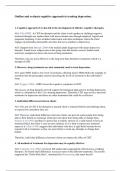
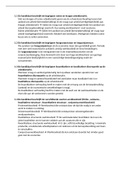
1. Cognitive approach (CA) has led to the development of effective cognitive therapies.
A01: Ellis REBT. In CBT the therapist and the client work together to challenge negative
irrational thoughts are replace them with more rational ones through empirical, logical and
pragmatic disputing. It also includes behavioural activation techniques where the client
engages in potentially pleasurable activities that act as antidote to depression.
A03: Support from Babyak (2000) who studied adults diagnosed with major depressive
disorder. Found lower relapse rates in the group who did aerobic exercise (behavioural
activities) compared to those who received drug treatments.
Therefore, may me more effective in the long term than alternative treatments which is a
strength of CBT.
2. However, drug treatments are also commonly used to treat depression.
A01: gene SERT leads to low level of serotonin, effecting mood. SSRIs bloke the reuptake of
serotonin into the presynaptic neuron increasing the levels of serotonin in the individual’s
brain.
A03: Pyggot (1990) - SSRI's lower the cognitive symptoms of OCD.
The success of drug therapies provide support for biological approach for treating depression,
which is a limitation of the CA to treating depression. Therefore, CBT may not be a universal
treatment for depression and there are other treatments that could be as effective.
3. Individual differences between clients
A01: The aim of CBT if for therapist to unearth client’s irrational beliefs and challenge them,
to expose how unrealistic they are.
A03: However, individual differences between clients can prevent some people from being
able to their beliefs as irrational, which prevents them from being able to change them.
Simons et al (1995) said that if a person has a realistic stressor or a valid reason to have an
irrational belief, the belief is seen as more rational, so it is hard to expose any irrational
aspect to it. Elkin (1985) suggests that individuals who have a rigid belief system do not
respond well to treatment, as they are more likely to resist any attempts to change their
beliefs.
Therefore, individual differences between clients can impact the effect of CBT.
4. All methods of treatment for depression may be equally effective.
A03: Luborsky et al (2002) reviewed 100 studies that compared the effectiveness of talking
therapies. He found small differences in success rates of the different treatments. The results
supported the “Dodo Bird effect”, introduced by Rosenzweig, that states that all
1. Cognitive approach (CA) has led to the development of effective cognitive therapies.
A01: Ellis REBT. In CBT the therapist and the client work together to challenge negative
irrational thoughts are replace them with more rational ones through empirical, logical and
pragmatic disputing. It also includes behavioural activation techniques where the client
engages in potentially pleasurable activities that act as antidote to depression.
A03: Support from Babyak (2000) who studied adults diagnosed with major depressive
disorder. Found lower relapse rates in the group who did aerobic exercise (behavioural
activities) compared to those who received drug treatments.
Therefore, may me more effective in the long term than alternative treatments which is a
strength of CBT.
2. However, drug treatments are also commonly used to treat depression.
A01: gene SERT leads to low level of serotonin, effecting mood. SSRIs bloke the reuptake of
serotonin into the presynaptic neuron increasing the levels of serotonin in the individual’s
brain.
A03: Pyggot (1990) - SSRI's lower the cognitive symptoms of OCD.
The success of drug therapies provide support for biological approach for treating depression,
which is a limitation of the CA to treating depression. Therefore, CBT may not be a universal
treatment for depression and there are other treatments that could be as effective.
3. Individual differences between clients
A01: The aim of CBT if for therapist to unearth client’s irrational beliefs and challenge them,
to expose how unrealistic they are.
A03: However, individual differences between clients can prevent some people from being
able to their beliefs as irrational, which prevents them from being able to change them.
Simons et al (1995) said that if a person has a realistic stressor or a valid reason to have an
irrational belief, the belief is seen as more rational, so it is hard to expose any irrational
aspect to it. Elkin (1985) suggests that individuals who have a rigid belief system do not
respond well to treatment, as they are more likely to resist any attempts to change their
beliefs.
Therefore, individual differences between clients can impact the effect of CBT.
4. All methods of treatment for depression may be equally effective.
A03: Luborsky et al (2002) reviewed 100 studies that compared the effectiveness of talking
therapies. He found small differences in success rates of the different treatments. The results
supported the “Dodo Bird effect”, introduced by Rosenzweig, that states that all