TEST I: BCAT Questions with Correct Answers Scored A+
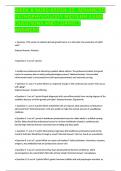
TEST I: BCAT Questions with Correct Answers Scored A+ Deficits in social-emotional reciprocity *ANS* -abnormal social approach -failure of normal back-and-forth conversation -reduced sharing of interests, emotions, or affect -failure to initiate or respond to social interactions example of deficit of social-emotional reciprocity *ANS* he teacher tells students to find a partner to work with on a math activity. As students move around the classroom pairing up, Michelle, a student with autism, stands in the middle of the classroom looking at the other students. For this assignment, Michelle may be having difficulty with initiating social interactions. Deficits in nonverbal communicative behaviors used for social interaction *ANS* -poorly integrated verbal and nonverbal communication -abnormalities in eye contact and body language -deficits in understanding and use of gestures -lack of facial expressions -nonverbal communication Examples of nonverbal communication *ANS* shrugging shoulders when you don't know pointing at a picture in a book to show another person frowning when someone tells you sad news. Deficits in developing, maintaining, and understanding relationships *ANS* -difficulties adjusting behavior to suit various social contexts -difficulties in sharing imaginative play or in making friends -absence of interest in peers stereotypes or repetitive motor movements, use of objects or speech *ANS* simple motor stereotypes lining up toys or flipping objects echolalia idiosyncratic phrases. idiosyncratic phrases *ANS* this is where the child uses a word or expression to refer to something which is unrelated or irrelevant echolalia *ANS* repeating what has been said but not understanding why or what has been said. primary motor stereotypes *ANS* flapping and waving of the arms, hand flapping, head nodding, rocking back and forth. insistence on sameness, inflexible adherence to routines, or ritualized patterns of verbal or nonverbal behavior *ANS* -inflexible adherence to routines -ritualized patterns of verbal or nonverbal behavior -extreme distress at small changes -difficulties with transitions -rigid thinking patterns -greeting rituals -need to take same route or eat same food everyday. highly restricted, fixated interests that are abnormal in intensity or focus *ANS* strong attachment to or preoccupation with unusual objects, excessively circumscribed or perseverative interests. perseverative behavior *ANS* repetitive and continuous behavior hyper or hypoactivity to sensory input or unusual interests in sensory aspects of environment *ANS* indifference to pain/temperature adverse response to specific sounds or textures excessive smelling touching of objects visual fascination with lights or movement. levels of severity across social communication and restricted repetitive behaviors *ANS* restricted, repetitive patterns of behavior, interests or activities as manifested by at least 2 of the following: 1. stereotypes or repetitive movements, use of objects or speech 2. insistence on sameness, inflexible adherence to routines or ritualized patterns of verbal non verbal behavior. 3. highly restricted, fixated interests that are abnormal in intensity or focus. 4. Hyper-or hyporeactivity to sensory input or unsuual interests in sensory aspects of the environment. what is severity based on? *ANS* social communication impairments, and restricted, repetitive patterns of behavior. Level of Severity 3 *ANS* "requiring very substantial support" -few intelligible words, rarely initiates interaction, extreme difficulty coping with change Level of Severity 2 *ANS* "requiring substantial support" -simple sentences, interaction is limited to narrow special interests, odd nonverbal communication, inflexibility, difficulty coping with change. Level of Severity 1 *ANS* "requiring support" -engages in full-sentence communication but reciprocal conversations with others fail, attempts to make friends are odd and typically unsuccessful, inflexibility, problems with organization and planning treatment dosage *ANS* which is often referenced in treatment literature as "intensity" will vary with each individual and should reflect the goals of treatment, specific patient needs and response to treatment treatment dosage should be considered in two distinct categories *ANS* intensity and duration treatment dosage: intensity *ANS* is typically measured in terms of number of hours per week of direct treatment often determines whether the treatment falls into the category of either focused or comprehensive. focused ABA treatment *ANS* generally ranges from 10-25 hours per week of direct treatment (plus direct and indirect supervision and caregiver training) however, certain programs for severe destructive behavior may require more than 25 hours per week of direct therapy. comprehensive ABA treatment *ANS* often involves an intensity level of 30-40 hours of 1:1 direct treatment to the individual per week, not including caregiver training, supervision and other needed services. treatment duration *ANS* effectively managed by evaluating the individuals response to treatment. This evaluation can be conducted prior to the conclusion of an authorization period. Some individuals will continue to demonstrate medical necessity and require continued treatment across multiple authorization periods. ABA early intensive intervention helps *ANS* all ages, but those who start before age 2 were most likely to make dramatic gains. early intensive behavioral intervention or treatment (EIBI or EIBT) consists of *ANS* 20-40 hours per week of individualized instruction for children with autism who begin treatment at the age of 4 years or younger and who usually continue for 2-3 years. what is the UCLA model *ANS* it is one EIBI model and emphasizes instruction at home with discrete trial training. Dr. Ivar lovass' (UCLA) research showed that *ANS* 40 hours per week of intervention had better results than 10 hours per week of intervention "Intensive behavior intervention (IBI) is the only empirically validated treatment for ASD is there a known cause for autism? *ANS* no. research suggests that autism often develops from a combination of *ANS* genetic and non-genetic or environmental, influences that increase the risk a child will develop autism. however, increased risk is not the same as cause (e.g. genetic markers associated with autism are also found in people who do not have autism) Evidence-based (EB) means *ANS* treatment that has been proven effective through outcome evaluations (research) EB research outcomes have then been replicated to show consistent results In implementing ABA services, we are using ONLY _______-based practces/procedures *ANS* evidence positive reinforcement *ANS* Behavior increased because something was given to kiddo. examples of positive reinforcement *ANS* high 5, thumbs up, smile, snacks, hugs negative reinforcement *ANS* behavior increases when something is taken away. examples of negative reinforcement *ANS* 10 trails instead of 15, getting a free day, etc. positive punishment *ANS* behavior decreases because something was given to kiddo examples of positive punishment *ANS* adding more trials. negative punishment *ANS* behavior decreases because something was taken away from kiddo examples of negative punishment *ANS* time out. reinforcer *ANS* stimulus that is either delivered or removed that will INCREASE the likelihood of that response occurring in the future. punisher *ANS* stimulus that is either delivered or removed that will DECREASE the likelihood of that response occurring in the future. conditioned reinforcement *ANS* learned reinforcer neutral stimulus gained reinforcing properties by being paired with something conditioned reinforcement example *ANS* token board paired with a desired prize. unconditioned reinforcer *ANS* innately reinforcing stimulus unlearned fulfills basic needs unconditioned reinforcer example *ANS* snacks, water, etc. extinction *ANS* a procedure by which a bx that was previously reinforced no longer receives reinforcement and the probability of the bx decreases deprivation *ANS* the absence or reduction of a reinforcer for a period of time. the deprivation is an establishing operation that increases effectiveness of the reinforcer. satiation *ANS* repeated presentation of a reinforcer weakens its effectiveness and for this reason the rate of response declines. contingency *ANS* Refers to dependent and/or temporal relations between operant behavior and its controlling variables. where response produces a consequence motivativing operation *ANS* an environmental variable that alters the effectiveness of some stimulus or event example of motivating operation *ANS* if person is hungry, food is strongly reinforcing but if person is satiated, food is less reinforcing. antecedent *ANS* something that happens before behavior *ANS* action that happens consequence *ANS* event that happens after targeted behavior 3 term contingency *ANS* ABC: antecedent, behavior, consequence stimulus *ANS* something (object, thing, noise, environmental factor) that causes a behavioral reaction in client. Discriminative Stimulus (SD) *ANS* something you say or do to make them do a specific behavior you want them to do . stimulus control *ANS* how much control the SD has over the response (target behavior) is it likely to evoke that behavior? response *ANS* the particular behavior after a given SD, what is the result discrete trial *ANS* actual trial itself in technique of ABA using trials to implement program (giving SD, behavior, response and reinforcement) discrimination training *ANS* process of reinforcing behavior only when SD is given (can be during behavior, after or through maintenance) discrete trial training *ANS* technique of ABA using trials to implement program (giving SD, behavior response, and reinforcement) natural environment training *ANS* natural teaching fluency based training *ANS* focusing on previous skills to make it more accurate and make client more competent in skill using accuracy and speed, improving how well they do the skill. generalization *ANS* learning to target behavior with other people and in different environments. maintenance *ANS* a refresher, once program is completed, ensuring client is able to continue performing behavior caregiver (parent) training *ANS* parent education about ASD or targets ensuring parent's accuracy and competence when managing behaviors and implementing targets premack principle (first/then) *ANS* when something preferred can be used as a reinforcer to something not preferred; say "first do this, then you can get this" preference assessment *ANS* conducting an assessment on the client's preferred items and activities (finding out what they like) prompt *ANS* any help (SD or gesture) to assist client in responding correctly errorless teaching *ANS* teaching without errors, providing immediate prompt so response can ALWAYS be correct (just giving them the answer) most to least prompting *ANS* using the most intrusive prompts first then fading less intrusive prompts (HOH or full physical prompt) least to most prompting *ANS* using least intrusive prompts first then including more intrusive prompts (G or partial prompt) prompt fading *ANS* reducing prompts over time to help client response independently (start off at full prompt---> partial prompt---> independent) Time delay prompt *ANS* A time delay between SD and giving a prompt chaining *ANS* teaching a behavior step by step (task analysis) and reinforcing each step! shaping *ANS* reinforcing approximations of the behavior that you want (shaping it to look like target behavior) pacing *ANS* speed at which you are presenting trials/SD Alternative and augmentative communication (AAC) *ANS* all forms of communication that isnt verbal (signs, tablet, texts, pictures) alternative ways of verbal speech and communication. functional approaches to teaching language skills *ANS* form of communication to get needs met. mand training *ANS* when teaching a child to request items, action, people, or information. mand is a verbal operant that is controlled by antecedent and followed by a consequence that is specific to that motivation. basically a request for something. tact training *ANS* when teaching child to comment on the environment around them. A tact verbal operant that is controlled by a nonverbal antecedent followed by a nonspecific consequence. Basically, labeling or stating something. Does not apply only to tangible objects, but also quality (pretty, hot) tact example *ANS* an adult points to an item and asks a child, "what is this?" the child labeling this item would be considered a tact. Training Echoic Behavior *ANS* teaching a person to repeat what the speaker is saying. an echoic is a verb operant that is controlled by and matches a verbal antecedent. Training Intraverbal Behavior *ANS* Teaching a person to have a conversation w/ another person w/o using just mands, tacts, & echoics. Teaching joint attention *ANS* Teaching a client to share an item or attend to an item that is being shared with them at the same time as another person. It is the shared focus of two individuals on an object. One of the individuals alerts the other to the object by gaining her attention Teaching Play skills *ANS* play skills are taught to many people with ASD because they typically lack the ability to engage appropriately with toys or other leisure time activities. Teaching Adaptive and Safety Skills *ANS* People with ASD may have difficulty with adaptive skills for many reasons. Safety skills is also a major concern as they may not be able to read the situation and then react incorrectly and put themselves in harm. Teaching social skills *ANS* social deficits are part of the diagnostic criteria for ASD. Eye contact, joint attention, imitation, sharing, reading social cues, gesture and facial expressions, etc. Teaching Cognition Skills *ANS* teach desires, emotions, senses, physical states, thinking, preferences, sarcasm, etc. Teaching executive function skills *ANS* is part of diagnostic criteria for ASD. paying attention, organizing, planning and prioritizing, starting tasks and staying focused on them to completion. Understanding different points of view, regulating emotions, self monitoring Teaching Academic Skills *ANS* people with ASD may appear to be delayed with their academic skills. Clinicians may also teach academic skills earlier, so that the clients can focus on social skills generalization in the school setting. Visual Supports *ANS* Many people with ASD use visual supports to learn, understand or communicate Curriculum modification *ANS* Not al learners gain concepts in the same way as others. This is true with people with ASD as it is with neurotypical people. BCBAs may change instructions or responses suggested within the curriculum they are following. Behavior Intervention Plan (BIP) *ANS* A plan that is created for a specific client in regards to their specific bx they are or are not engaging in. It is created to attempt to change the frequency or duration of consequence manipulation to change the bx. Target Behavior *ANS* This is either the bx that we are looking to reduce or the bx we are looking to increase target behavior example *ANS* head banging, hitting, non-compliance, or FCT, leisure time activities. Operational definition *ANS* A clear, concise, accurate statement that specifies the exact details of an observable bx. Functional Behavior Assessment (FBA) *ANS* It is considered a problem solving process for addressing problem bx relies on questionnaires and observations to determine the function of the bx. BCBAS and BCaB's conduct FBAs Escape Function *ANS* Client engages in bx due to the want to escape from a task. This is an example of a social negative response, the problem bx is strengthened when someone removes or delays an aversive stimulus following the occurrence of a problem bx Attention Function *ANS* Client engages in bx due to wanting attention this is social positive response, the problem bx is strengthened when someone delivers a positive reinforce following the occurrence of the problem bx. Access to Tangible Function *ANS* Client engages in bx due to wanting access to a tangible. This is also a social positive response Autimatic Function *ANS* Client engages in bx due to automatic function. the bs is reinforcing on its own because it produces a sight, sound, taste, feel, smell or motion that the person enjoys. automatic positive bx example. *ANS* reinforcing sensory stimuli automatic negative bx *ANS* is when the problem bx removes the sensory stimuli automatic negative bx example *ANS* relief from painful stimuli escape from disliked sensory sensation. antecedent interventions *ANS* activities that are designed to alter the environment before the bx occurs. Functional Communication training *ANS* Differential reinforcement (DR) procedure in which an individual is taught an alternative response that results in the same class of reinforcement identified as maintaining problem behavior. During this time, the problem bx is typically put on extinction. Token Economy *ANS* reinforcement system that the learners receive tokens for engaging in target behaviors. High-P request sequence (Behavioral Momentum) *ANS* An antecedent intervention in which several easy tasks with known history of learner compliance are presented in quick succession immediately before requesting the target task or low prequest. High P request sequence example *ANS* touch your hair, touch your head, touch your hand, touch your eyes, etc. low p requests:come here, sit down on your chair. so you ask the high p requests before the low p requests. noncontingent reinforcement *ANS* delivery of functional reinforcers on a time based schedule, independent of the problem bx. noncontingent reinforcement example *ANS* if the function is to gain attention from teacher, the teacher should provide the student with access to attention. Replacement Behavior *ANS* Replacement bs are skills taught that are an appropriate substitute for a problem behavior. Escape Extinction *ANS* Planned ignoring of the problem bx maintained by social negative reinforcement (ability to escape a situation/demand) so it is the discontinuation of negative reinforcement for a behavior. ESCAPE EXTINCTION example *ANS* if a mother asks her child with ASD to clean his room and the child screams, to implement escape extinction, the mother would need to continue to require him to clean his room until he does it, regardless of screaming. if a child had a tantrum to avoid brushing his teeth, escape extinction would involve still having him brush his teeth while having the tantrum. Attention Exctinction *ANS* planned ignoring of the problem bx maintained by social positive reinforcement. (receiving attention from another person) attention extinction example *ANS* the teachers decided to no longer go over to brian to give him attention when he screamed. Access to tangible extinction *ANS* Planned ignoring of the problem bx maintained by social positive reinforcement (the ability to gain a desired outcome) Extinction Burst *ANS* A sharp increase in the frequency of a bx that has recently been placed on extinction, planned ignoring. Continuous reinforcement *ANS* reinforcing every occurrence of a specific bx. intermittent reinforcement *ANS* Reinforcing some occurrences but not all instances of a specific bx. Differential reinforcement of incompatible behavior (DRI) *ANS* the delivery of reinforcers that is contingent on a specific desirable bx that is physically incompatible with the problem bx so that both responses could not occur at the same time. in other words, replacement bx is given so that child cannot engage problem bx. Differential Reinforcement of Alternative Behavior (DRA) *ANS* the delivery of reinforcers contingent on an alternative response, where a specific replacement bx is identified and only that specific bx is reinforced. in other words, if the child uses an alternative bx that is appropriate instead o the problem bx, they will receive a reinforcer. DRA example *ANS* child B has a problem behavior of elopement from the work table to escape a demand. When Child B attempts to stand up at the work table, you physically prompt her to sit down and immediately hand her an "i want a break" card. When child B gives the card back to you, you provide, praise and allow child B a short break. DRI example *ANS* young child who, while watching television, continually "twiddles" with her hair to the extent that bald patches are appearing. Hair "twiddling" could be reduced by reinforcing the child for cuddling a teddy bear. Differential Reinforcement of Other Behavior (DRO) *ANS* The delivery of reinforcers on an internal schedule, contingent upon the absence of the problem bx. With a DRO specific replacement bx is not identified, but rather any appropriate bx other than the problem bx. DRO example *ANS* student receives a star for each interval he refrains from talking with his neighbor or client receives praise for staying at the dinner table without eloping. response blocking *ANS* the source of reinforcement is blocked or stopped by the tx in order to eliminate the reinforcing sensory stimuli. response blocking example *ANS* blocking client from throwing lunch in trash, or from pulling their hair. Redirection *ANS* Prompting a client to engage in a different bx than they are trying to engage in. redirection example *ANS* child wishes to elope, you redirect him by prompting client to sit down and finish their assignment before leaving. Overcorrection *ANS* The procedure of reducing the frequency of a target bx by making restitution for damaged and practice of appropriate bx contingent upon the target bx (*Do a task plus more*) in other words, client has to correct the bx that they did and do extra work for more practice. Overcorrection example *ANS* if client uses marking pens to write his name on desk top then the student must clean his/her name off the desk top AND all the other words/designs written in ink on that surface. you might even have him/her clean all the other desks in the classroom. Response Cost *ANS* A response reduction procedure in which bx is weakened by the removal of a specified amount of a reinforcer, contingent upon the occurrence of the problem bx. response cost example *ANS* client engaged in problem bx so you take away tokens for not engaging in target bx. Time Out for Reinforcement *ANS* a response reduction procedure in which bx is weakened by the brief removal of all sources of social positive reinforcement contingent upon the occurrence of the problem bx. This is only effective when the child is in preferred environment and moved to a less preferred environment. time out from reinforcement *ANS* client engages in problem bx so you take them inside their home/classroom instead of being outside to play. spontaneous recovery *ANS* After a bx has been extinguished or reduced for a period of time an increase in the magnitude of the bx occurs. rate *ANS* ratio of count per observation time rate example *ANS* the client engages in average rate of 16 instances of screaming per hour. frequency *ANS* count frequency example *ANS* client screamed 7 times duration *ANS* measure of the total time that the behavior occurred duration example *ANS* one instance of screaming lasted 25 seconds percentage *ANS* percentage presents a proportional quantity per 100 4/5*100=80% latency *ANS* a type of recording in which an observer measuring how long it takes for a behavior to begin after a specific veral demand or event has occurred interresponse time (IRT) *ANS* Time between two consecutive responses IRT example *ANS* 13 seconds passed in between the two instances of screaming latency example *ANS* teacher said dog, and 4 seconds later, the client touched the dog. measurement procedures *ANS* recording of samples of the bx during the observation period. not all instances of bx are recorded event recording timing time sampling. Continuous measurement *ANS* provides actual measure of behavior. point to point correspondence between behavior and measure can be labor intensive or even impossible given some practical constraints. Discontinuous measurement *ANS* sample of how often behavior occurs in a given observation session popular in both practice and in applied research 3 types of discontinuous recordings *ANS* partial interval recording whole interval recording momentary time sample partial interval recording *ANS* observer is interested in behavior that occurs or not in any part of the interval and that the behavior usually does not consume the entire interval example of discrete behaviors that can be observed using partial interval recording include *ANS* swearing, hitting, participating in class discussions, and making positive statements to peers and others. Whole Interval Recording *ANS* means that observer is interested in behavior that occurs during entire interval Example of whole interval recording *ANS* writing, reading, or working on a given assignment ongoing behaviors that can be observed momentary time sampling *ANS* a measurement method in which the presence or absence of behaviors are recorded at precisely specified time intervals momentary time sampling example *ANS* Teacher is measuring on task behavior for a student. She sets her phone to buzz every two minutes. When her phone buzzes, she records whether the student is on task or not. She assumes the behavior occurred throughout the interval when calculating the student's time on task. Skill acquisition data *ANS* data collected for skill acquisition skill acquisition are the skills that are learned by a client over a period of time. problem behavior data *ANS* a bx that negatively impacts an individual or others by causing harm to self or others, interferes with a person's ability to learn, limits or prevents quality social experiences, or the bx results in property damage. can be problematic due to topography, context, intensity and frequency. graphing *ANS* visual representation of bx data, illustrating one or two more sets of data over time. it provides a visual display of data points from multiple days on a single page allows the observer to quickly see trends in the data. which graphing is most commonly used *ANS* line graph uses lines to connect data points in order to show changes in data over time can see if bx is increasing or decreasing. x axis represents passage of time. y axis represents the bx dimension (rate, percentage) Interobserver Agreement (IOA) *ANS* measures reliability that two people agreed on a bx they observed, measure and recorded should be incorporated regularly. ethical/legal considerations: Safety (included OSHA) *ANS* always make sure that the work space is free and free from anything dangerous. ethical/legal considerations: responding to emergencies *ANS* Call 911 ethical/legal considerations: confidentiality (including HIPAA) *ANS* keep cient information private and confidential do not discuss with anyone other than client team members handle paperwork with care client information should not be disclosed to anyone other than those who are required to have the information may not share identifying information about clients on social media always obtain permission from clients and staff to record interviews and service deliver sessions protect confidentiality and privacy of clients ethical/legal considerations: recognition of client abuse *ANS* recognize signs of physical, sexual, emotional abuse and neglect. signs of physical abuse *ANS* broken bones, cuts, bruises, burns, injury unusual for the child's age, parent/caregiver delays/fails to seek medical care for child's injury, statement by child that injury was caused by punishment or violence. signs of sexual abuse *ANS* inapproprate sexual knowledge for age/development, demonstrating sexual acts on other children/toys, molesting other children, sexually explicit drawings signs of emotional abuse *ANS* injury to the psychological capacity resulting in observable changes in behavior, emotional response and cognition. signs of neglect *ANS* dirt clothes, poor hygiene, failure to thrive/malnourished, severe dental cavities, medications/toxins within reach of child, guns/weapons not properly secured, trash/rotted food, insects or animal waste in the home, choking hazards within reach of an infant or toddler. Ethical/Legal Considerations: reporting client abuse: mandated reporters *ANS* Legally responsible and required to report any reasonable suspicion of child abuse and neglect. Notify child's supervisor and director immediately for support Make phone call to Child Protective Services (CPS) Make a written report Dual relationships *ANS* Do not babysit or attend parties of clients. Do not give or accept gifts to/from clients. Avoid multiple relationships with clients and supervisors.
Written for
- Institution
- BCAT
- Course
- BCAT
Document information
- Uploaded on
- August 9, 2023
- Number of pages
- 32
- Written in
- 2023/2024
- Type
- Exam (elaborations)
- Contains
- Questions & answers
Subjects
-
test i bcat questions with correct answers scored